
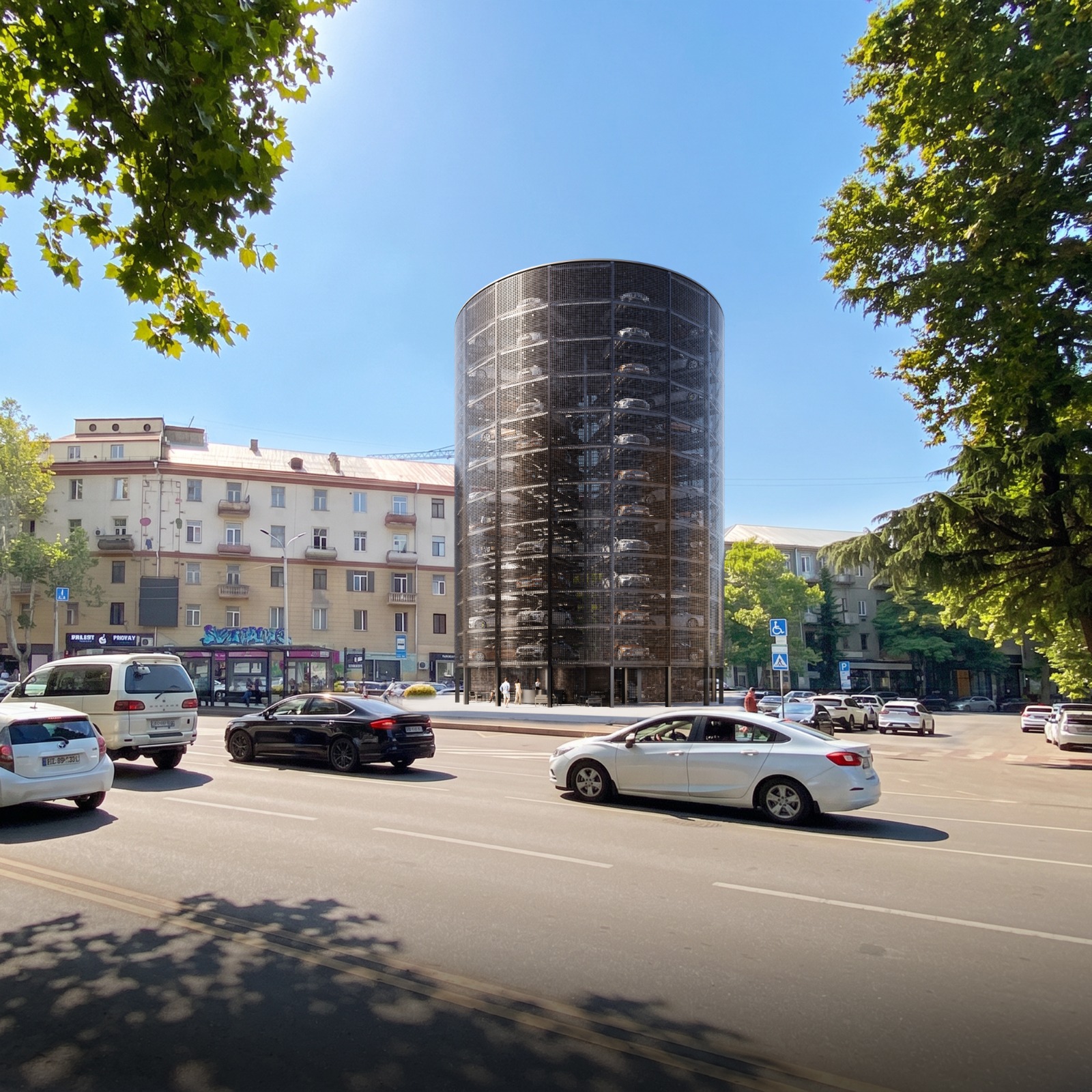
Why Prioritize Vertical Circulation Parking Systems?
As the urban parking gap continues to widen, a growing number of old residential communities, commercial parks, hospitals, scenic spots, and municipal supporting projects are resolving their static traffic challenges by building mechanical parking garages and installing intelligent parking equipment. Among the many mechanical parking products on the market, lifting-transfer parking equipment and vertical circulation parking systems are the two mainstream categories with the largest market usage and the most real-world deployment scenarios.
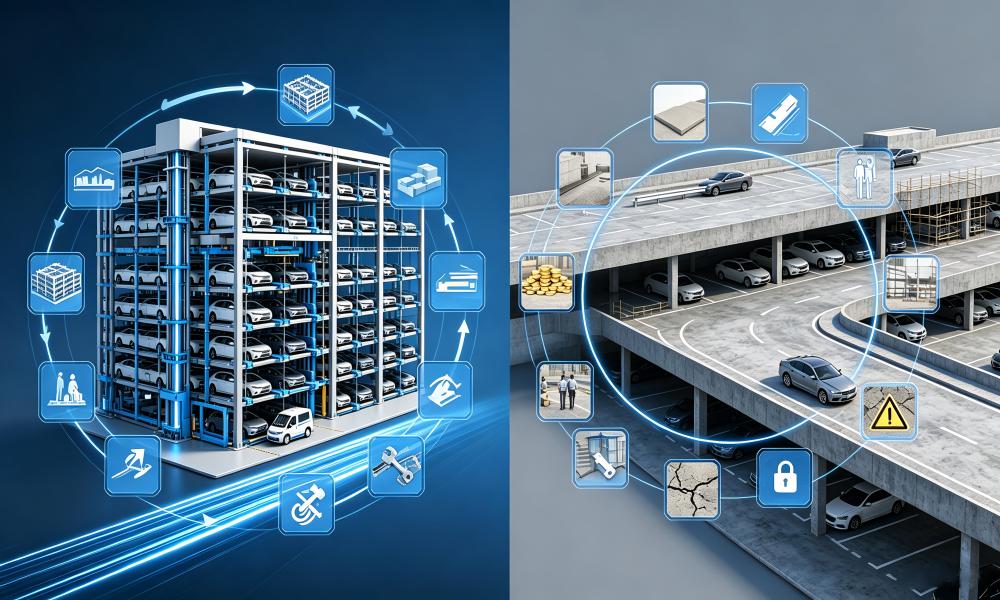
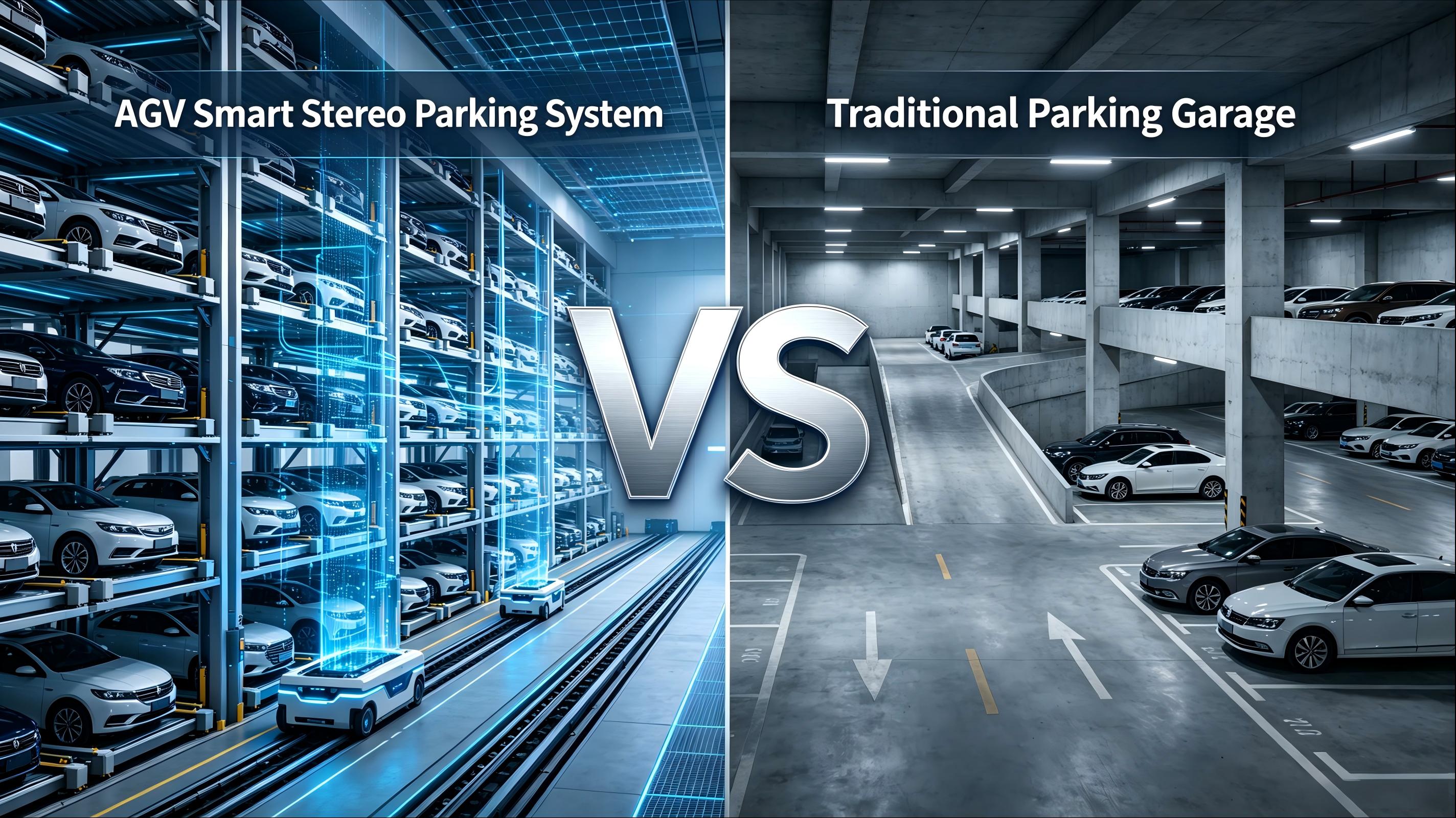
Many investors, when selecting a mechanical parking garage and purchasing parking equipment for the first time, tend to compare only the initial construction cost and civil works cost, mistakenly believing that lifting-transfer parking equipment offers better value for money. However, when viewed comprehensively across the overall construction cost of the mechanical parking garage, site utilization rate, outdoor supporting cost, parking equipment failure rate, and long-term commercial operation stability, the vertical circulation parking system is the high-quality mechanical parking solution with better full-lifecycle cost-effectiveness and is more suitable for long-term operation.
I. True Cost Comparison
In terms of basic civil works and equipment unit price, the lifting-transfer mechanical parking garage and lifting-transfer parking equipment hold a certain early-stage advantage.
Lifting-transfer parking equipment features a common structure and widely available parts, giving it a lower equipment cost per parking space. At the same time, the lifting-transfer mechanical parking garage imposes simple civil works requirements, needs no high-strength special pre-embedding, and uses mature construction techniques, resulting in low civil construction cost and fast site entry — making it ideal for large-scale mechanical parking projects on large, regular sites.
The vertical circulation parking system is an integral modular mechanical parking garage. Its complete machine has greater dead weight and stronger structural integrity, so the vertical circulation mechanical parking garage places higher demands on foundation bearing capacity and floor flatness, and its foundation civil works cost is slightly higher than that of the lifting-transfer mechanical parking garage. In a purely single-item comparison of equipment procurement and civil works, lifting-transfer parking equipment requires lower early-stage investment.
But for most outdoor commercial mechanical parking projects, the real cost gap is driven by the peripheral protection and canopy works.
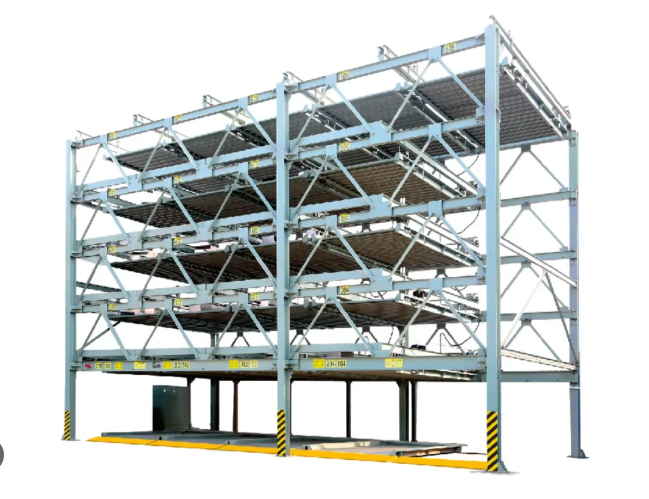
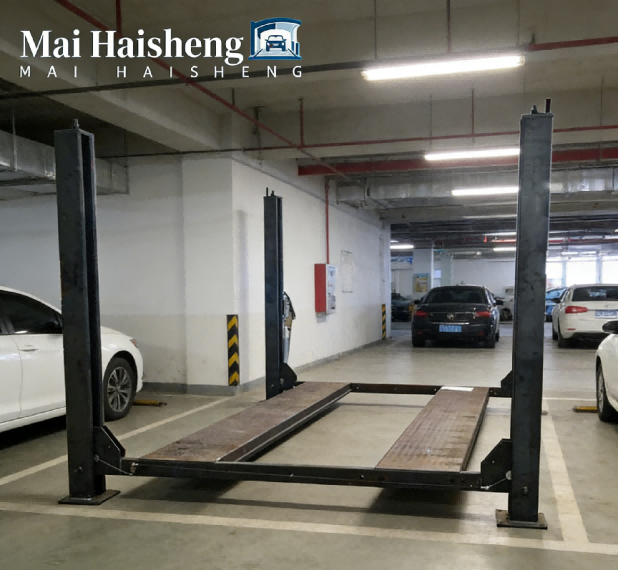
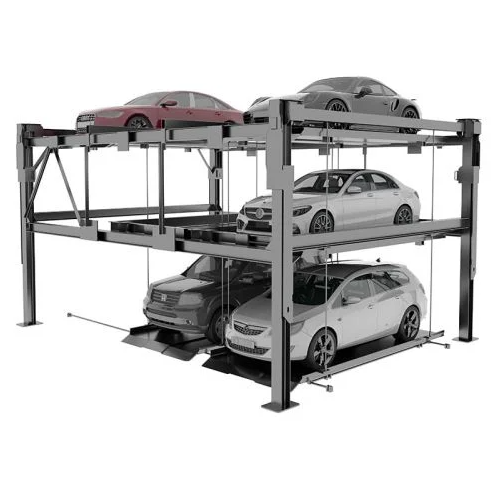
Outdoor open-air lifting-transfer parking equipment is an open multi-level mechanical parking garage. Its motors, chains, sensors, and electrical components are all exposed, so it must be fitted with a fully enclosed canopy plus overall facade enclosure to ensure safe operation of the parking equipment and slow down aging. The lifting-transfer mechanical parking garage covers a large area with a large enclosure expansion surface, making its overall steel-structure canopy and enclosure cost higher than that of the vertical circulation parking system.
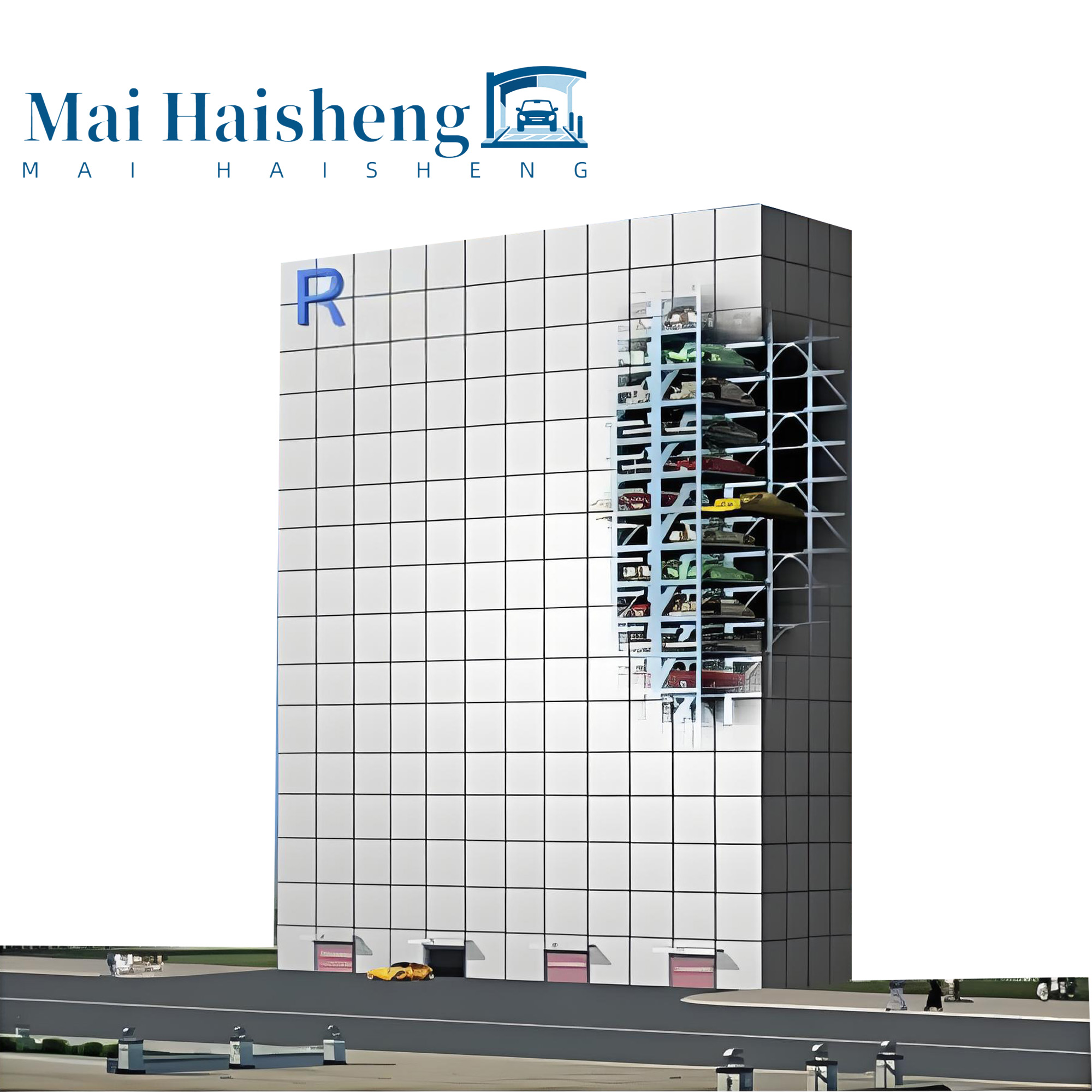
By contrast, the vertical circulation parking system features its own fully enclosed body structure and excellent mechanical protection performance. When used as an outdoor mechanical parking garage, it requires no fully enclosed facade — a simple canopy roof is enough to meet protection standards. As a result, the vertical circulation mechanical parking garage substantially saves on enclosure materials, steel-structure labor, and facade construction costs, directly offsetting the early-stage civil works and equipment price gap and giving the entire parking equipment solution a more favorable overall construction cost.
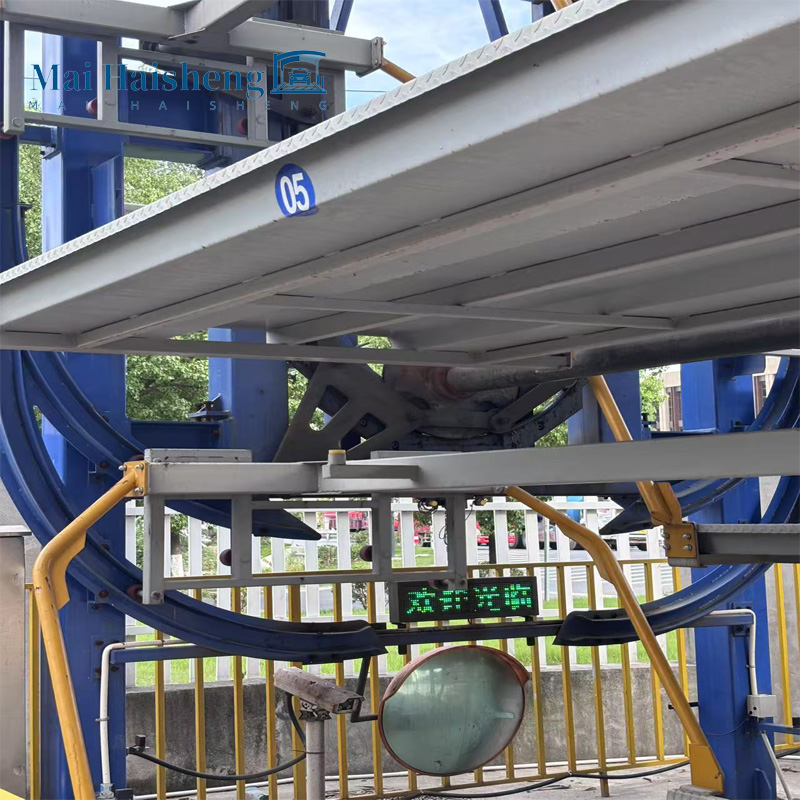
II. Significantly Higher Site Utilization — Small Footprint, Massive Expansion
The core value of investing in a mechanical parking garage and deploying parking equipment is to activate limited land resources and increase the number of parking spaces. In terms of space utilization, the vertical circulation parking system holds an overwhelming advantage over the lifting-transfer mechanical parking garage.
The operation of lifting-transfer parking equipment requires reserving a large amount of lateral-transfer space, vehicle entry/exit lanes, and inter-level safety clearances, so the entire mechanical parking garage occupies a large footprint with much unusable space and limited land utilization. If the site is narrow or the plot is irregular, the lifting-transfer mechanical parking garage is difficult to deploy and cannot fully realize the expansion value of parking equipment.
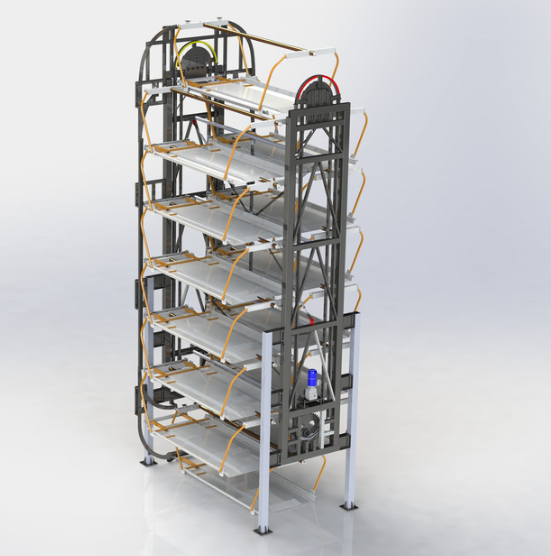
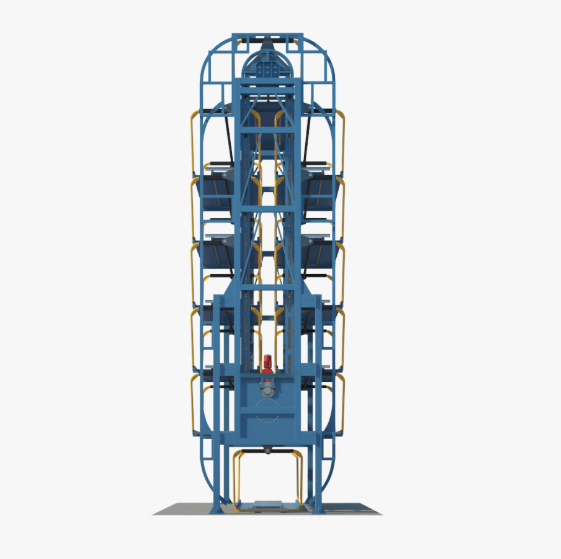
Relying on a vertical closed-loop circulation structure, the vertical circulation parking system needs no lateral movement, no large-area lanes, and no redundant avoidance space. It is the industry-recognized intelligent mechanical parking garage with the smallest footprint and the highest parking density. Under the same single-side footprint, the vertical circulation parking system can accommodate several times more vehicles than the traditional lifting-transfer mechanical parking garage.
For precious sites such as urban core areas, corner lots in old residential communities, and scattered idle plots, the vertical circulation mechanical parking garage can maximize the value of land, adding a large number of parking spaces on a minimal footprint and raising the upper limit of investment returns for mechanical parking projects.
III. Simple Structure, Extremely Low Failure Rate — Better Suited for Long-Term Commercial Operation
The key to profitability for a commercial mechanical parking garage lies not in construction speed but in stable equipment, fewer failures, less downtime, and continuous operation. The lower the parking equipment failure rate, the longer the effective operating time of the mechanical parking garage and the faster the investment payback.
The biggest core advantage of the vertical circulation parking system is its extremely simple structure, minimal movements, and extremely low failure rate. The entire vertical circulation mechanical parking garage adopts a single-motor centralized drive mode — one motor completes all circulation movements, with a concentrated transmission structure, a single mechanical action, and simple electrical control logic. With fewer moving parts and fewer linkage points across the whole machine, failure points are reduced at the source, making this parking equipment the most stable mechanical parking category on the market.
By contrast, lifting-transfer parking equipment is a complex mechanical parking garage with multiple zones, multiple levels, and multi-point control. Each level and each group of parking spaces is equipped with an independent motor, independent sensors, and an independent transmission structure, so the entire parking equipment has many components, complex program linkage, and frequent lifting-transfer movements. Under long-term high-frequency use, problems such as sensor drift, chain loosening, motor overload, and alignment abnormalities tend to occur, and the failure probability is far higher than that of the vertical circulation mechanical parking garage.
More critically, lifting-transfer parking equipment commonly suffers from single-point failure and whole-group shutdown. A failure of one component can cause the entire mechanical parking garage to stop operating, directly leading to vacant parking spaces, interrupted revenue, and vehicle-owner complaints, seriously affecting commercial parking operation.
The vertical circulation parking system, in contrast, runs smoothly and circulates at a uniform speed, with no frequent start-stop impact, even mechanical wear, and extremely strong overall stability. Annual downtime for repair is very small, enabling the mechanical parking garage to maintain continuous, stable, open-to-the-public operation — making it highly suitable for commercial, round-the-clock parking equipment projects.
IV. Lower Long-Term Operation & Maintenance Costs — Easing Operating Pressure
In terms of long-term operation and maintenance, the advantage of the vertical circulation mechanical parking garage is further amplified.
The vertical circulation parking system has a simple structure, durable parts, and few failures. Routine work only involves regular tightening, lubrication, and inspection, with low maintenance frequency, low labor cost, and low spare-part consumption, greatly easing the management pressure on the mechanical parking garage operator.
Because lifting-transfer parking equipment has a complex structure, many sensors, many motors, and complex program linkage, it requires frequent calibration, frequent repair, and regular replacement of wearing parts. The long-term operation-and-maintenance time cost, material cost, and labor cost of the mechanical parking garage remain persistently high, continuously squeezing project profits.
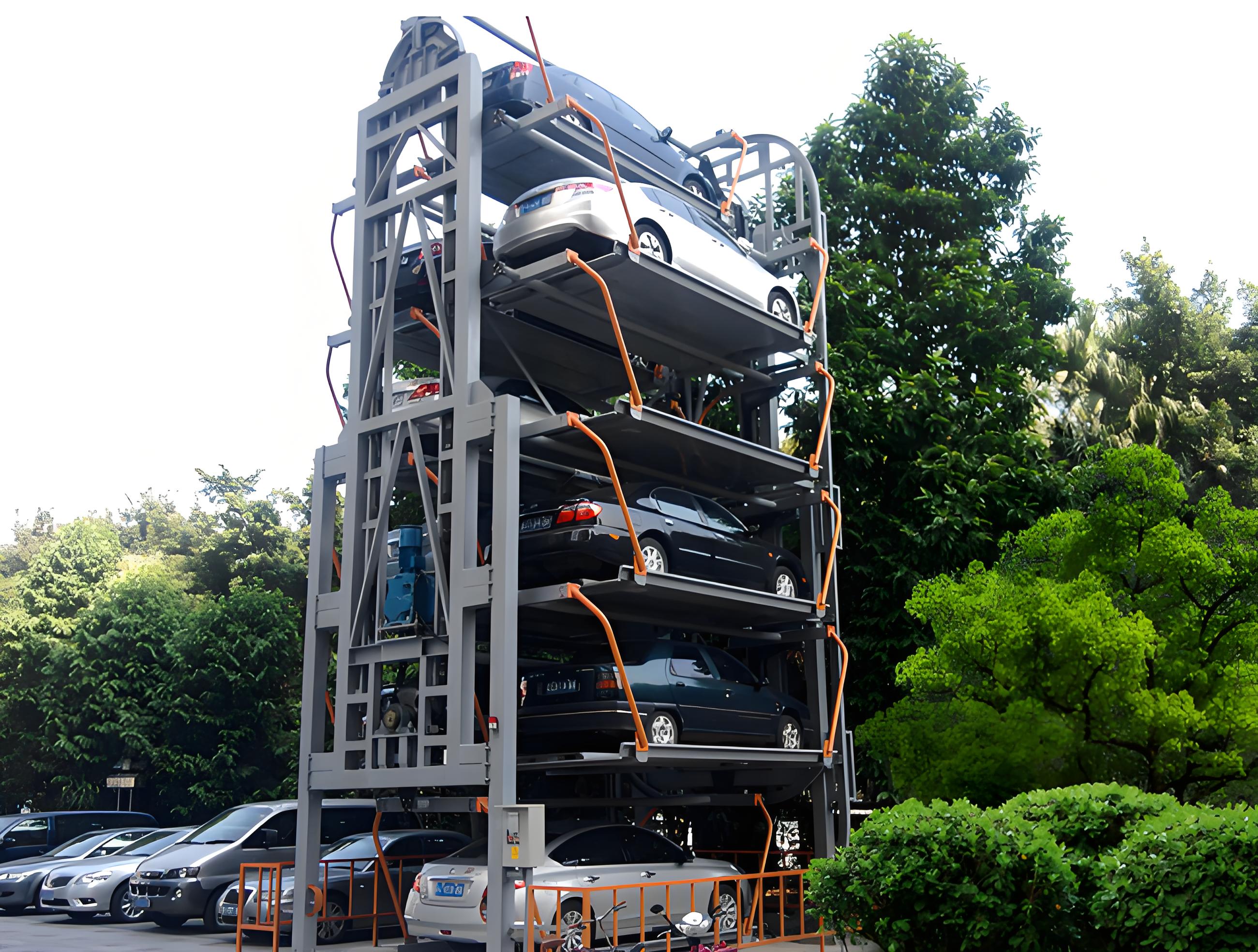
V. Scenario Suitability Summary — Selection Logic for Different Mechanical Parking Garages and Parking Equipment
A comprehensive comparison clearly yields the selection criteria:
For projects with regular, large-area sites, purely self-use supporting functions, and highly budget-sensitive requirements, the lifting-transfer mechanical parking garage and lifting-transfer parking equipment can be chosen, leveraging their advantages of simple civil works and low early-stage cost.
For high-quality projects involving old-community renovation, narrow sites, outdoor open-air conditions, commercial charging, and long-term operation, the vertical circulation parking system should be prioritized. Relying on ultra-high space utilization, extremely simple canopy supporting, an extremely low failure rate, and stable operation capability, the vertical circulation mechanical parking garage has become the preferred parking equipment for commercial mechanical parking investment.
Theoretically, if a vertical circulation parking lot charges more than US$1 per hour, most investments can recover the full cost within two years. With each parking space charging US$1 per hour and running 8 hours a day — a conservative calculation that does not account for turnover rate or nighttime use — one space generates US$8 a day, US$240 a month, and US$2,880 a year, reaching US$5,760 over two years, which already covers the investment cost. In general, vertical circulation equipment has a service life of as long as 25–30 years, after which it becomes a cash cow. However, when investing in a parking lot, the first consideration is the hourly charge, and second, the location of the parking lot and the actual demand.
When selecting a mechanical parking garage and parking equipment, you should not look only at civil works and equipment unit price. You must also weigh supporting cost, land utilization, equipment stability, operation-and-maintenance cost, and long-term revenue capability.
Lifting-transfer parking equipment and the lifting-transfer mechanical parking garage have lower early-stage civil works and equipment costs, but they occupy a large footprint, have low space utilization, high outdoor supporting cost, more failures, and less stable operation than the vertical circulation parking system.
The vertical circulation parking system and the vertical circulation mechanical parking garage, although requiring a slightly higher initial civil works investment, offer high parking density, an extremely small footprint, low canopy cost, few failures from the single-motor structure, stable operation, and effortless maintenance, giving them comprehensive full-cycle cost-effectiveness far beyond traditional equipment. They are currently the most recommended mechanical parking garage and intelligent parking equipment for urban renewal, commercial parking, and long-term investment projects.