


Puzzle Parking vs. Tower Parking: Key Differences in Design, Space, Speed, and Cost
I. Fundamental Differences
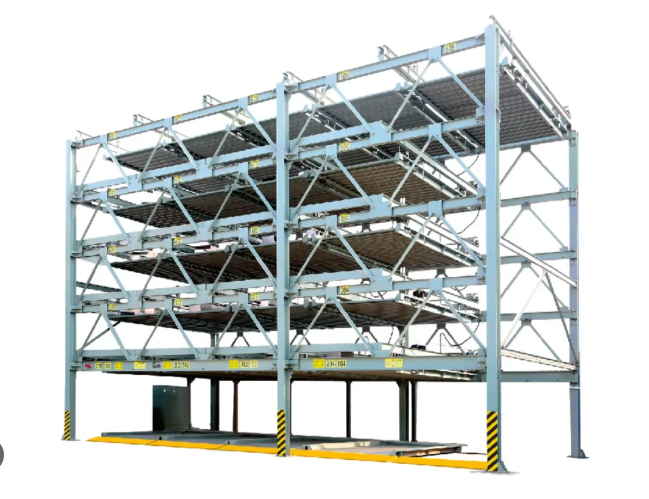
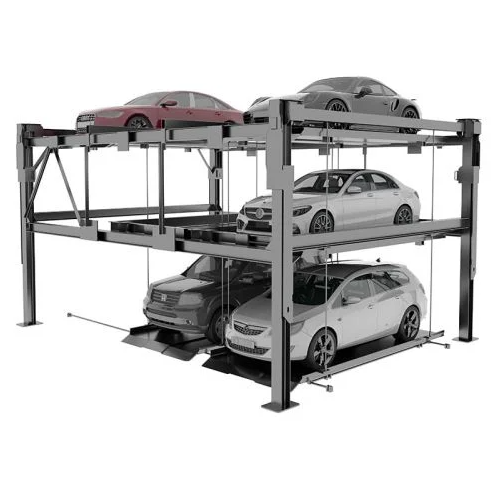
Puzzle Parking System: It retrieves vehicles through two motions—lifting and horizontal shifting. This is a flat-plane + multi-layer translation mode, similar to a jigsaw puzzle. Empty parking spaces are moved back and forth to shift the target vehicle horizontally into the empty slot, which is then lifted or lowered to the entrance/exit for retrieval.
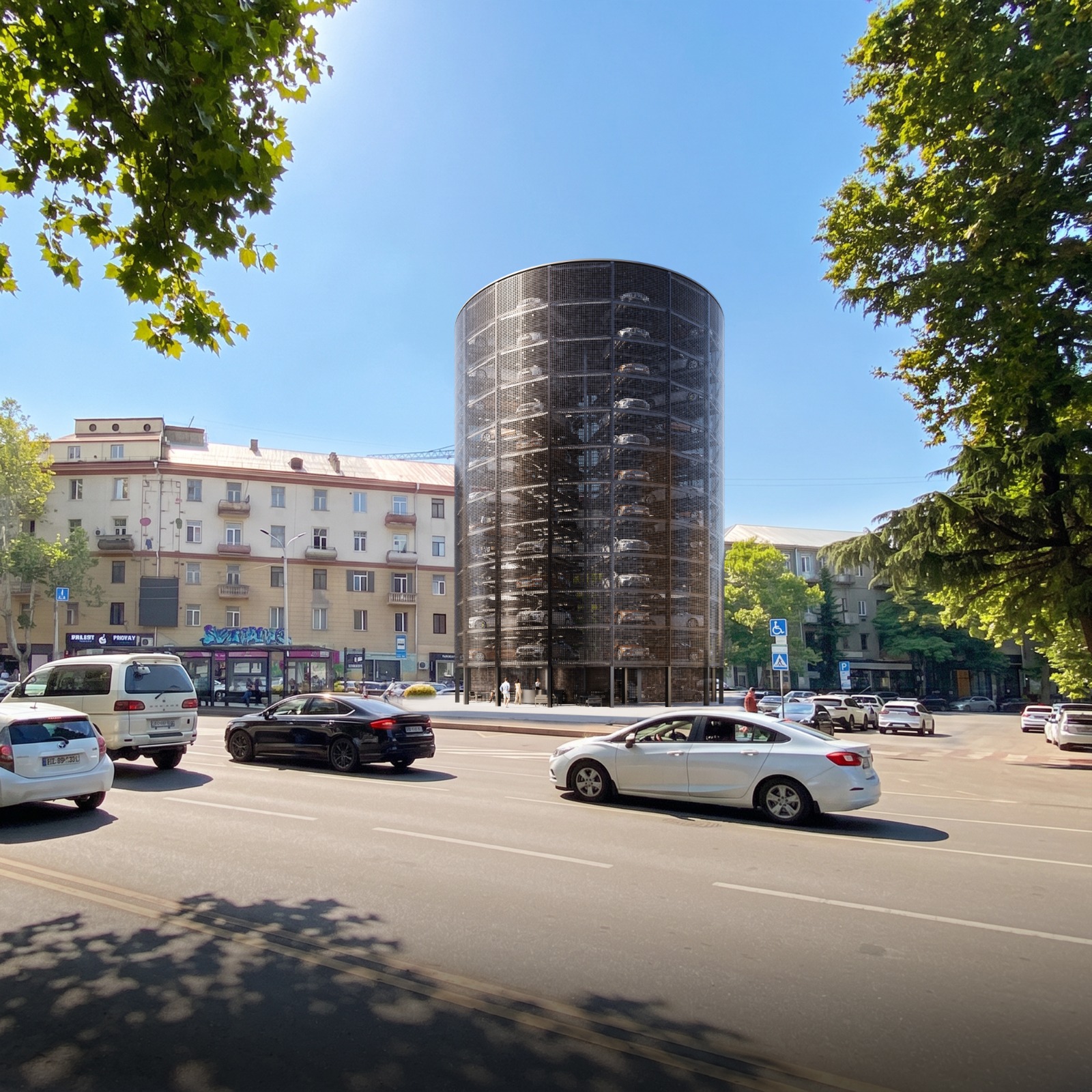
Tower Parking System: It relies on a vertical lifting system to transport vehicles up and down. This is a high-rise, high-density transportation mode, similar to an elevator in a tall building. Vehicles move directly in the vertical direction without the need for large-scale relocation of empty spaces. It requires a smaller footprint and provides more parking spaces per unit area.
II. Working Principle Differences
1. Puzzle Parking System
Each level is equipped with multiple car-carrying pallets that can move up/down and left/right. The system must reserve empty parking spaces. By continuously moving the empty space and shifting other vehicles, the target vehicle is gradually moved to the ground-level exit.
Key Characteristics: Requires vehicle relocation, involves waiting time, higher levels mean more relocation steps, and slower retrieval speed.
2. Tower Parking System
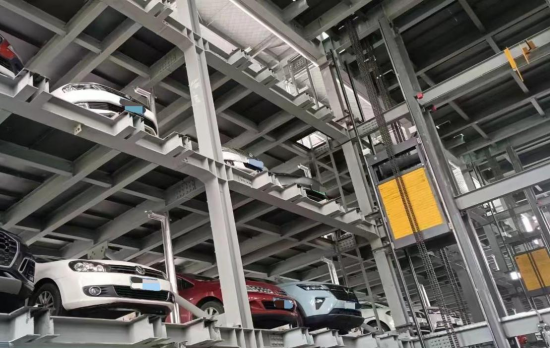
The entire parking structure is an independent high-rise tower with a high-speed vertical elevator at its center. The driver parks the vehicle at the ground-level entrance, and the elevator directly transports the vehicle vertically to the designated level. Throughout the process, no other vehicles need to be moved.
Key Characteristics: No need to move other vehicles, direct access to parking slots, stable speed, consistent efficiency even at high levels.
III. Footprint and Space Utilization Differences
Puzzle Parking System
This is a "spread-out" parking facility with a relatively large footprint, suitable for spacious sites. It is generally limited to 3–7 levels; the higher the level, the lower the efficiency. It is ideal for residential community open spaces, underground garages, rooftop conversions, and projects with ample land.
Tower Parking System
This is a "vertical-growth" parking facility with an extremely small footprint. With only a small plot of land, it can be built to 15 or even 25 levels, providing a massive number of parking spaces. It is ideal for urban core areas, high-value land, confined sites, and projects aiming to significantly increase parking capacity.
IV. Retrieval Speed and User Experience Differences
Puzzle Parking System
Lower-level parking slots offer acceptable retrieval speed, while higher-level slots are significantly slower. This is because multiple empty spaces across several levels must be moved first before the target vehicle can be lifted or lowered. The lifting motors are slow, the steps are numerous, and waiting times are long, making peak-hour queuing and congestion common.
Tower Parking System
The entire process involves direct vertical elevator lifting, with minimal speed difference between low and high levels. The lifting speed is fast, operation is stable, and efficiency is high, with almost no long waiting times. The user experience is relatively better. From a professional perspective, for towers of 15–20 levels, if there are too many vehicles, waiting time may also increase.
V. Cost, Civil Engineering, and Construction Differences
Puzzle Parking System
It features a simple structure, lightweight steel construction, low foundation requirements, affordable cost, fast construction, and low civil engineering expenses. It can be built and expanded in phases, offering very high flexibility and low maintenance costs.
Tower Parking System
As a high-rise building-type facility, it has an enormous self-weight, imposing extremely high demands on foundation, load-bearing capacity, steel structure, fire protection, ventilation, and electrical systems. The overall investment is high, approvals are stringent, and the construction cycle is long. Once completed, it cannot be expanded and is permanently fixed in scale.
VI. Fire Safety Differences
Puzzle Parking System
It adopts an open-frame structure with excellent ventilation and high visibility. Fire protection requirements are conventional and well-established, making post-construction fire inspections easier to pass.
Tower Parking System
It features a fully enclosed tower structure, which is a confined space. It imposes stringent requirements on smoke detection, sprinklers, ventilation, smoke exhaust, and fire compartmentalization. Fire safety standards are higher, and inspections are more rigorous.
VII. Pros and Cons Summary
|
Category |
Puzzle Parking System |
Tower Parking System |
|
Advantages |
|
Extremely land-efficient with very high parking density |
|
Low site requirements and flexible layout |
Fast retrieval speed and superior user experience |
|
|
Simple maintenance and low failure rate |
Clean appearance with a premium, high-end look |
|
|
Supports phased construction and future expansion |
Stable efficiency even at high levels |
|
|
Disadvantages |
Limited number of levels with average land utilization |
High construction cost and large overall investment |
|
Slow retrieval for high-level slots and long waiting times |
High demands on civil engineering, fire protection, and approvals |
|
|
|
Cannot be expanded after completion |
VIII. How to Choose the Right Parking System
Choose a Puzzle Parking System if you have sufficient land, a limited budget, and require a moderate number of levels (below 6 levels).
Choose a Tower Parking System if you have limited land, require a large number of parking spaces, and prioritize efficiency and a premium image.
 |
 |