


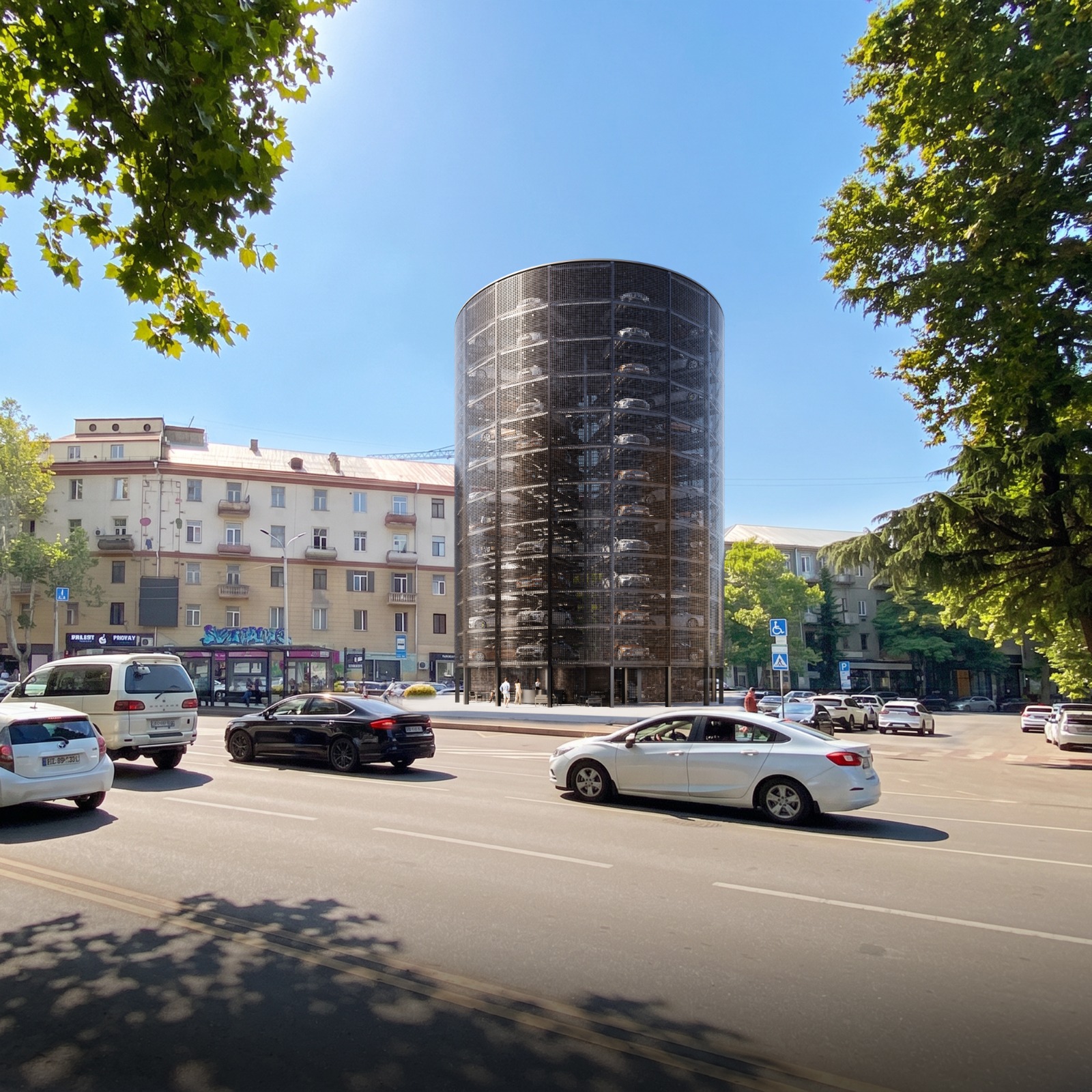
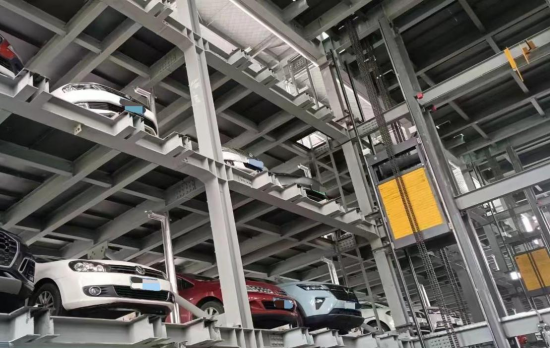
Intelligent Multi-Level Parking Garage vs. Cast-in-Place Concrete Parking Garage
1. What Are We Comparing?
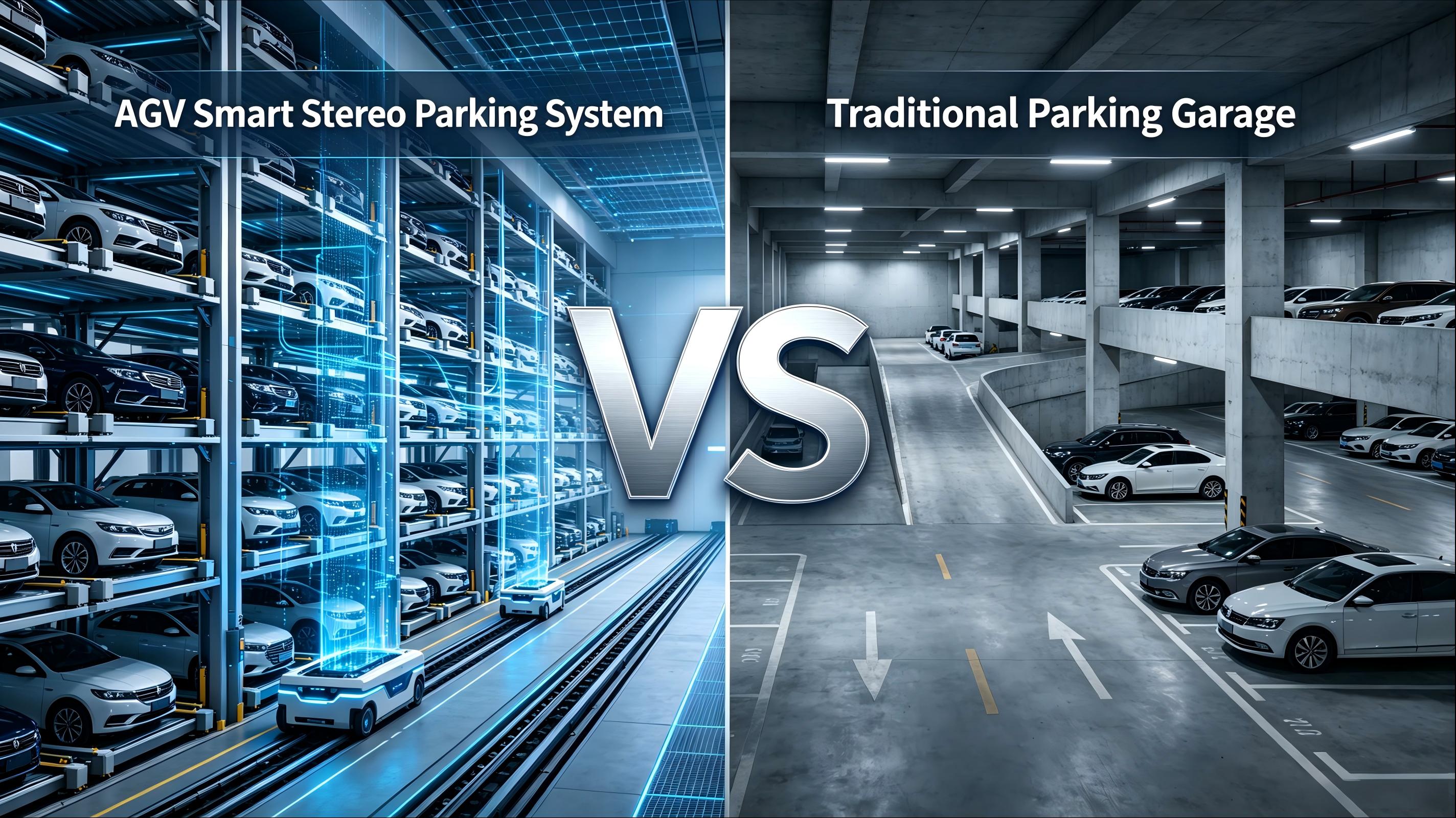
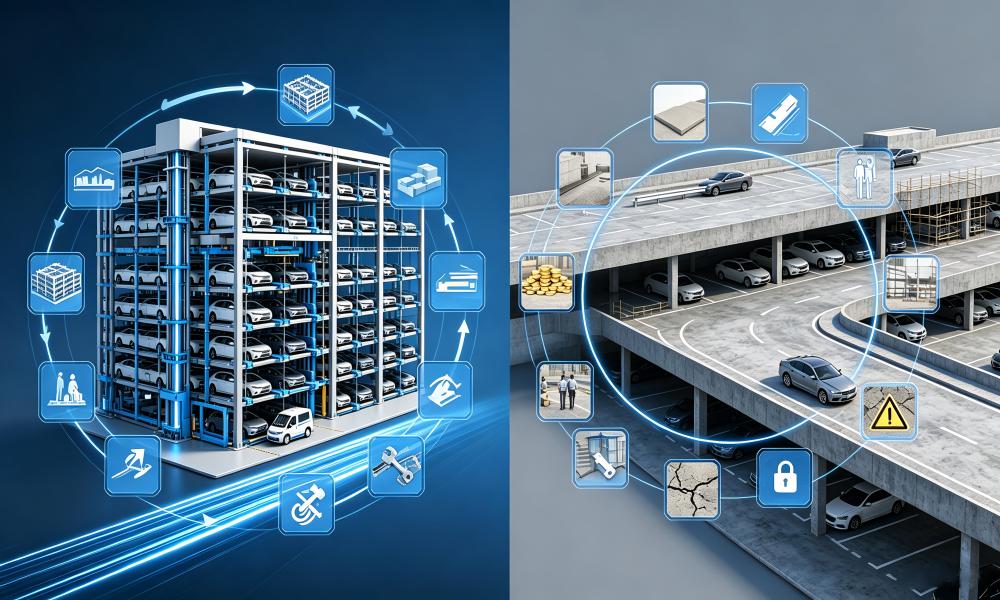
Cast-in-Place Concrete Parking Garage (Traditional): Reinforced concrete poured and cured on-site. Open layout with shared pedestrian-vehicle access. Drivers park their own cars. This is the conventional civil-engineering approach to parking.
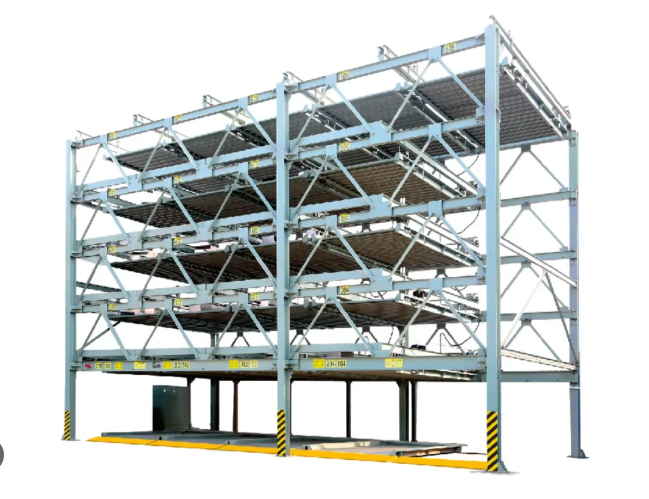
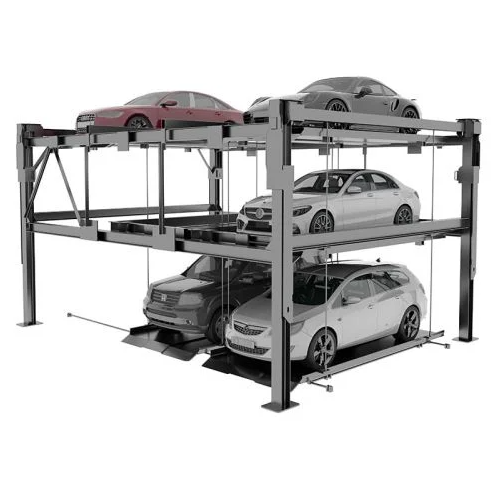
Intelligent Multi-Level Parking Garage (New Generation): Steel-framed modular structure paired with a fully automated mechanical retrieval system. No drive aisles, no ramps, no pedestrian-vehicle mixing. A high-density, fully automated smart parking system.
2. Eight Core Comparisons
2.1 Land Utilization (The Most Critical Gap)
|
Metric |
Cast-in-Place Concrete Garage |
Intelligent Multi-Level Garage |
|
Drive aisles |
Must reserve lanes, turning radiuses, walkways, and door-clearance space |
Eliminates all traffic aisles; vertical dense stacking |
|
Capacity |
Lowest space count per square meter |
2.5-3x more parking spaces on the same footprint |
Takeaway: On tight urban plots, old-city renovations, and prime commercial sites, an intelligent multi-level garage is the only viable option.
2.2 Construction Timeline and Speed to Operation
|
Metric |
Cast-in-Place Concrete Garage |
Intelligent Multi-Level Garage |
|
Method |
On-site wet construction: pouring + curing, weather-dependent |
Factory-prefabricated, on-site assembly; civil works and equipment produced in parallel |
|
Total timeline |
12-18 months; slow payback, capital tied up for long |
3-5 months; fast completion, fast revenue |
Need to hit a deadline and start earning? The intelligent garage gets you operational in a fraction of the time.
2.3 Total Construction Cost
|
Metric |
Cast-in-Place Concrete Garage |
Intelligent Multi-Level Garage |
|
Earthwork |
Heavy excavation, foundation pits, large-formwork concrete, high material waste |
Minimal civil footprint; factory-standardized production with low waste |
|
Overall investment |
High hidden costs; expensive total build |
10%-20% lower total investment for the same space count |
The bigger the project, the more pronounced the cost advantage of the intelligent multi-level garage becomes.
2.4 Operations and Labor Cost
|
Metric |
Cast-in-Place Concrete Garage |
Intelligent Multi-Level Garage |
|
Staffing |
Manual parking guidance, toll collection, security patrols, 24/7 staffing |
Fully unmanned: automated storage, automated billing, remote operations |
|
Annual cost |
Labor costs climb year after year; scratch disputes common |
Near-zero on-site labor; no disputes, no scratch incidents |
2.5 User Experience and Throughput
|
Metric |
Cast-in-Place Concrete Garage |
Intelligent Multi-Level Garage |
|
Parking process |
Self-parking, finding spots is difficult, peak-hour congestion |
Drop off at ground level and walk away; system handles the rest |
|
Environment |
Damp, dim, exhaust-filled; frequent bumps and scrapes |
Clean, bright, contactless; premium feel |
|
Retrieval time |
Depends on walking distance and finding your car |
70-150 seconds; car delivered nose-out, drive straight out |
2.6 Smart Features and Upgrade Potential
|
Metric |
Cast-in-Place Concrete Garage |
Intelligent Multi-Level Garage |
|
Intelligence |
Pure civil structure; no smart dispatch, no automated management |
Native PLC smart dispatch, remote monitoring, fault self-check |
|
Integrations |
Cannot adapt to smart parking, unmanned operation, or EV charging upgrades |
Directly integrates EV charging, smart fire systems, reservation parking, big data platforms |
|
Smart city ready |
No |
Yes — fully compliant with smart city standards |
2.7 Structural Life and Long-Term Maintenance
|
Metric |
Cast-in-Place Concrete Garage |
Intelligent Multi-Level Garage |
|
Main structure |
Long-lasting, but prone to water seepage, cracking, surface dusting, and carbonation |
Steel structure: stable, no seepage, no structural cracking |
|
Maintenance |
Annual repairs and renovations; costs rise year over year |
Only routine wear-part replacement; simple, low-cost, low failure rate |
|
Design life |
Varies; concrete degrades |
25+ years |
2.8 Flexibility and Reusability
|
Metric |
Cast-in-Place Concrete Garage |
Intelligent Multi-Level Garage |
|
Structure type |
Fixed building: cannot dismantle, relocate, modify, or expand |
Modular: add levels, expand, reconfigure, relocate, or reuse |
|
Urban renewal fit |
Poor — permanent and immovable |
Excellent — adapts to phased construction and city renewal projects |
3. Pros and Cons at a Glance
Cast-in-Place Concrete Parking Garage
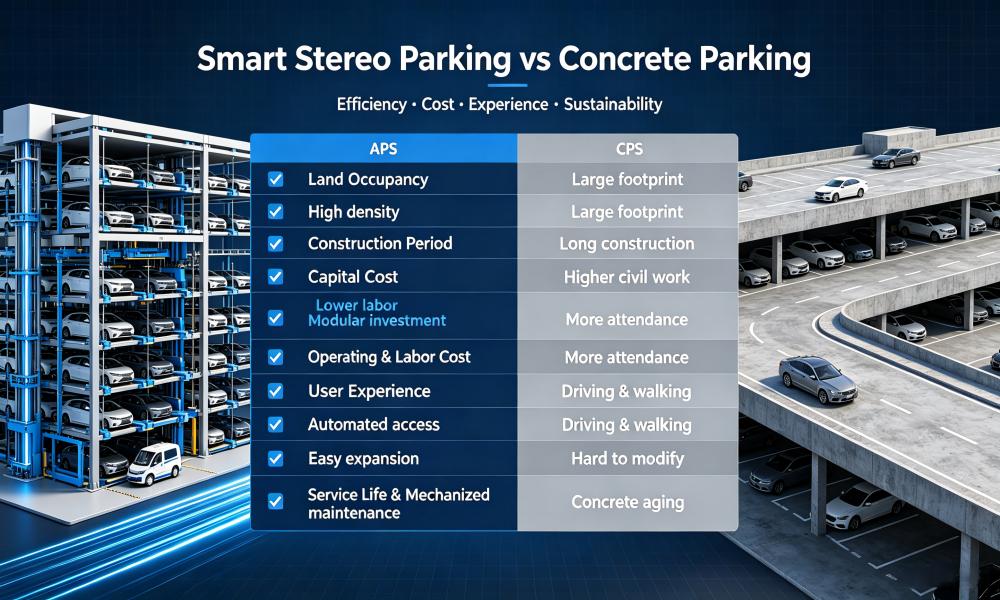
Strengths: Strong monolithic structure, concrete fire resistance, no mechanical equipment to break down.
Weaknesses: Large footprint, few spaces, long construction, high cost, high labor, poor user experience, no smart upgrade path, tedious maintenance.
Intelligent Multi-Level Parking Garage
Strengths: Ultra-high land efficiency, fast construction, lower total cost, unmanned operations, zero-accident safety, premium user experience, smart-ready, reconfigurable and expandable.
Weaknesses: Requires professional equipment maintenance; mechanical components can fail.
4. Selection Guide: Which One Fits Your Project?
Choose the Intelligent Multi-Level Parking Garage when:
- Your site is in a city core, commercial district, hospital zone, office district, or premium residential area
- Land is scarce, the parking gap is large, and large-scale civil works are not feasible
- You need fast completion and fast operational revenue
- You want unmanned management and low operating costs
- Your project needs EV charging, smart parking, or a premium architectural image
- It is an old-community renovation or a small-site capacity expansion
Choose the Cast-in-Place Concrete Parking Garage when:
- Your site is in a suburb with ample land and a limited budget for standard parking provision
- Traffic is light, there is no need for smart features, and the site will not be renovated long-term
5. Final Verdict
Cast-in-place concrete garages suit projects with plenty of land, modest budgets, no time pressure, and basic requirements.
Intelligent multi-level garages fit projects that demand space efficiency, speed, long-term returns, and smart capabilities. They are the mainstream trend and the optimal solution for modern urban parking construction.
This comparison is based on industry data and real-world parking projects. Construction timelines, costs, and performance metrics are indicative and may vary by project specifications, regional regulations, and market conditions.