


How Much Does an Automated Parking System Cost?
Quick Answer: What Does an Automated Parking System Cost?
There is no single universal price per parking space. A preliminary budget normally includes equipment, foundation or civil works, installation and commissioning, electrical and safety systems, weather protection for outdoor projects, transport, local approvals, and taxes or duties. Equipment-only prices can therefore be substantially lower than a fully installed project budget.
The figures in this article are budgetary reference ranges from the source material supplied for this guide. They are not fixed public quotations. Final pricing depends on the country, project size, vehicle dimensions, load capacity, number of levels, site conditions, automation scope, delivery terms, and local regulations.
1. Semi-Automatic vs. Fully Automatic Parking Systems
Semi-automatic mechanical parking
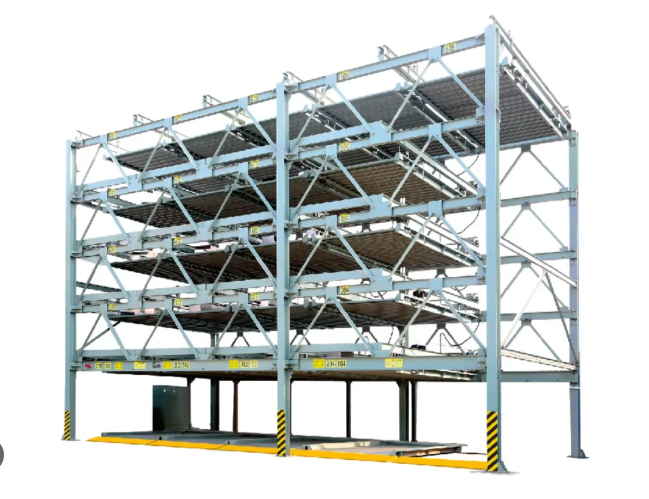
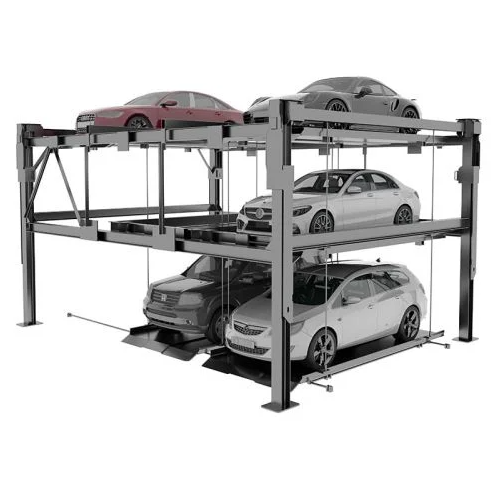
In a semi-automatic system, the driver enters or exits the vehicle at the parking pallet or operating bay, while the equipment performs mechanical lifting, sliding, or rotation. Puzzle parking, simple lifting systems, and many rotary systems are commonly evaluated in this category. They are often considered for residential retrofits, industrial parks, small and medium-sized projects, and outdoor sites where cost and installation flexibility are priorities.
Fully automatic parking
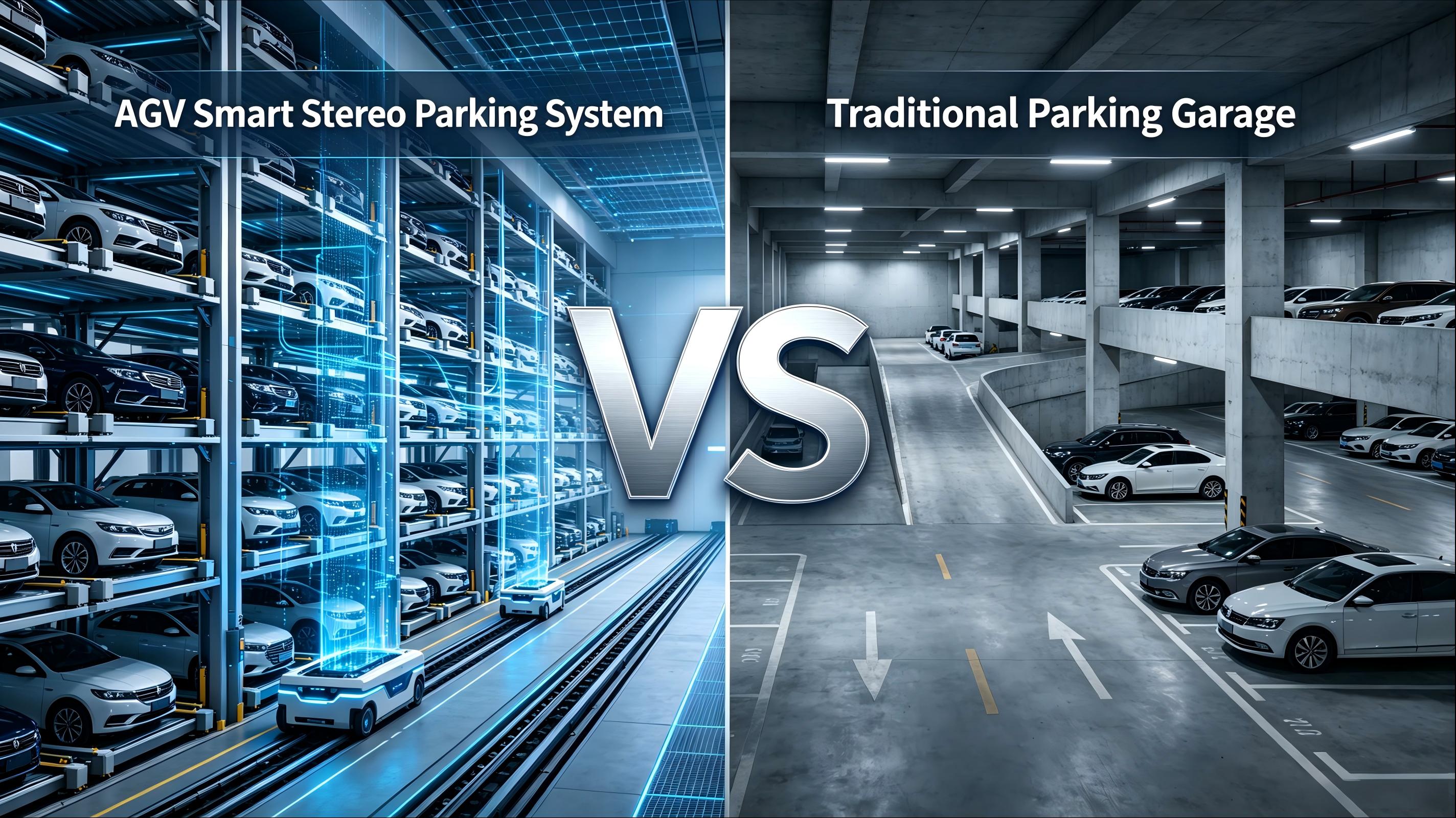
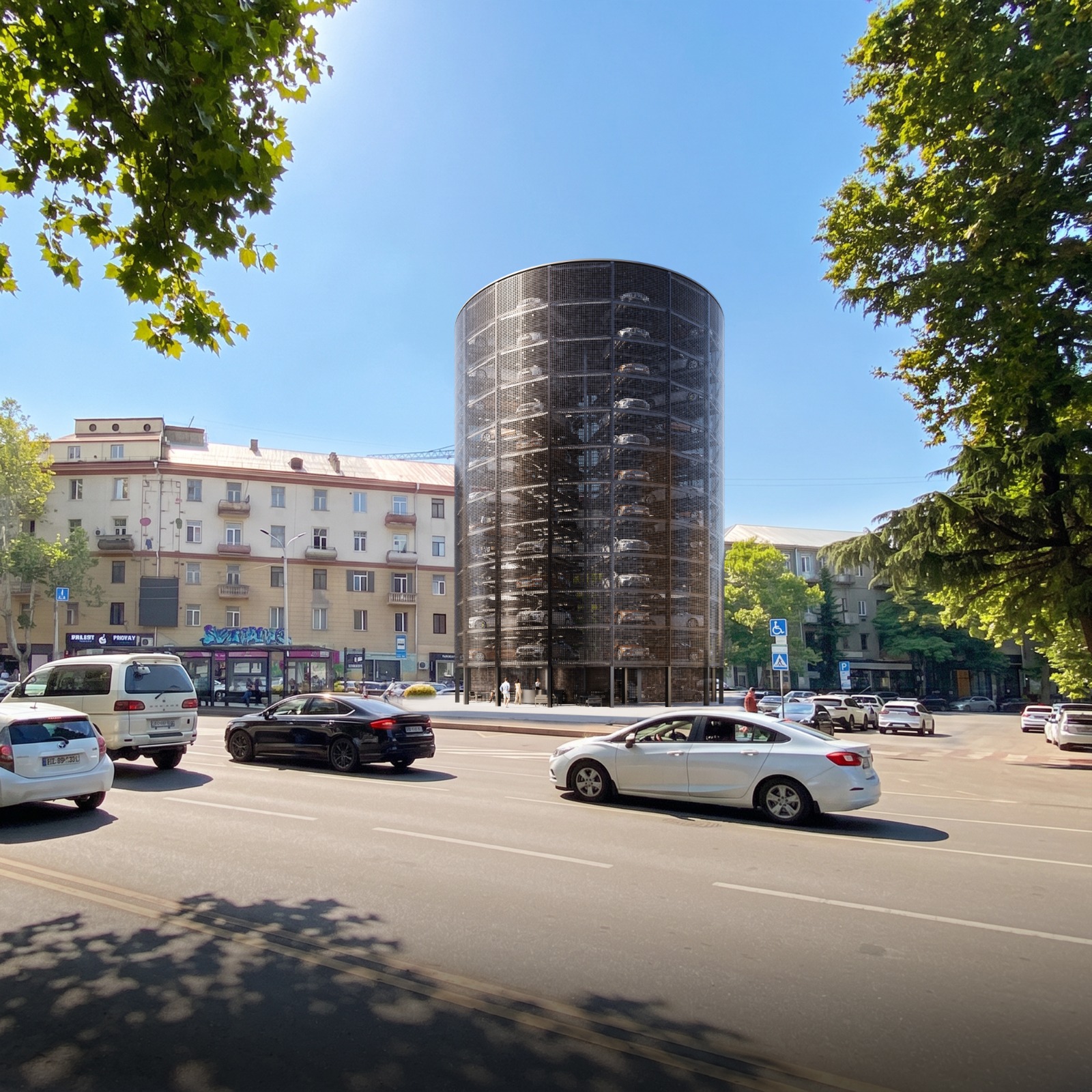
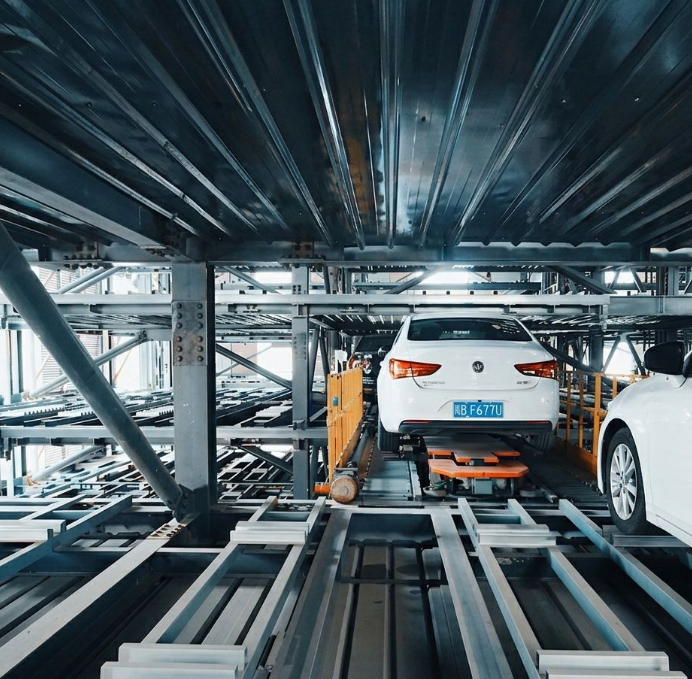
In a fully automatic system, the driver leaves the vehicle in an entry or transfer bay and the equipment completes the internal transfer without people entering the operating area. Robotic, tower, plane-moving, and aisle-stacking solutions may fall into this category depending on their actual configuration. These systems can suit hospitals, commercial complexes, transport facilities, high-density urban sites, and projects requiring more controlled access and higher automation.
A supplier should confirm the automation classification for the exact model and project configuration. A system with an electric motor or PLC is not automatically a fully automatic parking garage.
2. Equipment Cost by System Type
The table below separates the system types by their typical operating category in the supplied website materials. The ranges are equipment-only budget references and should not be interpreted as installed project prices.
|
Operating category |
System type |
Indicative equipment cost per space |
Typical planning context |
|---|---|---|---|
|
Semi-automatic |
Puzzle parking system |
US$1,700–US$3,600 |
Residential communities, industrial parks, retrofit projects |
|
Semi-automatic |
Rotary parking system |
US$4,200–US$5,600 |
Narrow sites, residential towers, offices, commercial projects |
|
Fully automatic |
Plane-moving / aisle-stacking system |
US$4,200–US$8,400 |
Commercial complexes and projects requiring automated transfer |
|
Fully automatic |
Tower parking system |
US$7,000–US$9,800 |
Land-scarce urban sites and high-density parking |
|
Fully automatic |
AGV or robotic parking system |
US$5,600–US$11,200+ |
High-end commercial and fully unmanned applications |
Why the range is wide: the same system family can use different vehicle loads, pallet sizes, numbers of levels, controls, fire-protection interfaces, finishes, and entry/exit layouts. A 20-space project may also have a different per-space cost from a 100-space project because engineering, mobilization, and commissioning costs are distributed across a different number of spaces.
3. Civil Works and Foundation Costs
Mechanical parking equipment transfers substantial loads to the ground. Before a supplier confirms the equipment layout, the project should evaluate slab strength, foundation conditions, drainage, finished floor levels, underground utilities, seismic or wind requirements, and local building rules.
|
Site condition |
Typical scope |
Budget reference per space |
|---|---|---|
|
Existing slab meets load requirements |
Ground leveling and anchor-bolt embedment |
US$140–US$280 |
|
New reinforced concrete slab required |
New slab, reinforcement, and related foundation works |
US$350–US$700 |
|
Poor soil or difficult ground conditions |
Additional reinforcement or pile-foundation works |
US$700+ |
These figures are preliminary planning references only. A geotechnical survey and structural review are essential before using them in a formal investment budget. A weak slab, soft soil, high water table, backfill, or difficult drainage condition can change the civil-work scope substantially.
4. Outdoor Canopy and Weather Protection
Outdoor systems may require a canopy or enclosure to protect the steel structure, motors, control cabinets, and electrical components from rain, sunlight, and corrosion. The canopy footprint should include overhangs, side protection, access areas, and maintenance clearance—not only the parking-pallet area.
|
Canopy option |
Indicative cost per m² |
Planning note |
|---|---|---|
|
Steel structure with color-steel panel |
US$28–US$36 |
Cost-oriented option commonly used for outdoor projects |
|
Tensile membrane structure |
US$42–US$84 |
Architectural appearance and weather protection |
|
Premium aluminum panel or glass |
US$56–US$98 |
Higher-end finish for commercial or landmark projects |
For an illustrative 40-space outdoor puzzle project, the source material assumes approximately 250–300 m² of canopy coverage. The actual quantity must be measured from the site layout and architectural requirements.
5. Electrical, Safety, Design, and Inspection Costs
A complete parking project may also require power distribution, grounding, control wiring, fire-protection interfaces, structural and electrical drawings, installation, commissioning, operator training, and special-equipment inspection. Whether each item is included in the equipment quote depends on the supplier’s scope and the delivery terms.
|
Cost item |
Planning reference |
What to confirm |
|---|---|---|
|
Electrical system |
Approximately US$70 per space in the source example |
Power capacity, cable route, grounding, control cabinet, and local electrical standard |
|
Fire protection |
Project-specific |
Sprinklers, smoke detection, ventilation, fire separation, and authority requirements |
|
Design and drawings |
Project-specific |
Structural, electrical, fire, civil, and approval drawings |
|
Inspection and acceptance |
Approximately US$210 per space in the source example |
Local inspection authority, certification, testing, and acceptance procedure |
|
Combined supporting budget |
Approximately US$280 per space in the source example |
Use only as a preliminary allowance; do not treat as a universal rate |
6. Illustrative Project Budget: 40-Space Outdoor Puzzle System
The following example uses a representative 40-space, three-level outdoor puzzle parking project. It is an illustrative budget model, not a quotation for every 40-space project. It assumes that the listed scope is required and that the project has the site, vehicle, regulatory, and delivery characteristics described in the final quotation.
|
Cost category |
Illustrative total |
Share of total |
|---|---|---|
|
Parking equipment |
Approximately US$98,000 |
75.7% |
|
Civil and foundation works |
Approximately US$14,000 |
10.8% |
|
Steel-structure canopy |
Approximately US$11,200 |
8.6% |
|
Electrical and grounding works |
Approximately US$2,100 |
1.6% |
|
Fire protection, design, and inspection |
Approximately US$4,200 |
3.2% |
|
Total project budget |
Approximately US$129,500 |
Approximately 100% |
In this example, US$129,500 divided by 40 spaces equals US$3,237.50, or approximately US$3,238 per space. If rounded to the nearest ten dollars, the figure is approximately US$3,240 per space. The displayed percentages are rounded, so they may not add to exactly 100.0%.
7. Factors That Change the Final Price
Project scale
Engineering, mobilization, transport, installation, and commissioning costs are distributed differently in small and large projects. Ask the supplier to separate fixed and variable costs.
Indoor or outdoor installation
Outdoor projects may need canopy, drainage, anti-corrosion treatment, weatherproof controls, and additional site work.
Site geology and existing slab
Foundation reinforcement, excavation, pile work, groundwater control, or demolition can materially change the civil budget.
Automation level and throughput
Robotic transfer, multiple entry/exit bays, scheduling, sensors, and integrated management systems can raise the equipment and maintenance scope.
Vehicle size and load
SUVs, vans, pickups, long-wheelbase vehicles, and higher loads may require larger pallets or stronger structures.
Customization and finishes
Cladding, lighting, architectural panels, paint systems, signage, and user interfaces affect both equipment and construction cost.
Logistics and local compliance
Transport distance, port handling, installation access, import duties, local engineering, inspection, and certification requirements vary by market.
8. What Is Included in an Equipment-Only Quote?
Before comparing two supplier prices, ask both suppliers to identify whether the quote includes or excludes the following items:
- Main steel structure, pallets, motors, drives, and control system
- Delivery terms such as EXW, FOB, CIF, or delivery to site
- Installation, commissioning, operator training, and spare parts
- Civil works, foundation, drainage, canopy, and architectural enclosure
- Electrical distribution, grounding, fire protection, ventilation, and lighting
- Local permits, inspection, certification, taxes, customs, and insurance
- Warranty period, response time, preventive maintenance, and long-term service
9. How to Request a Preliminary Budget
A supplier can prepare a more useful preliminary estimate when the project brief includes the following information:
- Project country, city, and site address
- Required parking capacity and expected daily traffic
- Site dimensions, available height, access roads, and existing drawings
- Indoor or outdoor installation and current slab or foundation information
- Vehicle types, maximum dimensions, weight, and required clearance
- Preferred operation: semi-automatic mechanical parking or fully automatic transfer
- Target delivery date, installation scope, and local approval requirements
10. Frequently Asked Questions
What is the cheapest type of automated parking system?
In the supplied reference table, puzzle parking has the lowest equipment-only range. However, the cheapest equipment is not always the lowest total project cost. Site preparation, capacity, retrieval requirements, vehicle dimensions, and local approvals must also be considered.
How much does a fully automatic parking garage cost per space?
The supplied reference ranges place tower, plane-moving, aisle-stacking, and robotic systems in different equipment-only bands. A fully installed budget can be significantly higher after civil works, fire protection, controls, installation, inspection, transport, and taxes are included.
Does the equipment price include installation?
Not necessarily. Some quotes cover manufacturing only, while others include installation, commissioning, training, or spare parts. Confirm the exact Incoterm and scope of supply before comparing prices.
Is outdoor parking more expensive than indoor parking?
It can be, because outdoor projects may require a canopy, drainage, corrosion protection, weatherproof electrical components, and additional civil work. The difference depends on the site and design rather than a universal percentage.
How long does installation take?
Installation time depends on equipment quantity, civil-work readiness, shipping, site access, local inspection, and commissioning. A supplier should provide a project schedule after reviewing the site and scope; the equipment-installation period should not be confused with the full approval and construction timeline.
What maintenance budget should be planned?
Maintenance depends on equipment type, operating frequency, local service capability, spare parts, and the maintenance contract. Ask for a preventive-maintenance schedule and a written service quotation instead of applying a generic percentage.
Can I get a project-specific quote?
Yes. Submit the country, site dimensions, desired capacity, vehicle sizes, installation environment, and required automation level. Maihaisheng can then review the project scope and prepare a preliminary solution and budget.
11. Key Takeaways
- Equipment cost is only one part of the total parking-project budget.
- Semi-automatic and fully automatic systems should be compared by operating method, site requirements, throughput, and safety scope—not only by the number of levels.
- Civil works, canopy, electrical systems, fire protection, inspection, logistics, and local compliance can materially affect the final price.
- The US$129,500 example is an illustrative 40-space outdoor puzzle-system budget and should not be used as a universal quotation.
- A site-specific preliminary design is the fastest way to turn a broad price range into a useful project budget.
Need a preliminary budget for your project?
Contact Maihaisheng for a project-specific parking solution and budget estimateProduct categories: Puzzle Parking | Tower Parking | Plane-Moving Parking | About Maihaisheng