


Fully Automatic vs Semi-Automatic Parking Systems: Key Differences, Pros & Cons, and Complete Selection Guide
In the mechanical parking garage industry, fully automatic parking systems and semi-automatic parking systems are the two most dominant solutions available today. Many developers, property managers, and engineering teams struggle to accurately distinguish between the two when selecting equipment. Making decisions based solely on price often leads to mismatched site conditions, insufficient throughput capacity, compliance issues during inspection, and unexpectedly high long-term maintenance costs.
This article is based on industry standards including GB/T 26559 (Classification of Mechanical Parking Equipment) and JGJ/T 326 (Technical Specification for Mechanical Parking Garages). It systematically analyzes the core differences between fully automatic and semi-automatic parking systems across multiple dimensions: core principles, operation methods, space utilization, operational efficiency, safety performance, construction and maintenance costs, and applicable scenarios. Our goal is to help project stakeholders make fast, data-driven, and scientifically sound equipment selection decisions.
1. Core Definitions: How Fully Automatic and Semi-Automatic Parking Systems Differ
According to Chinese and international standards, the fundamental difference between these two types of equipment does not lie in the number of parking levels or external appearance. Instead, it lies in the human-vehicle interaction model and the vehicle transfer mechanism. This is the root cause of all other differences between the two systems.
1.1 Semi-Automatic Parking System (Human-Machine Collaborative Parking)
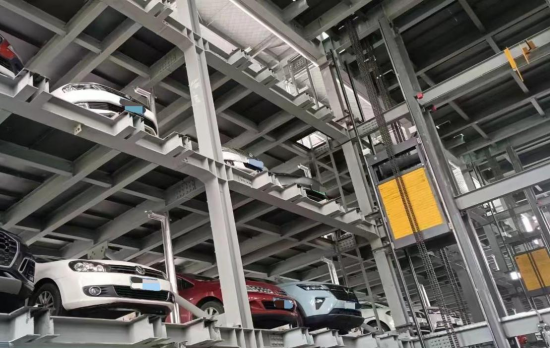
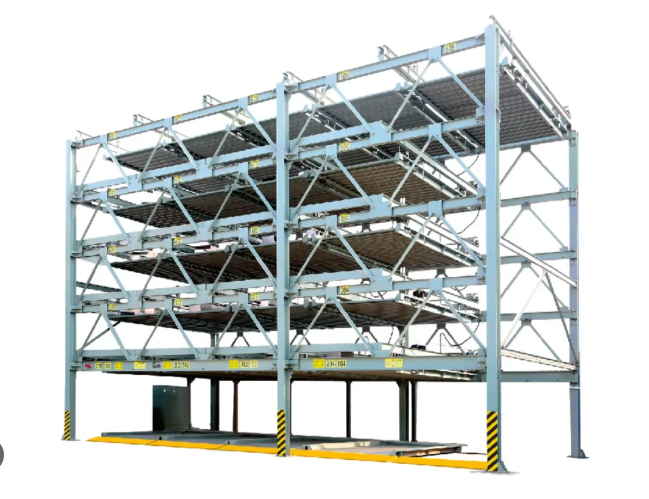
A semi-automatic parking system is a partially automated, human-assisted parking solution. The entire system does not include an independent robotic transfer mechanism. Its core operating logic is: manual parking + mechanical shifting.
The driver must drive or reverse the vehicle onto a parking pallet and position it precisely. After the driver has fully exited the operating area, the system is activated via card swipe, button press, or QR code scan. The mechanical structure then performs lifting and horizontal traversing movements to store or retrieve the vehicle. The garage has an open-frame structure that allows personnel to enter the equipment area. Accessing upper-level parking spaces requires shuffling vacant positions to complete the transfer sequence.
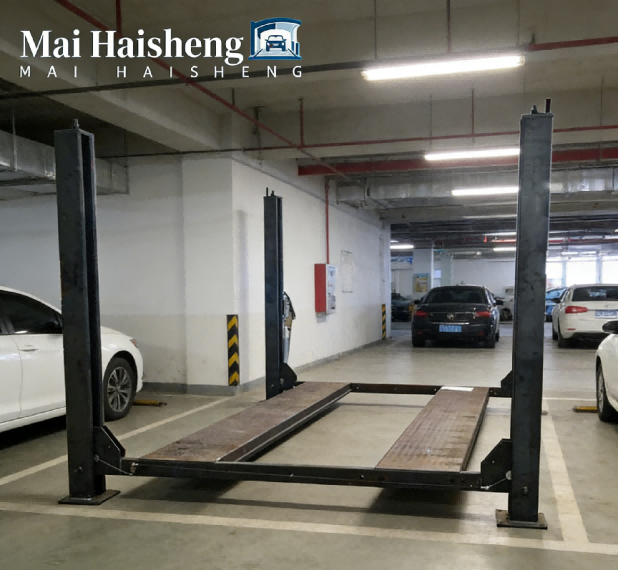
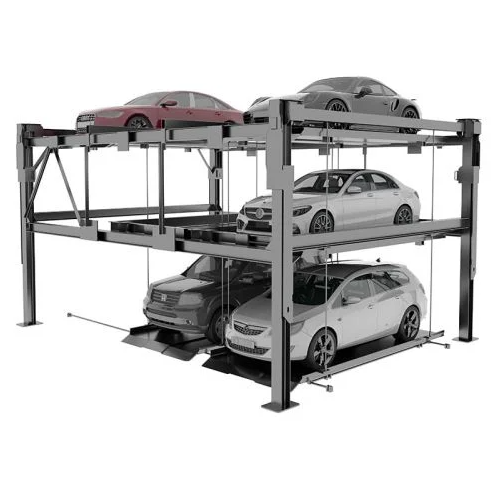
Common system types: Puzzle Parking System (PSH), Simple Parking System, and Rotary Parking System. These are most commonly used in residential community retrofits and small-to-medium sized supporting parking facilities.
1.2 Fully Automatic Parking System (Unmanned Smart Warehouse Parking)
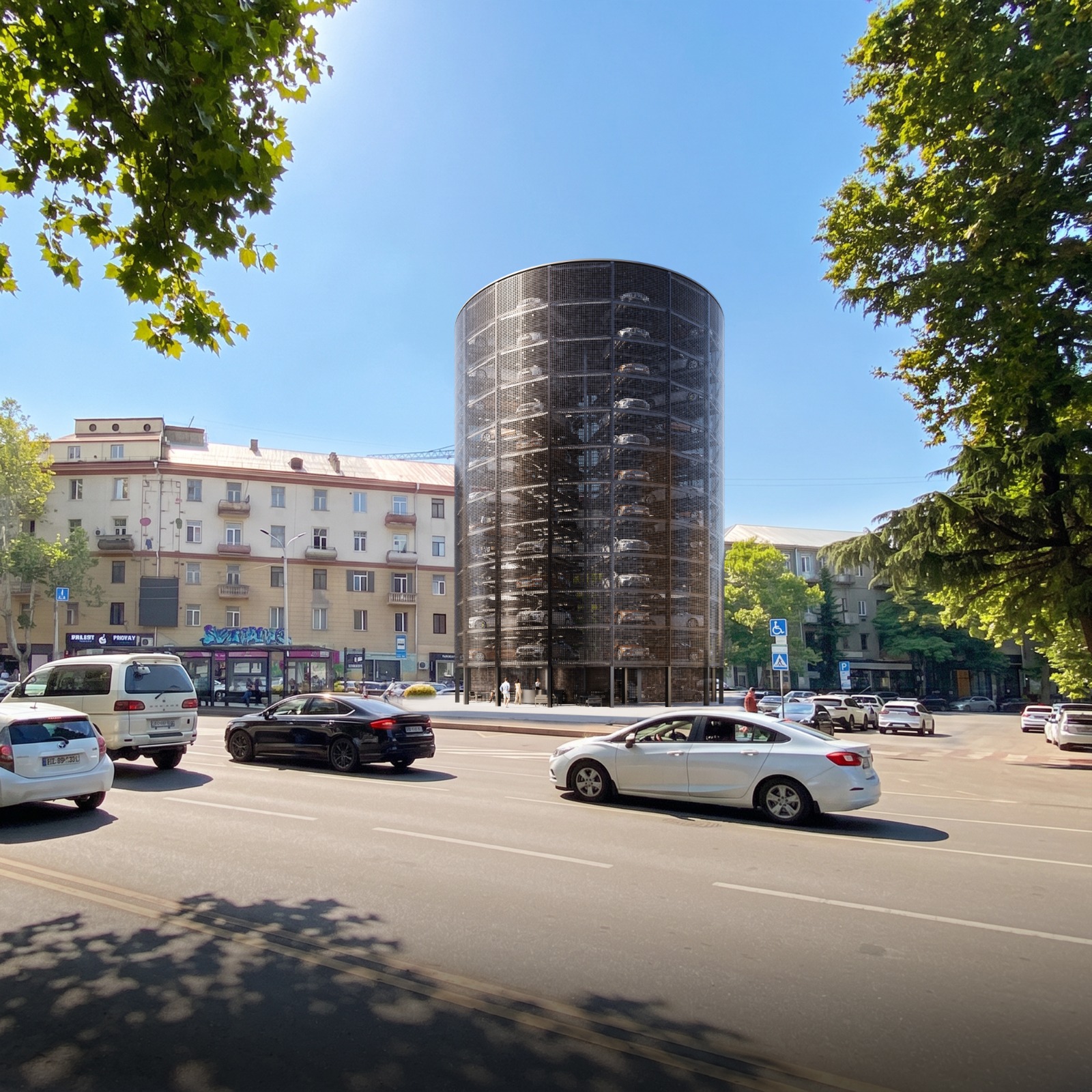
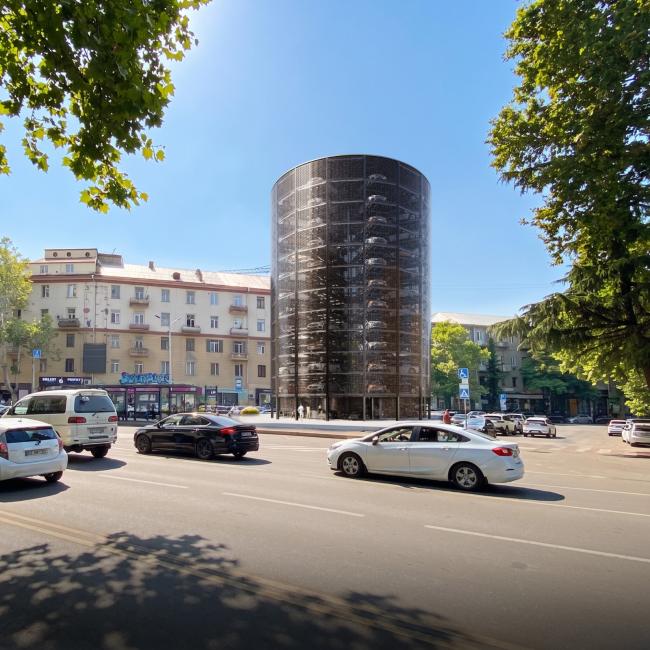
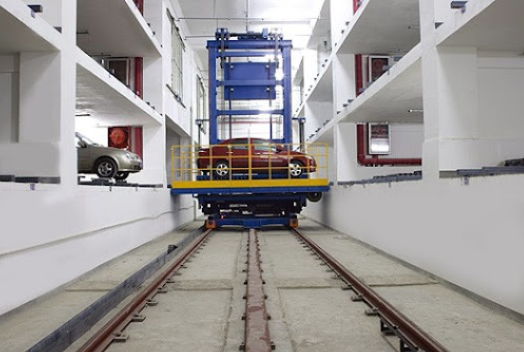
A fully automatic parking system is a completely automated, unmanned parking solution. Its core operating logic is: physical separation of people and vehicles + fully automatic robotic transfer.
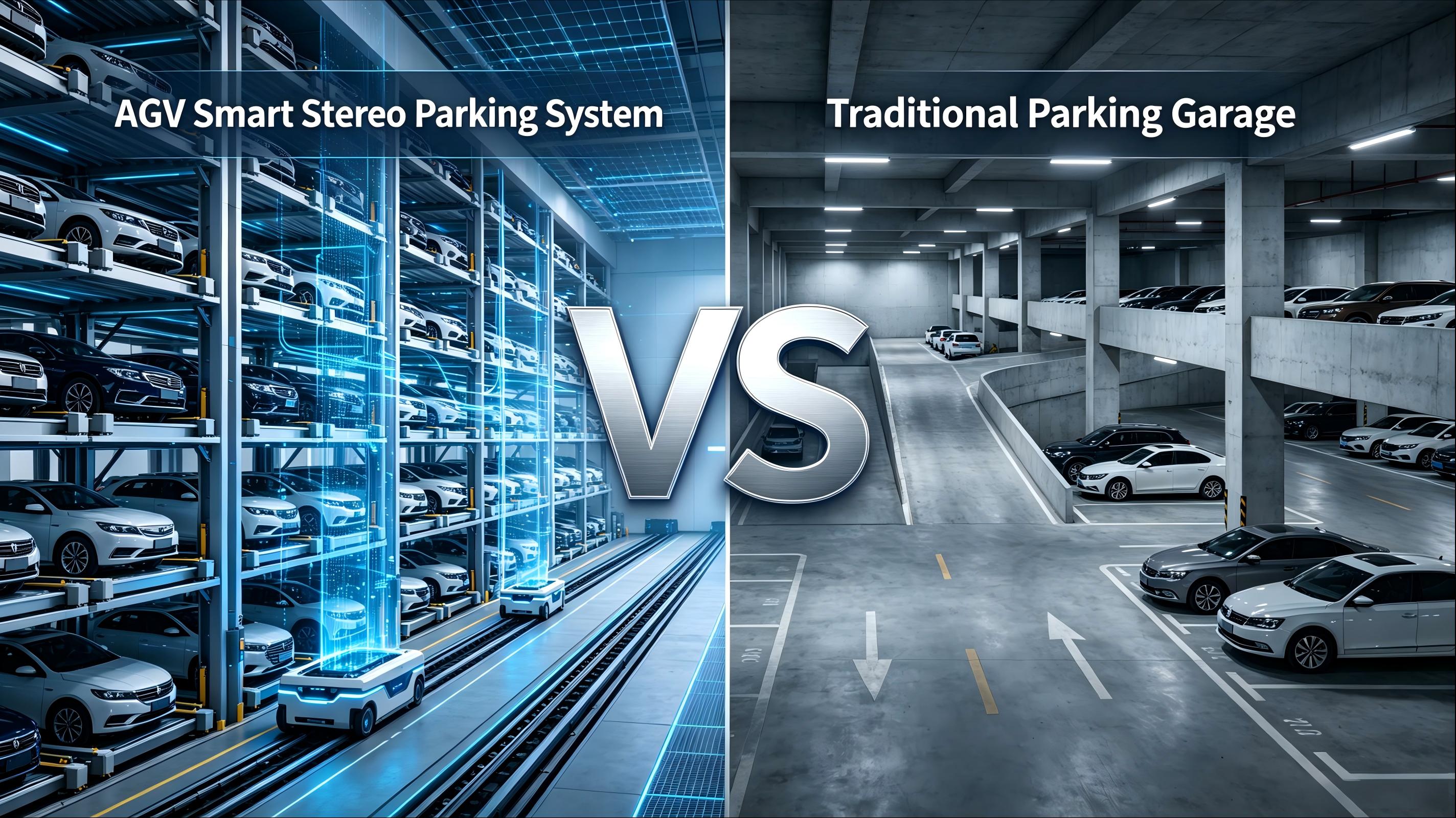
The vehicle only needs to be driven into an independent entry/exit cabin (transfer bay). The driver parks the car, exits, and leaves immediately — no precise alignment or manual adjustment of the vehicle position is required. The entire garage is fully enclosed and prohibits personnel from entering the internal operating area. The system automatically completes the entire process of vehicle detection, pickup, transfer, storage, sorting, and retrieval using precision equipment such as stackers, intelligent transfer devices, and traversing shuttles — all without any human intervention. Each parking space operates independently; no vehicle shuffling or position swapping is required, making the scheduling process smarter and more stable.
Common system types: Vertical Parking System (PCS Tower), Aisle Stacking Parking System (PXD), and Plane Moving Parking System (PPY). These are predominantly used in commercial complexes, hospitals, transportation hubs, high-end office buildings, and other large-scale public facilities.
2. Six Key Comparisons: Fully Automatic vs Semi-Automatic Parking Systems
2.1 Operation Method and User Experience
Semi-automatic parking systems: Require a certain level of driving skill. Drivers must reverse into position and straighten the vehicle manually. When retrieving a vehicle from an upper-level space, all lower-level vehicles must be moved out of the way first. During peak hours, this easily leads to queuing, and wait times can be unpredictable. Inexperienced drivers generally have a poor user experience.
Fully automatic parking systems: Have an extremely low operational barrier. They support casual parking — no precise alignment and no reversing required. When retrieving a vehicle, the system automatically turns the car around so it exits facing forward. The system can also pre-schedule vehicles in advance. During peak hours, operations remain orderly and stable, delivering a more standardized experience that is suitable for all driver demographics.
2.2 Site Space and Civil Engineering Compatibility
Semi-automatic parking systems: Use an open-frame structure that requires internal driving lanes, resulting in relatively lower space utilization. Typical constructions have only 2 to 5 levels. The equipment has low civil engineering requirements, can be installed outdoors, and is suitable for retrofitting existing sites. No enclosed machine room or complex fire protection systems are required.
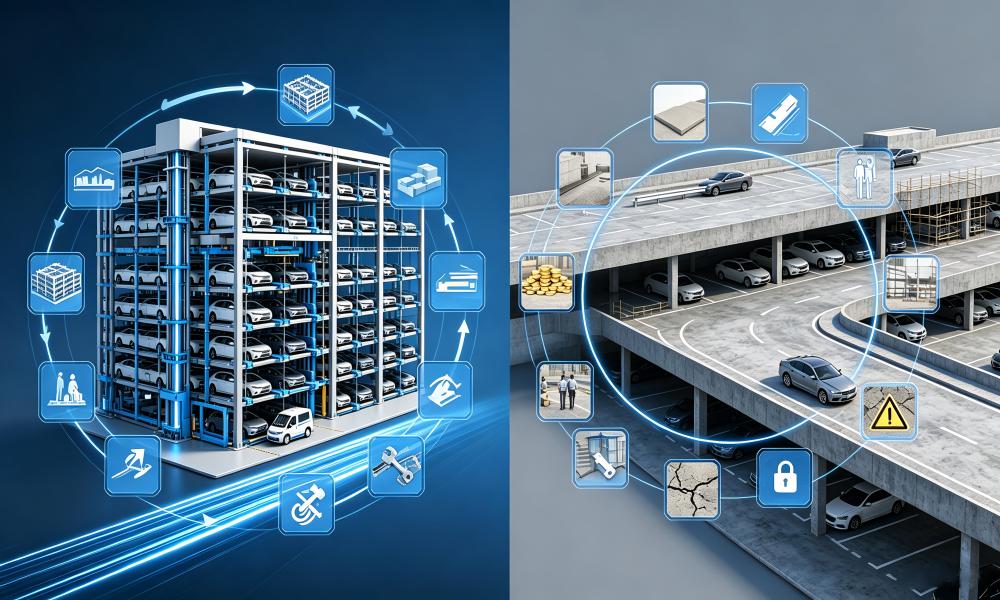
Fully automatic parking systems: Require no internal driving lanes and feature an enclosed machine-room structure. They can be built as ultra-high vertical garages with 5 to 25 levels, improving land utilization by 40% to 80% compared to semi-automatic systems. This makes them ideal for city centers and narrow plots where land is scarce. However, they have higher requirements for structural engineering, machine room enclosure, fire zoning, and ventilation/lighting systems.
2.3 Access Efficiency and Peak-Hour Stability
Semi-automatic parking systems: Offer fast single-vehicle access times, but operate on a "puzzle-style" vehicle-shuffling logic. The more parking spaces and levels there are, the more cascading shuffling steps are required. During morning and evening rush hours or periods of concentrated traffic, efficiency drops significantly, easily causing congestion and backlogs.
Fully automatic parking systems: Their access efficiency is not affected by the number of levels or total parking spaces. The system supports intelligent path planning, parallel access at multiple entry/exit points, and vehicle pre-scheduling. They operate stably under high traffic volume and high-frequency turnover scenarios, with no significant congestion issues.
2.4 Intelligence and Operational Capability
Semi-automatic parking systems: Primarily rely on local, standalone control. They only support basic functions such as card swiping, button operation, and simple payment. They lack cloud-based scheduling, remote reservation, unmanned operation, and other intelligent features. Their low level of automation makes them difficult to adapt to modern smart parking facility management requirements.
Fully automatic parking systems: Equipped with a complete smart parking management system that supports license plate recognition, frictionless payment, mobile app reservations, remote fault alerts, cloud-based backend management, and unified multi-garage scheduling. They can achieve fully unmanned operation and are well-suited for intelligent management in commercial and high-end projects.
2.5 Safety Design and Compliance Standards
Semi-automatic parking systems: The open structure presents a risk of personnel accidentally entering the mechanical operating area. They are only equipped with basic protection devices such as anti-fall mechanisms, limit switches, and basic photoelectric sensors, resulting in lower safety redundancy. They are only suitable for residential communities with low pedestrian and vehicle traffic and struggle to meet the inspection standards for large public buildings.
Fully automatic parking systems: Achieve complete physical separation between people and vehicles. They are equipped with multiple layers of safety protection mechanisms including infrared light curtains, laser anti-collision systems, multiple emergency stop buttons, smoke alarms, and integrated fire protection linkage. With high safety ratings and strong compliance, they fully meet the safety acceptance specifications for public buildings such as hospitals, shopping malls, and transportation hubs.
2.6 Construction Cost and Long-Term Maintenance
Semi-automatic parking systems: Feature simple mechanical structures, fewer components, and straightforward electronic control logic. Equipment costs are low, installation cycles are short, and failure rates are minimal. Daily maintenance is simple — basic electrical technicians can perform routine servicing, resulting in lower long-term operational costs.
Fully automatic parking systems: Composed of motors, precision sensors, intelligent transfer mechanisms, and multi-linked electromechanical systems. Equipment costs are significantly higher than semi-automatic systems, project construction cycles are longer, and regular precision maintenance by professional technical teams is required. Both initial investment and long-term professional maintenance costs are higher.
3. Pros and Cons Summary
3.1 Semi-Automatic Parking Systems
Key advantages: Outstanding cost-effectiveness, short construction period, strong retrofit adaptability, outdoor installation capability, stable and durable equipment, low maintenance costs, and fast response times in low-frequency parking scenarios.
Main disadvantages: Limited land space utilization, upper-level vehicle access depends on shuffling, prone to congestion during peak hours, low intelligence level, average user experience, and relatively low safety protection rating.
3.2 Fully Automatic Parking Systems
Key advantages: Extremely high land utilization rate, strong safety through human-vehicle separation, stable operation under high traffic volume, fully unmanned operation, comprehensive intelligent management, high overall project quality, and compliance with large public building standards.
Main disadvantages: High initial construction investment, stringent civil engineering and fire protection requirements, long construction period, precision equipment structure, and high professional maintenance requirements.
4. Selection Guide: Should You Choose Fully Automatic or Semi-Automatic Parking?
4.1 Scenarios Best Suited for Semi-Automatic Parking Systems
- Old residential community renovation projects
- Small-to-medium sized community supporting parking
- Parking capacity of 50 spaces or fewer
- Limited project budget
- Open and spacious sites
- Height-restricted locations
- Outdoor open-air parking
- Stable daily traffic flow with no high-frequency congestion requirements
4.2 Scenarios Best Suited for Fully Automatic Parking Systems
- Large hospitals, airports, and high-speed railway stations
- Commercial complexes and high-end office buildings
- Premium residential developments
- Scarce land plots in urban core areas
- Parking capacity of 100 spaces or more
- High traffic volume and high-frequency turnover
- Projects requiring unmanned operation and high-standard safety management
5. Common Industry Misconceptions Clarified
Myth #1: The more levels a garage has, the more automatic it must be. Fact: Vertical rotary parking garages can have many levels but still belong to the semi-automatic category. They require manual driving into the space and do not include automatic robotic transfer functionality.
Myth #2: Fully automatic parking is always faster than semi-automatic parking. Fact: In scenarios with few parking spaces and low utilization rates, semi-automatic equipment responds faster. In large-scale garages with high traffic volume and high frequency, fully automatic systems demonstrate clear efficiency advantages.
Myth #3: Fully automatic parking systems are maintenance-free. Fact: Fully automatic equipment has many precision components and complex systems. Regular professional inspection and maintenance are essential. Without proper upkeep, stalling and downtime issues can arise, affecting normal operation.
6. Conclusion
There is no absolute "better" choice between fully automatic and semi-automatic parking systems — it all comes down to scenario suitability. Semi-automatic parking systems, with their high cost-effectiveness, low maintenance requirements, and easy implementation, are the practical choice for small-to-medium projects and renovation projects. Fully automatic parking systems, with their high space utilization, superior safety, advanced intelligence, and high turnover efficiency, have become the mainstream solution for large-scale public buildings, high-end commercial, and residential projects in urban core areas.
When selecting equipment for your project, making a comprehensive judgment based on site conditions, land costs, parking scale, traffic volume, budget, and operational requirements will help you choose the most suitable, worry-free, and cost-effective mechanical parking solution.