
From Drawings to After-Sales: How International Turnkey Contractors of Multi-Level Parking Garages Win the Full Cross-Border Value Chain
01Design from the Drawing Board: Building Overseas Operating Conditions into Every Drawing
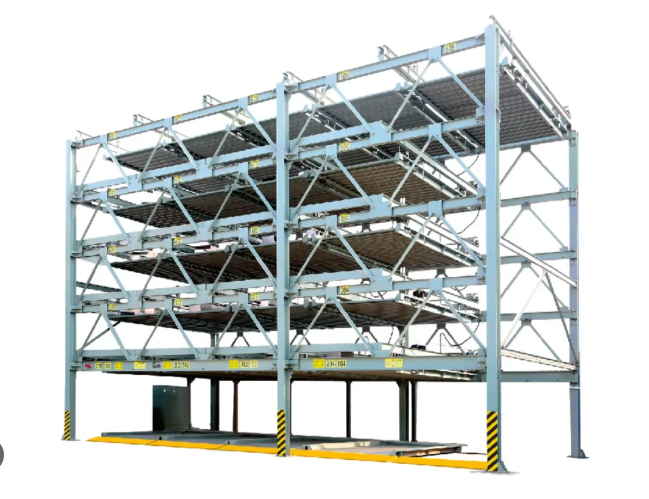
For international turnkey projects, design does not start at the drawing board but with in-depth research into the destination market. European customers focus on mechanical safety distances and noise levels under CE certification, while Southeast Asian projects must meet the stringent anti-corrosion demands that heat and high humidity place on steel structures. Take a six-level lifting-and-sliding project in Thailand: all steel structural members were treated with sandblasting plus powder coating to withstand erosion from the tropical monsoon climate. The design team of an international turnkey contractor needs to embed local regulations, voltage standards, and even local driving habits (for instance, the share of SUVs determines headroom and load reserves) into the scheme from the outset, and to pre-adapt the language of the parking system management software, the payment interfaces, and the protocols of mainstream local parking systems. Before drawings are released, clash detection between the 3D BIM model and the on-site civil conditions is a must, to avoid discovering misaligned reserved openings only after the equipment arrives—a rework whose cost on an overseas site is typically more than three times what it would be at home.
02Manufacturing: Made to Order, but Standard Parts Are Never an Afterthought
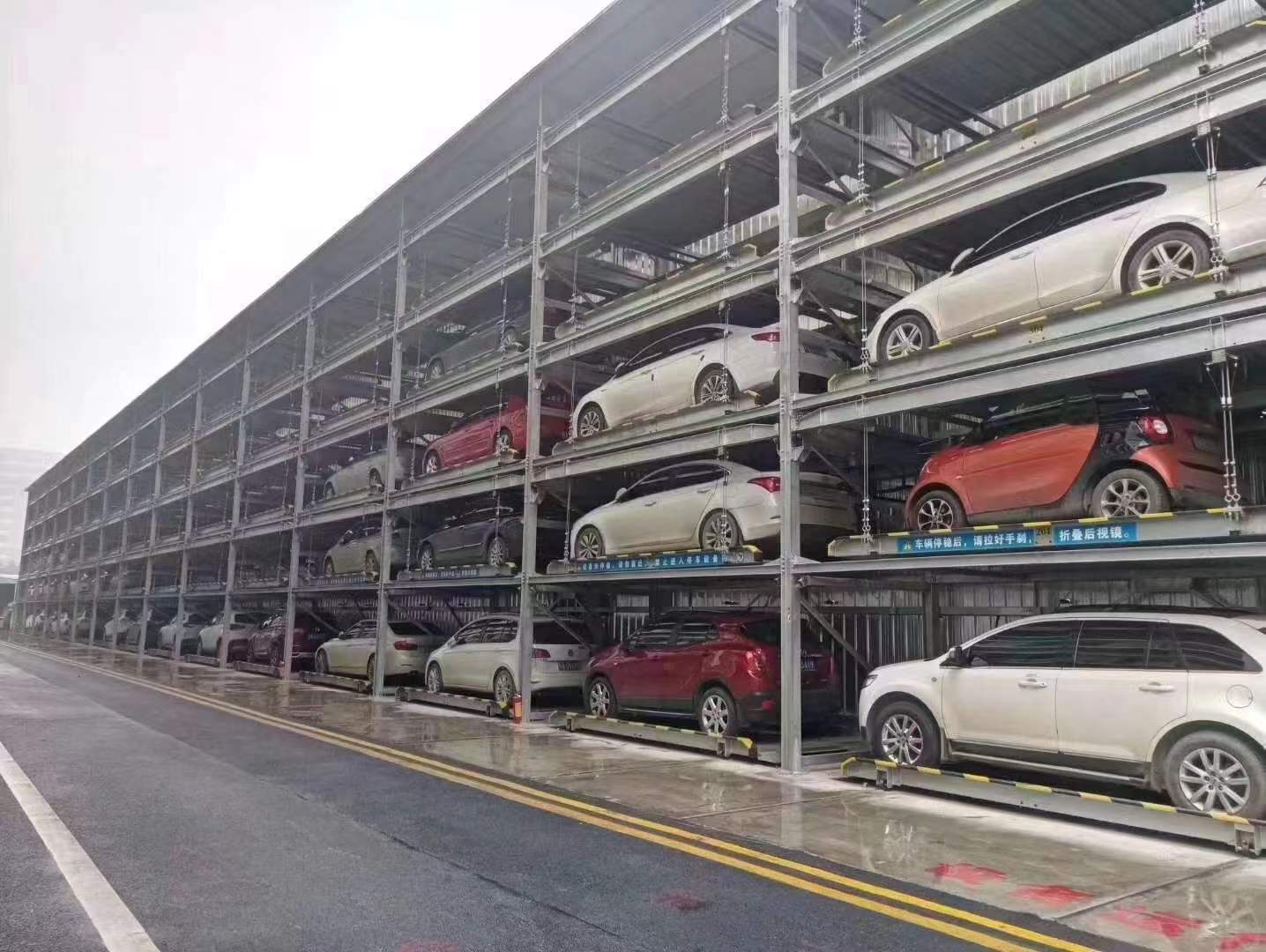
Multi-level parking garages are typically non-standard, customized products, and build-to-order is the industry norm. But what separates capable international turnkey contractors is where they stay flexible and where they stay rigid. Core components—pallets, columns, and hydraulic power units—should be built into a modular standard library, ensuring that urgent overseas orders or after-sales spare-part needs can be responded to within two weeks. Customized elements such as side-beam lengths and access/exit directions are instead flexibly machined before final assembly. The key quality-control checkpoints are not at finished-product dispatch but at incoming inspection of components and first-article confirmation. Experienced international turnkey contractors organize factory acceptance tests, inviting overseas owners or third-party supervisors on site and replacing verbal promises with verifiable load tests and continuous-running tests—turning “compliant with the contract” into “verifiably compliant with the contract.” This is both an endorsement of the quality of the parking equipment and a rehearsal for the overall reliability of the parking system.
03Logistics & Shipping: Treating Project Cargo Like Precision Instruments
The logistics challenge of multi-level parking garages lies in being heavy, long and scattered. A single column can be more than ten meters long; a single hydraulic station can be worth tens of thousands of dollars; and once a shipping manifest covering hundreds of packing cases contains an error or omission, the site is left with “a wrench but no bolt.” The logistics department of an international turnkey contractor needs to work tightly with freight forwarders, distinguishing when to use standard containers, open-top containers, and breakbulk vessels, and arranging overland transport permits and port lifting plans in advance for oversized and overweight items. Even more critical are the details of packaging and protection: electronic control cabinets must contain desiccant and carry anti-vibration markings, the oil ports of hydraulic cylinders need dust-proof caps, and the item numbers on every packing list must correspond to the on-site installation sequence. Project cargo management aims to ensure that goods are “ready to install upon arrival,” not “let’s figure it out when they get here.” A real-time tracking system should cover every node from factory dispatch to site sign-off, and any transit delay should trigger an alert inside the system rather than wait until the installation crew calls to chase the delivery. The on-time arrival of every piece of parking equipment is the precondition for on-time delivery of the entire parking system.
04Installation, Commissioning & Handover: Making the First Run Stand Up to Scrutiny
Overseas installation is where conflicts concentrate. Language barriers, incomplete tools, and civil deviations—any one of these can be magnified. Experienced international turnkey contractors adopt a mixed-team model of “domestic core staff plus local labor”: Chinese technicians handle mechanical alignment, electrical wiring and program commissioning, while local workers carry out handling and auxiliary installation. As the general contractor, they must also coordinate the interface between civil works, power supply connection and fire-safety acceptance to avoid the back-and-forth where equipment installation waits for civil works and civil works wait for equipment. During the commissioning stage before handover, no-load continuous-running tests and loaded running tests are both indispensable, and each safety device (anti-fall protection, prevention of human or vehicle intrusion, over-limit protection) must be signed off item by item. The delivery documentation is more than a single operation manual; it should include as-built drawings, electrical schematic diagrams, a list of wear parts, and a maintenance plan. The moment the owner signs the acceptance certificate, the parking system truly turns from “equipment” into “an operable asset.”
05Training, Operation & After-Sales Service: Leaving Capability in the Customer's Hands
Training is not a formality. Training for operators should be divided into three levels—routine vehicle storage and retrieval operations, emergency fault handling, and simple parameter changes—and those who fail the assessment must not work independently. Training for the owner’s maintenance team, in turn, must go down to the practical level, such as interpreting PLC fault codes and bleeding air from the hydraulic system. For an international turnkey contractor, the response time of after-sales service is a lifeline: in key markets in Europe or Southeast Asia, spare-parts warehouses should be set up or response agreements signed with local electromechanical service providers, so that common faults can have someone on site within 48 hours. Periodic inspection records during the warranty period are not merely proof of performance; they are also the gateway to the next round of warranty renewal or upgrade retrofits. The reputation of a parking system is usually not built at handover, but when the first late-night fault is resolved quickly.
From a single drawing to ten years of after-sales support, the core competitiveness of an international turnkey contractor of multi-level parking garages lies not in how exquisitely a single piece of parking equipment is made, but in whether it can use its coordination capability as the general contractor to keep a complex parking system running reliably across different legal, climatic and cultural environments. This requires an organizational capability that stitches together design rigor, manufacturing consistency, logistics precision, on-site coordination, and localized service. As Chinese parking equipment goes global, the contest is no longer about price, but about who can make an overseas owner press the car-retrieval button without a moment’s hesitation.