


Automated Parking Systems vs. Traditional Ground Parking
1. Introduction
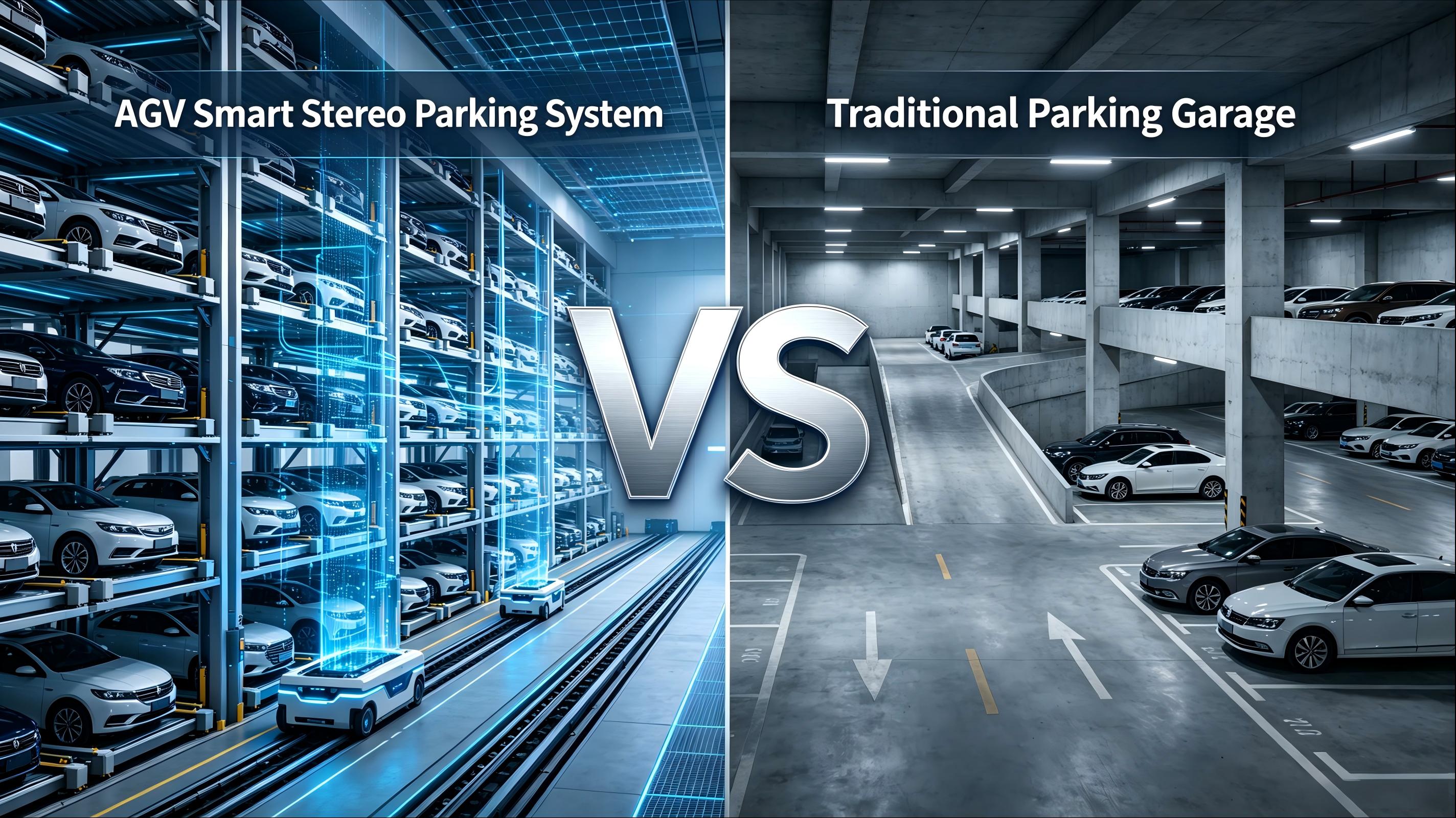
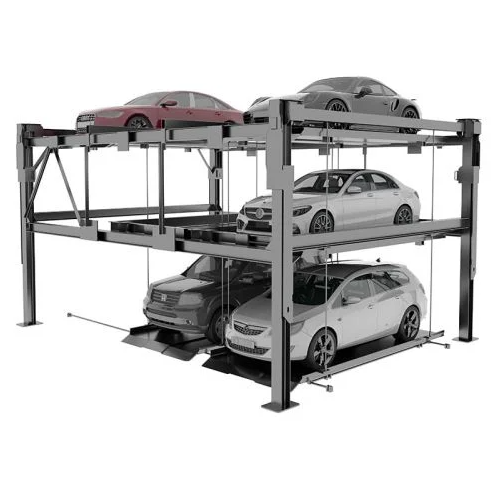
As global urbanization accelerates and vehicle ownership continues to rise, the gap between parking supply and demand in cities is widening. Traditional ground-level parking lots, with their low land utilization rates, can no longer meet the parking needs of dense urban areas. Smart automated parking systems, which maximize the use of limited land, are increasingly becoming a core solution to the urban parking crisis.
2. Core Differences: A Side-by-Side Comparison
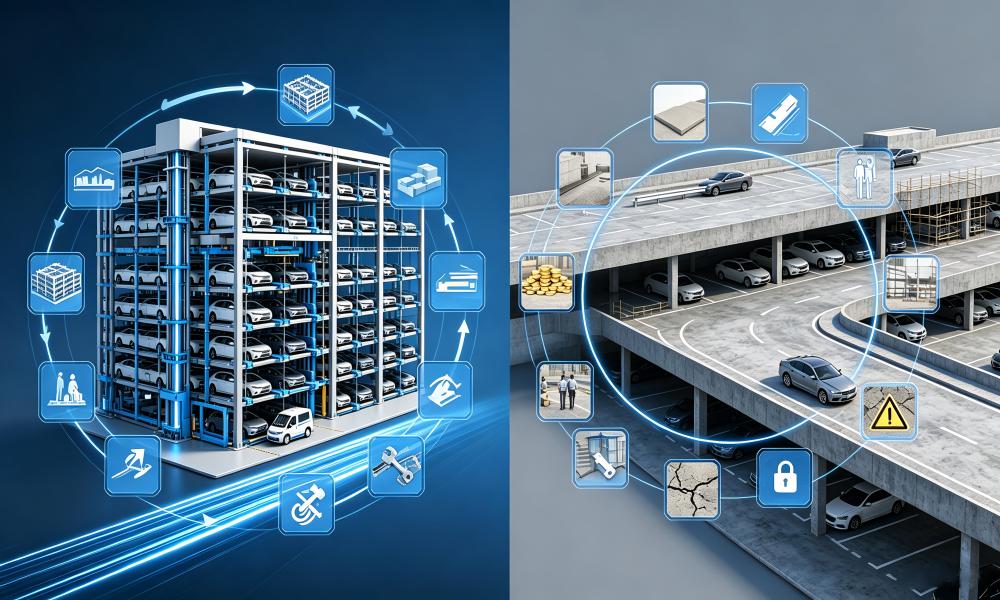
The table below summarizes the key differences between automated parking systems and traditional ground parking across five critical dimensions.
|
Dimension |
Traditional Ground Parking |
Automated Parking System |
|
Space Utilization |
30%-40% efficiency; ~30 m² per space |
5-10x more spaces on the same footprint |
|
Retrieval Time |
12+ minutes average search time in large lots |
90-120 seconds; fully automated |
|
Upfront Cost |
Low (~$100/space striping); high land cost |
$4,000-$8,000 per space equipment |
|
Safety & Security |
Higher risk of scratches, dents, theft |
AI monitoring, enclosed design, near-zero incidents |
|
User Experience |
Intuitive but frustrating to find spaces |
Drive-through, no reversing; learning curve varies |
2.1 Space Utilization
Traditional ground parking: Uses a flat, single-level layout with utilization rates of only 30%-40%. A 50-car surface lot requires roughly 2,000 m² of land. At approximately 30 m² per space including drive aisles, land resources are wasted on a massive scale.
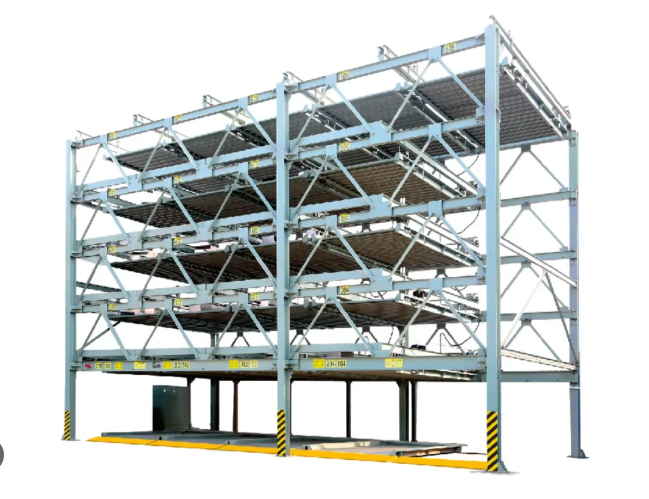
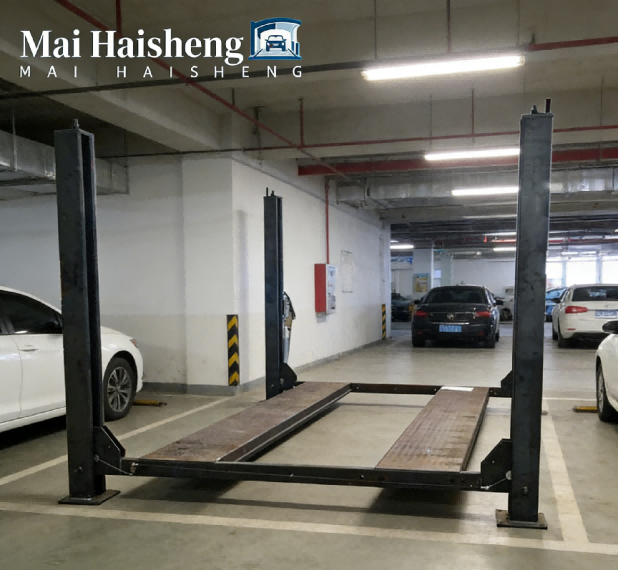
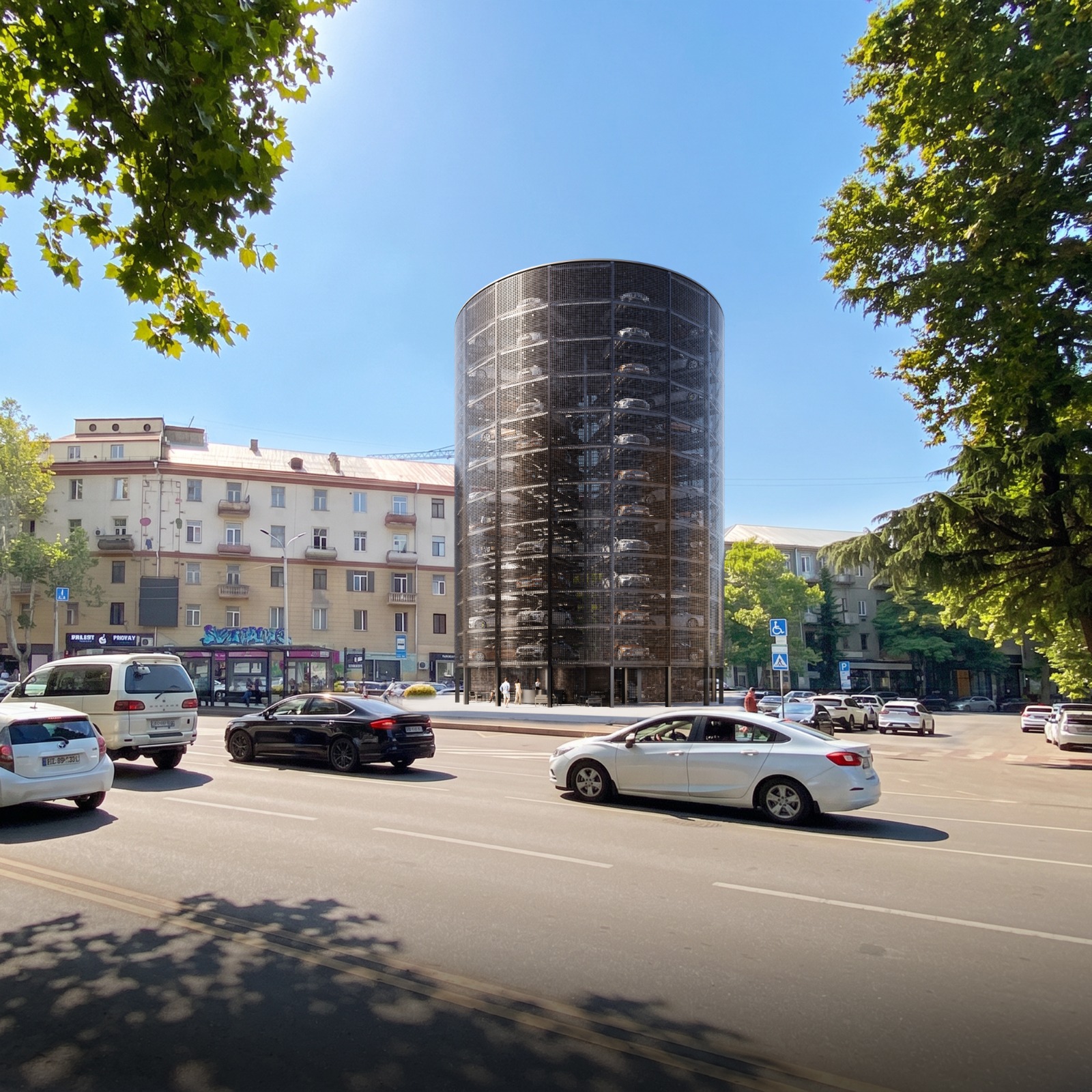
Automated parking systems: Multiplies parking capacity several times over the same land area through vertical stacking. In real-world projects, Maihaisheng automated garages have delivered 176 spaces on just 460 m² of land — roughly 10x the capacity of a surface lot. A hospital garage in Shanghai expanded 80 flat spaces into 480 spaces, achieving 6x the land utilization. Automated parking is rapidly becoming the primary tool for addressing urban parking shortages.
2.2 Vehicle Retrieval Efficiency
Traditional ground parking: Drivers must search for available spots on their own and remember where they parked. In large surface lots, the average driver spends more than 12 minutes looking for a space and locating their vehicle.
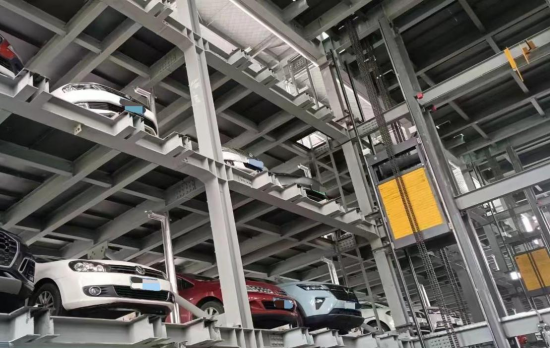
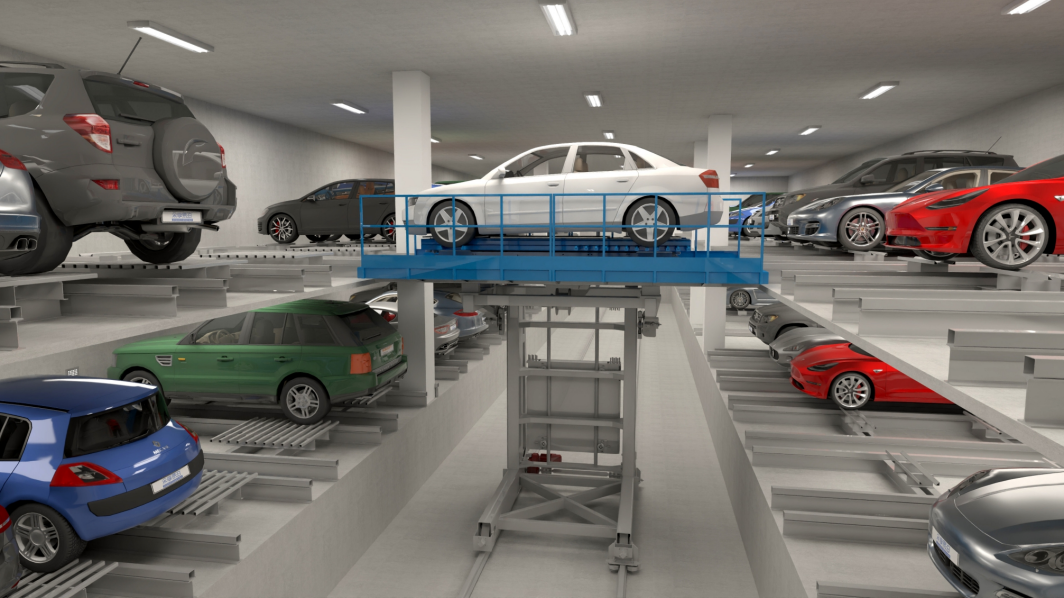
Automated parking systems: Drivers simply pull into a designated entry bay and use a card swipe, face recognition, license plate recognition, or a mobile app to trigger automatic storage and retrieval. Current mainstream smart garages average 120 seconds or less per transaction, with advanced systems completing retrievals in under 90 seconds — an efficiency improvement of over 80% compared to traditional lots. Shenzhen's first high-speed robotic parking garage achieved a construction efficiency 5-8 times higher than conventional methods.
2.3 Construction & Operating Costs
Traditional ground parking: Setting aside civil works, a surface space costs only about $100 for striping. A self-parking underground garage costs roughly $200 per space in direct construction costs. However, the disadvantage is the enormous land footprint — in dense urban cores where land is scarce, acquisition costs are extremely high.
Automated parking systems: Each automated space requires control systems, lifting mechanisms, and pallet shuttles, pushing equipment costs to $4,000-$8,000 per space. That said, annual maintenance costs are 30% lower than staffed parking lots — Maihaisheng projects report a 40% reduction in operating costs compared to traditional garages. Robotic smart garages can keep per-space costs at or below $8,000. Despite higher upfront investment, the total cost-of-ownership advantage becomes compelling in land-scarce areas.
2.4 Safety & Management
Traditional ground parking: Most lots rely on unattended operation or rotating security staff, leaving vehicles at higher risk of scratches, dents, and collisions. Driver error during manual parking also increases accident rates.
Automated parking systems: Equipped with comprehensive vehicle monitoring and security systems, including AI video surveillance, millimeter-wave radar, and infrared anti-collision sensors that operate in real time. The fully enclosed design fundamentally eliminates unauthorized parking and theft risks. At the same time, reduced reliance on on-site staff significantly cuts labor costs.
2.5 User Experience
Traditional ground parking: Operation is intuitive with no learning curve — drivers handle the entire parking process themselves. But the difficulty of finding a space, finding your car, and the risk of scrapes significantly degrade the experience.
Automated parking systems: Deliver a "drive straight in, drive straight out" experience with no reversing required, and the entire process is automated. However, user acceptance remains a challenge — surveys show 60% of drivers find automated garages "complicated to operate," and 58% worry about "vehicle damage risk." Additionally, some older automated garages suffer from tight space dimensions and long wait times. When designed with the user in mind, automated parking can actually deliver a better experience than surface parking.
3. Application Value Analysis
3.1 Relieving Urban Parking Shortages
Automated parking is an effective tool for increasing parking supply in dense urban cores. Shenzhen, China plans to add 50,000 automated parking spaces by 2026, and many city governments have incorporated garage construction into their civic improvement agendas. In Hangzhou's old city district, a 12-story tower garage built on a 1,200 m² site provides 288 spaces — a flat lot of the same size would hold only about 60 cars.
3.2 Improving Urban Land Use Efficiency
Traditional surface parking, with its large footprint and low utilization, is a poor fit for land-scarce city centers. Automated garages leverage vertical space to dramatically increase capacity without consuming large ground areas, aligning with the demand for efficient,集约 land use in modern cities.
3.3 Driving the Smart Parking Industry Upgrade
Powered by IoT, big data, and artificial intelligence, automated parking systems achieve end-to-end intelligence from vehicle recognition to automatic storage and retrieval. Software control systems optimize space layout and routing, adding another 20%-30% more spaces compared to conventional mechanical garages. Cities around the world are now pushing for automated garage retrofits.
3.4 Integrating New Energy & Green Mobility
Automated garages are increasingly integrated with EV charging infrastructure. In Shenzhen, a "solar-storage-charging-inspection-parking" integrated garage generates over 73,000 kWh of green electricity annually from rooftop solar panels. China's first "solar-storage-DC-flexible" zero-carbon automated garage is already operating in Qianhai. The "Lai Dian Dao 1" project combines automatic parking with automatic charging. This "parking + charging + solar" model represents the future direction of the industry.
4. Key Challenges
Despite their significant advantages, the widespread adoption of automated parking systems faces several challenges:
- User habits: Drivers are accustomed to traditional parking and take time to adapt to new technology.
- High costs: Construction and maintenance expenses are substantial, leading to long investment payback periods.
- Planning gaps: Urban planning in some cities lags behind; old residential areas and busy districts face tight land constraints and retrofit difficulties.
- Utilization rates: Some garages have space dimensions unsuitable for new energy vehicles and suffer from low usage. Globally, actual utilization of automated garages is below 72%, with some reaching vacancy rates of 38%.
5. Conclusion
The core differences between automated parking systems and traditional ground parking span space utilization, retrieval efficiency, cost structure, and user experience. Automated garages offer clear advantages in intensive land use and intelligent management, making them an effective path toward solving urban parking shortages. Traditional parking, meanwhile, retains its place in scenarios where construction cost and operational simplicity are priorities.
Looking ahead, as technology advances, policy frameworks mature, and user habits evolve, automated parking systems are poised to play an even greater role in urban mobility and static traffic systems.
Contact us