


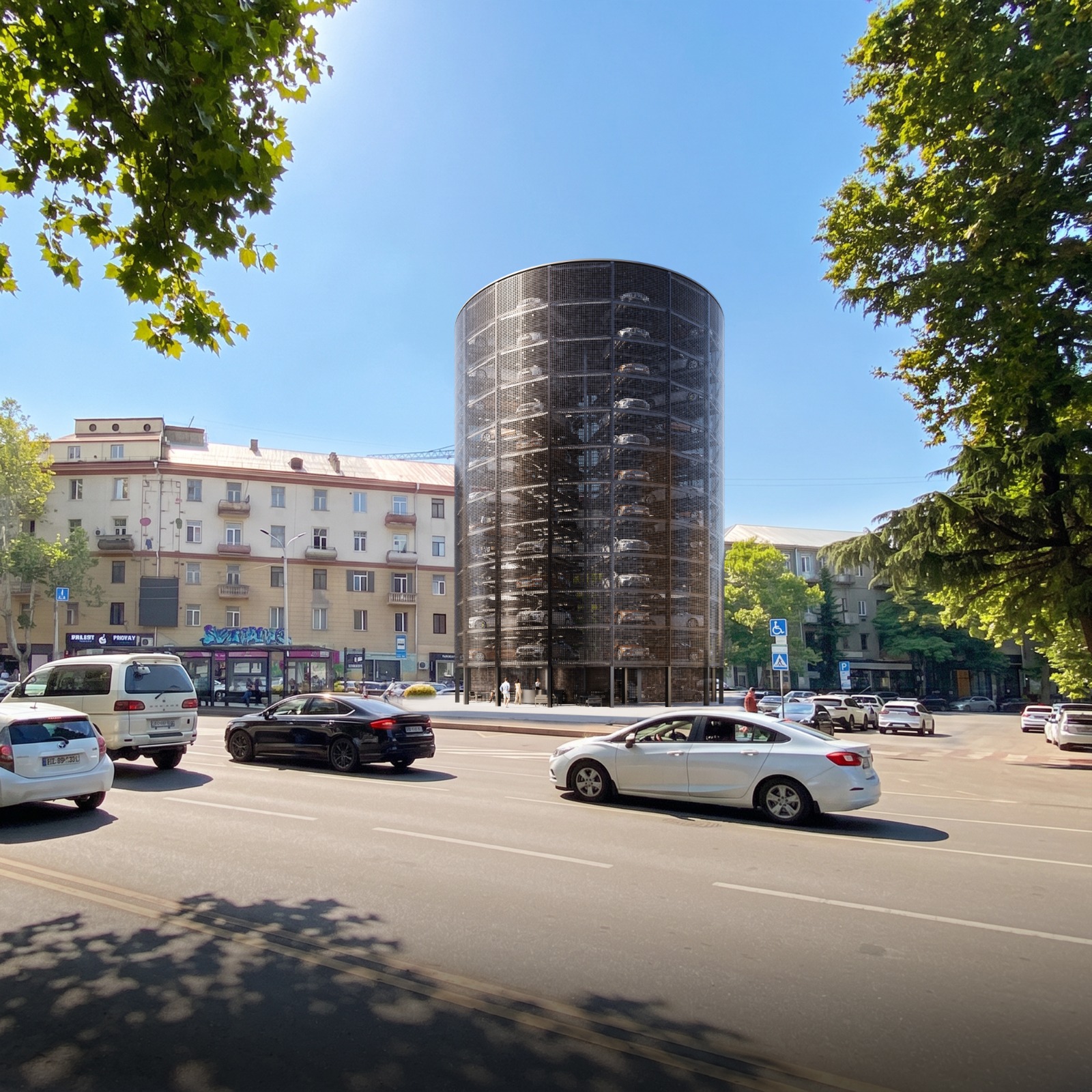
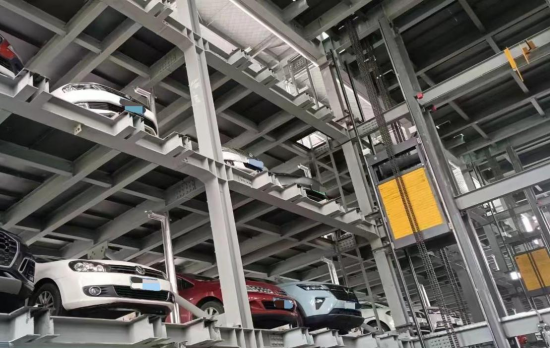
AGV Robot Parking System vs. Traditional Parking Garage
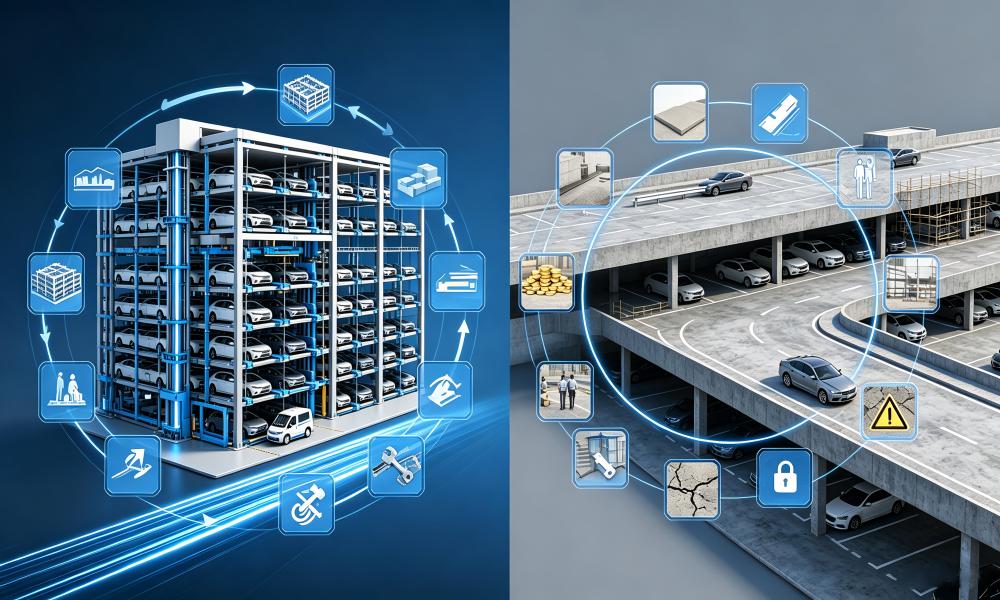
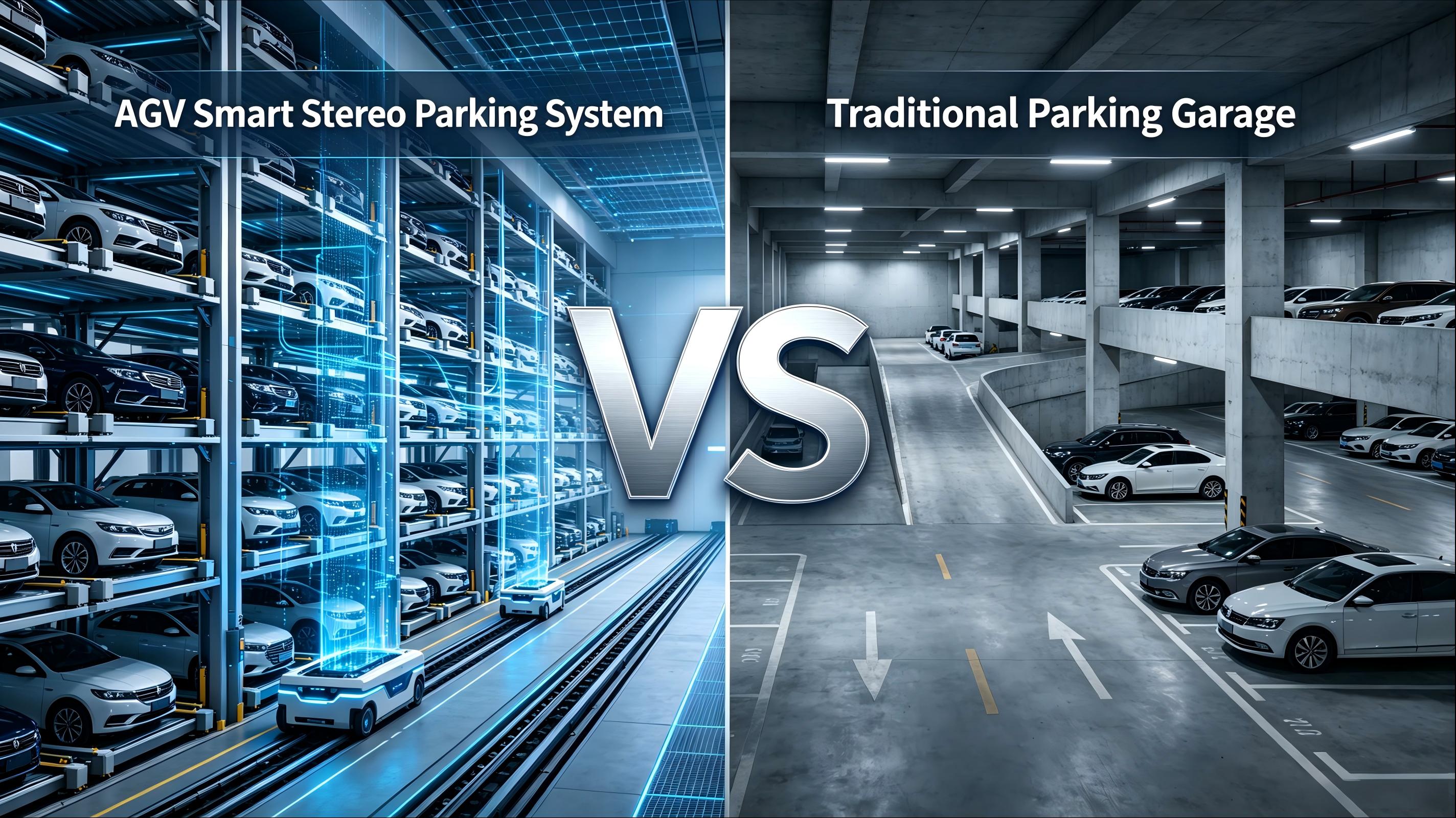
Urban land is running out. Parking demand keeps climbing. Traditional surface lots and conventional mechanical garages share the same old problems: they eat up too much land, run slowly, scratch cars, cost a fortune in labor, and lag behind in smart management.
The AGV Robot Parking System is the next generation of fully unmanned, high-density parking. It relies on intelligent shuttle robots, AI dispatch, and end-to-end automation to eliminate every shortcoming of traditional parking. For premium commercial developments, landmark buildings, and smart city projects, it has become the go-to solution.
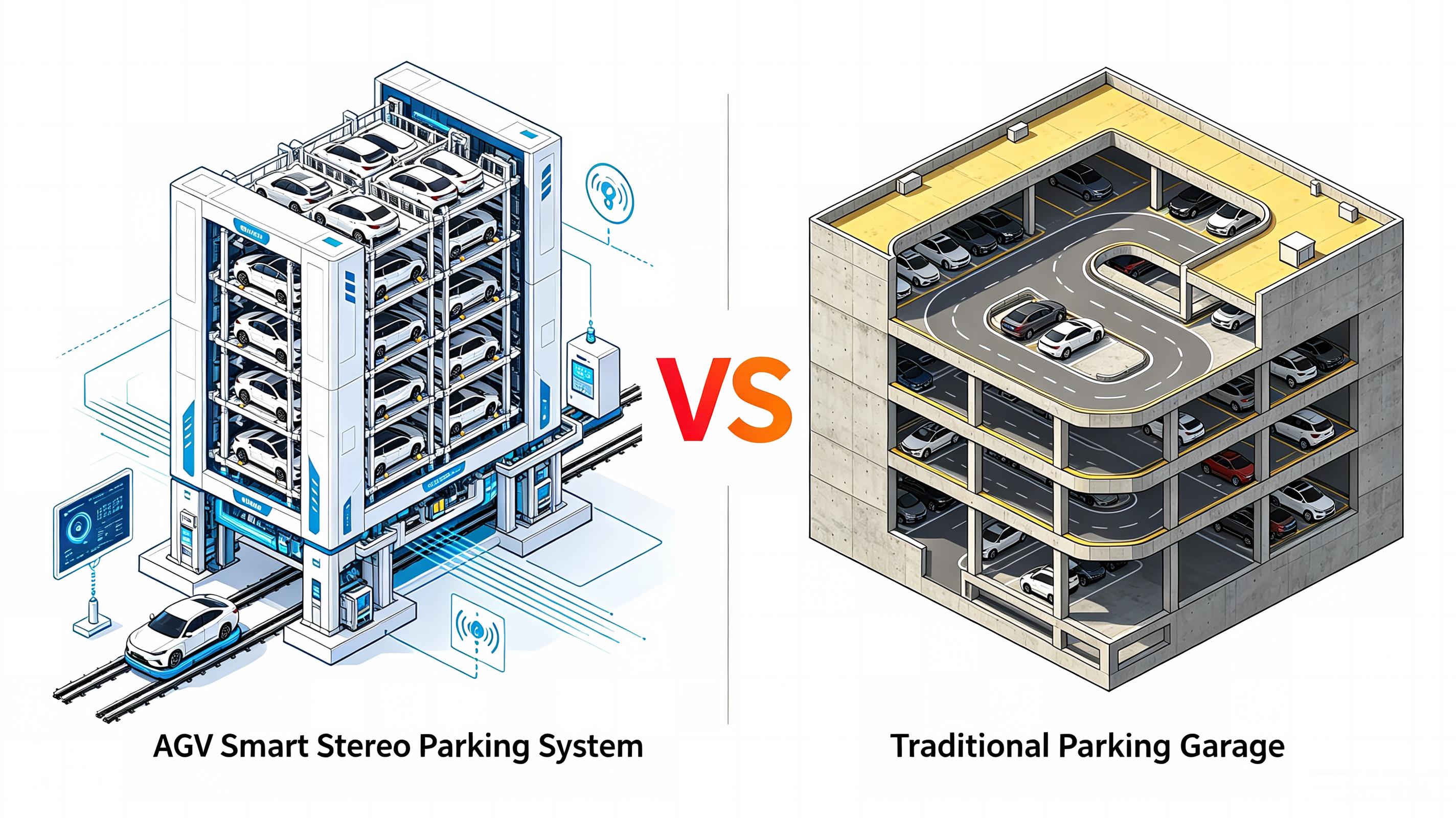
Six Core Dimensions Compared
1. Land Utilization (The Biggest Gap)
| Factor | Traditional Garage | AGV Robot Parking System |
| Drive aisles | Requires wide lanes, ramps, turning radiuses, and door-clearance space | No lanes, no ramps, no pedestrian access needed |
| Space layout | Massive land waste; limited capacity expansion | Dense vertical stacking, compact arrangement |
| Capacity gain | Marginal increase at best on tight plots | 2.5-3x more spaces on the same footprint |
Bottom line: AGV parking squeezes maximum capacity out of the smallest plots — exactly what city centers need where every square meter counts.
2. Parking Efficiency and User Experience
| Factor | Traditional Garage | AGV Robot Parking System |
| Parking process | Drivers reverse into spaces, hunt for spots, deal with congestion | Fully unmanned: drop off at street level, never enter the garage |
| Peak hours | Long queues, unpredictable wait times | Multiple robots work in parallel; smart dispatch prevents queues |
| Retrieval time | Varies widely, often frustrating | 60-90 seconds average, consistently fast |
| Damage risk | High incidence of scratches and dents | Zero scratches, zero accidents |
3. Construction Cost (Short-Term vs. Long-Term)
| Factor | Traditional Garage | AGV Robot Parking System |
| Initial equipment | Cheap equipment, low entry barrier | Higher per-space equipment cost |
| Civil works | Heavy earthwork, complex ramp structures, large land footprint | Dramatically cuts civil works, foundation pits, lanes, and ramps |
| Hidden land cost | Extremely high in prime locations | Saves precious land resources |
Verdict: Traditional wins on day-one price. AGV wins on total cost of ownership and long-term ROI — especially in land-scarce locations.
4. Operating Labor Costs
| Factor | Traditional Garage | AGV Robot Parking System |
| Staffing | Needs attendants, toll collectors, security, cleaners | Fully unstaffed on-site |
| 24/7 coverage | Round-the-clock shifts; labor costs rise every year | Only a small remote maintenance team needed |
| Disputes & damage | Frequent scratch claims and liability disputes | No parking disputes, no human-error costs |
The longer you run an AGV system, the more you save. Labor costs that escalate annually with traditional garages simply disappear.
5. Safety Level
| Factor | Traditional Garage | AGV Robot Parking System |
| People & vehicles | Mixed pedestrian-vehicle traffic; many blind spots | Complete physical separation of people and vehicles |
| Operation zone | Open to the public; theft, collision, and fire risks | Fully enclosed, nobody enters the working area |
| Monitoring | Relies on human vigilance | Smart surveillance, auto fault-lock, fire suppression linkage |
6. Durability and Service Life
| Factor | Traditional Mechanical Garage | AGV Robot Parking System |
| Wear parts | Chains, rollers, limit switches, buffers wear out fast | Modular smart components, low-friction design |
| Failure rate | Above average; constant part replacements | Smart self-diagnostics, fewer breakdowns |
| Service life | 15-20 years | 25+ years design life |
| Maintenance | Complex, costly, frequent | Simple, low-cost, high stability |
Smart Features and Commercial Value
| Capability | Traditional Garage | AGV Robot Parking System |
| Intelligence | Single-function, no smart dispatch | AI dispatch, big data management, remote diagnostics |
| Integrations | None | EV charging, smart fire protection, reservation parking |
| Revenue model | Basic parking fees only | Premium positioning, higher commercial value, stronger pricing power |
Where AGV Robot Parking Makes the Most Sense
AGV robot parking is well worth the investment when your project matches any of these profiles:
- Urban core zones: hospitals, commercial districts, office towers, premium residential developments
- Land-scarce sites: tight plots with high parking demand and heavy traffic flow
- Safety-first projects: developments that prioritize safety, premium experience, and long-term operating returns
- Retrofits: old residential community renovations and tiny-site capacity expansion projects
Final Investment Verdict
Traditional garages: win on low initial cost, lose on efficiency, safety, user experience, long-term operating cost, and value-add potential.
AGV Robot Parking Systems: higher upfront investment, but dramatically higher land utilization, unstaffed savings, zero accidents, longer service life, and greater commercial value.
For long-term operations, prime locations, and high-quality projects, AGV fully automated robot parking is absolutely worth the investment — and it represents the mainstream trend of the parking industry.
This analysis is based on industry data and real-world AGV parking projects. Costs and performance metrics are indicative and may vary by project specifications and regional market conditions.