
News

INVESTMENT & BUDGET ANALYSIS REPORT - Rotary Parking System Equipment - Cost, Installation & ROI Budget
A comprehensive cost breakdown for the rotary parking system, covering equipment investment, installation, maintenance, and return on investment (ROI)
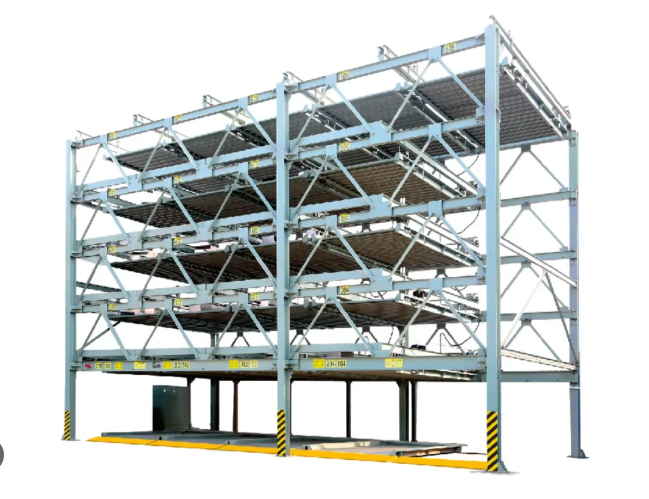
INVESTMENT ANALYSIS REPORT - Puzzle Parking System Equipment - Installation & ROI Budget
A comprehensive cost breakdown covering equipment investment, installation, maintenance, and return on investment analysis
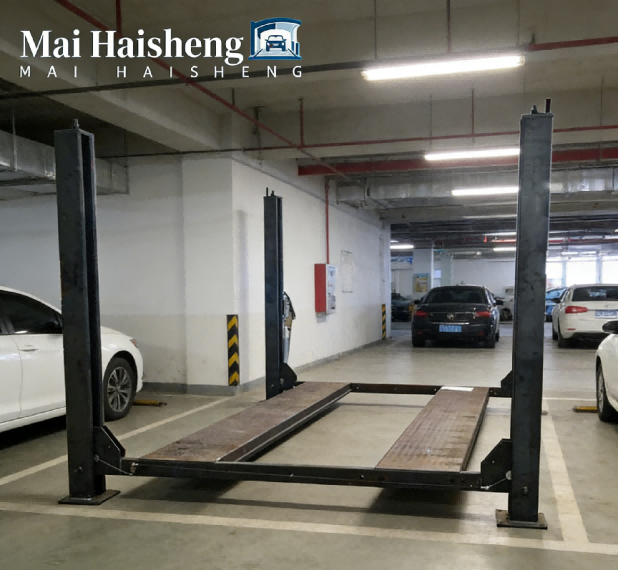
Home Car Stacking Equipment: Double Your Garage Spaces with Simple & Puzzle Parking Systems

Vertical Rotary Parking System: Maximizing Parking Space Utilization with Minimal Footprint
Updated: September 27, 2026 | Parking Equipment | 6 min read
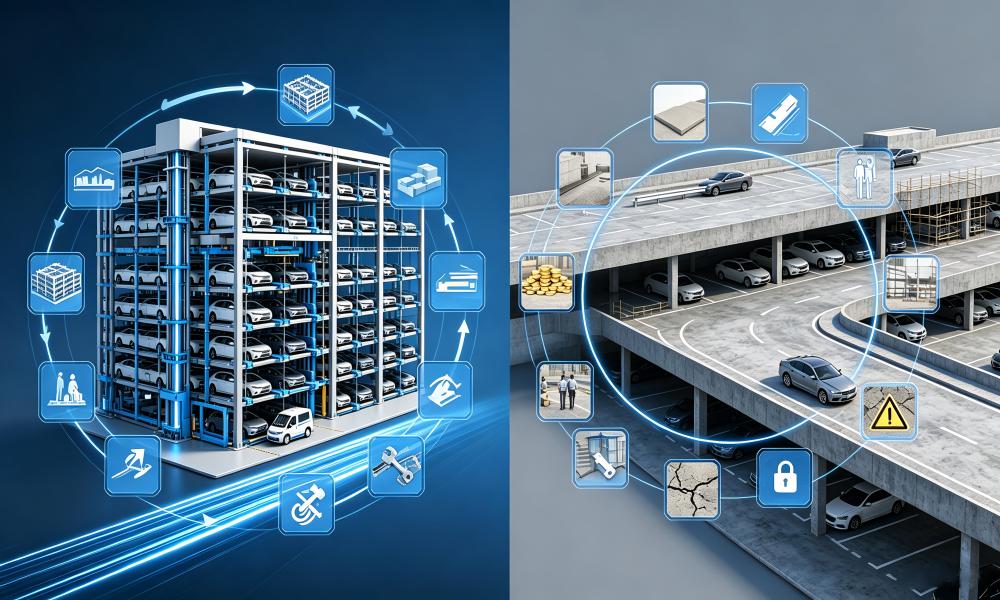
Intelligent Multi-Level Parking Garage vs. Cast-in-Place Concrete Parking Garage
Eight Key Differences Every Developer Should Know
August 27, 2026 | Parking Infrastructure | 10 min read
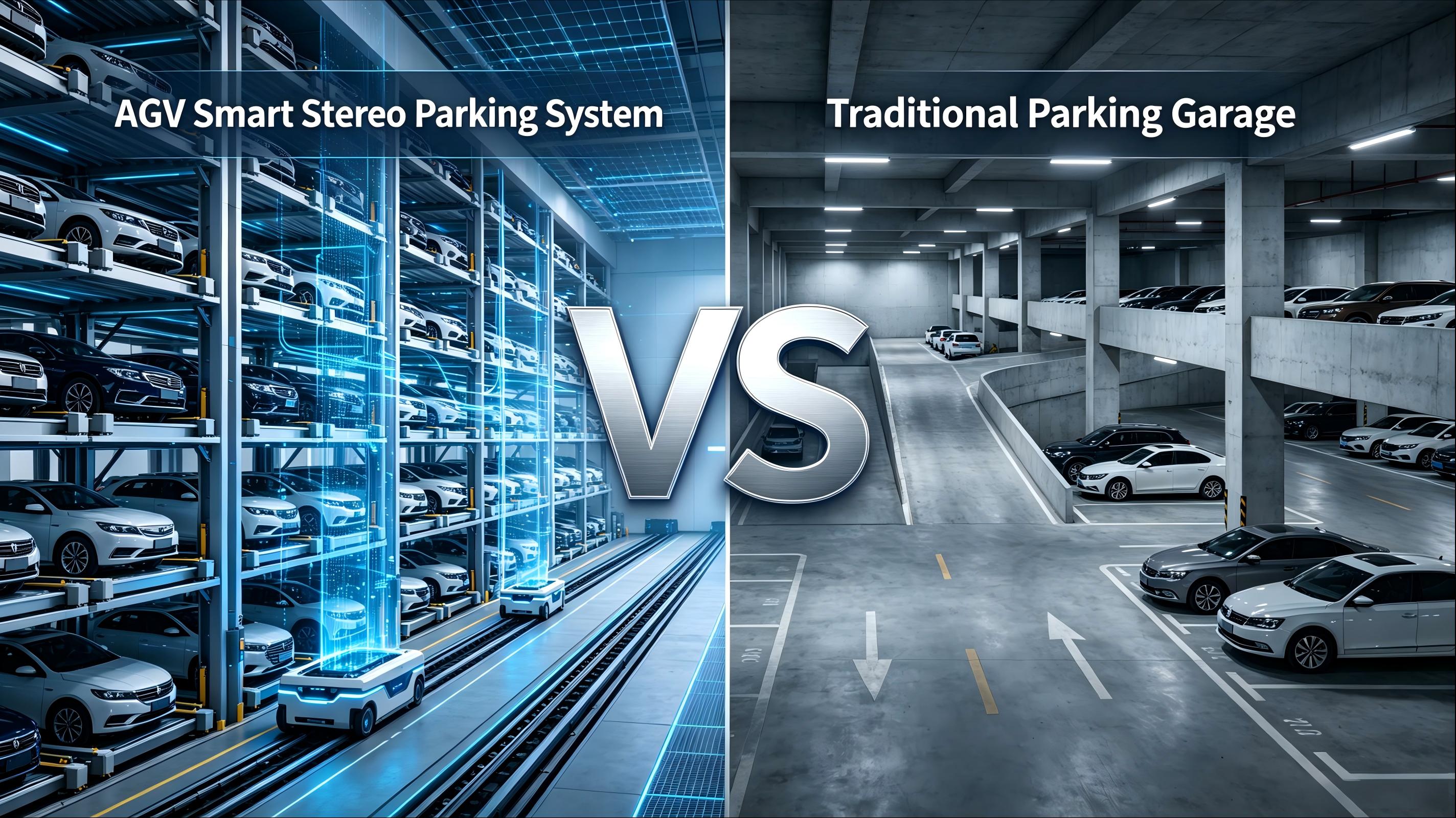
AGV Robot Parking System vs. Traditional Parking Garage
A Core Comparison and Investment Value Analysis
August 27, 2026 | Parking Technology | 10 min read
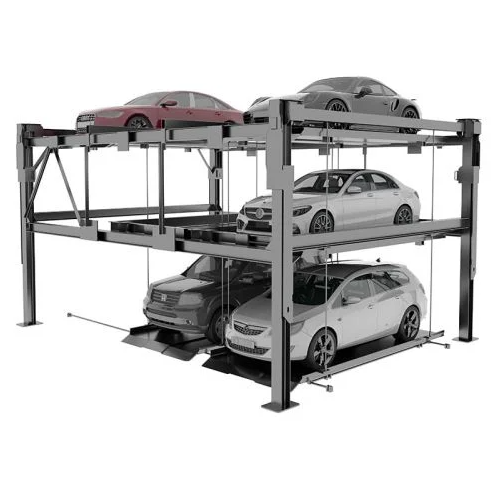
Automated Parking Systems vs. Traditional Ground Parking
A Comparative Analysis of Core Differences and Application Value

How Much Does an Automated Parking System Cost?
Equipment, installation, civil works, and project-budget guide
For developers, factory owners, contractors, and property operators, the equipment price is only one part of an automated parking project budget. Civil works, site conditions, electrical systems, canopies, inspection, logistics, and the required level of automation can materially change the final investment. This guide explains how to build a preliminary budget and what information a supplier needs before preparing a project quotation.
Important terminology: “automated parking system” is commonly used as a broad search term. In technical planning, however, semi-automatic mechanical parking and fully automatic parking should be evaluated separately. The difference is not simply the number of levels; it is how the vehicle is transferred and how people interact with the equipment.
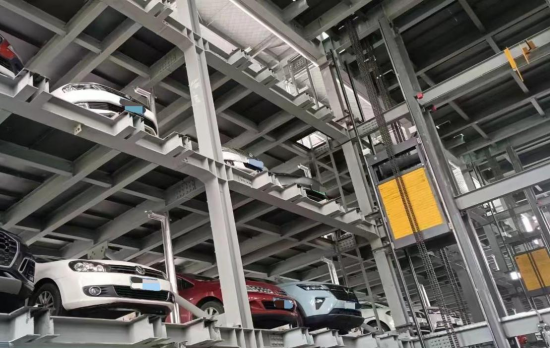
Types of Fully Intelligent 3D Parking Systems: Complete Guide to Mechanisms, Features, and Applications
Fully intelligent 3D parking systems are the core smart solution for modern cities facing parking shortages and limited land resources. These systems fall under the category of fully automatic unmanned mechanical parking equipment. Unlike traditional semi-automatic 3D garages, fully intelligent parking systems achieve complete physical separation of people and vehicles, automatic robotic transfer, fully unmanned operation, and intelligent scheduling for vehicle storage and retrieval. They are currently the leading smart parking solution for commercial public buildings, high-end real estate developments, and urban core area projects.
Fully Automatic vs Semi-Automatic Parking Systems: Key Differences, Pros & Cons, and Complete Selection Guide
In the mechanical parking garage industry, fully automatic parking systems and semi-automatic parking systems are the two most dominant solutions available today. Many developers, property managers, and engineering teams struggle to accurately distinguish between the two when selecting equipment. Making decisions based solely on price often leads to mismatched site conditions, insufficient throughput capacity, compliance issues during inspection, and unexpectedly high long-term maintenance costs.
Automated Stacking Parking Systems: Definitions, Benefits, and a Detailed Overview of Parking Solutions
The Automated Stacking Parking System is a popular and cost-effective mechanical parking solution designed to address garage space shortages. It parks vehicles vertically to maximize the use of limited garage space. Also known as a vehicle stacker or a double-decker parking lift, this system can convert a single standard parking space into a two- or three-level parking space.
Simple Hydraulic Lift Garage vs Simple Electric Lift Garage: Which is Better?
The Simple Hydraulic Lift Garage relies on a hydraulic power unit and cylinders to drive the lifting mechanism, with hydraulic pressure providing all the power throughout the entire process. It features fewer chains, steel cables, and gear drives. With fewer moving parts and a simple structure, it has very few potential failure points and operates reliably. ....