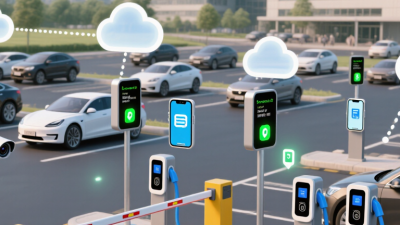
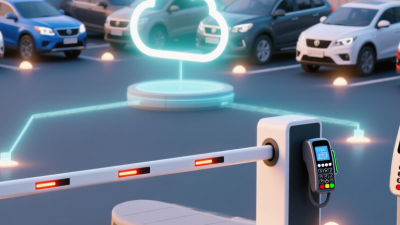
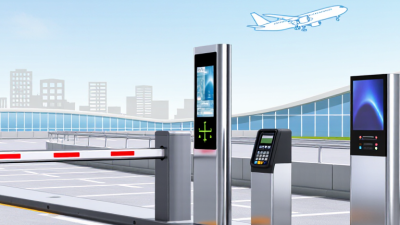
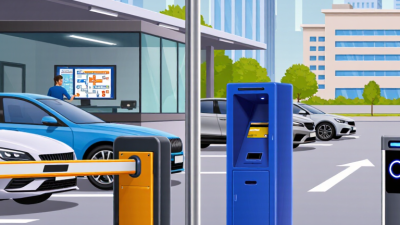
So, why does Parking Equipment actually matter for buyers around the world? Honestly, it's about more than just gates and payment machines. It shapes the whole experience—how drivers get in, pay, wait around, and finally leave. Think about a busy morning rush: a dependable barrier should go up without hiccups. A clear display should help visitors figure things out on their own, no staff needed. And those little details? They can quietly affect safety, revenue, and even public trust.
Global buyers? They’re dealing with all sorts of site conditions and different expectations for how things should run. Take a coastal car park—chances are you’ll want corrosion-resistant housings there. An underground garage, on the other hand, might need solid network coverage plus emergency access controls. And places like airports, hospitals, hotels, and shopping centers? They each come with their own workflows. That’s why experienced suppliers like ParkTech Solutions look at things such as traffic volume, climate, installation space, maintenance access, and integration needs before they recommend any products. I mean, that process is practical—it's not just there for decoration.
Compliance? Yeah, that matters just as much. Before buying, it's worth checking what each market requires around safety, accessibility, electrical, payment, and data-protection rules. License plate recognition can definitely make things more convenient, but you still need careful governance around how that data is handled. And don't overlook the less flashy stuff either: documentation, testing records, spare-parts availability, and responsive technical support. Those things say a lot about whether a supplier is actually reliable. Certifications are helpful, sure, but they don't replace testing on your actual site or having clear, ongoing communication.
The cheapest proposal isn't always the best call. I've watched projects fall behind because people signed off on equipment specs way too fast. And honestly, that's an easy mistake to make again. A realistic evaluation looks at the total cost of ownership, not just the purchase price. That means thinking about downtime, software updates, training, warranty terms, and room to expand later. In the end, Reliable Parking Equipment should just keep daily operations running smoothly—quietly and consistently. Honestly, sometimes the best call is just admitting what your buyer still doesn't know.
Parking’s Global Role: 68% of People May Live in Cities by 2050 (UN)
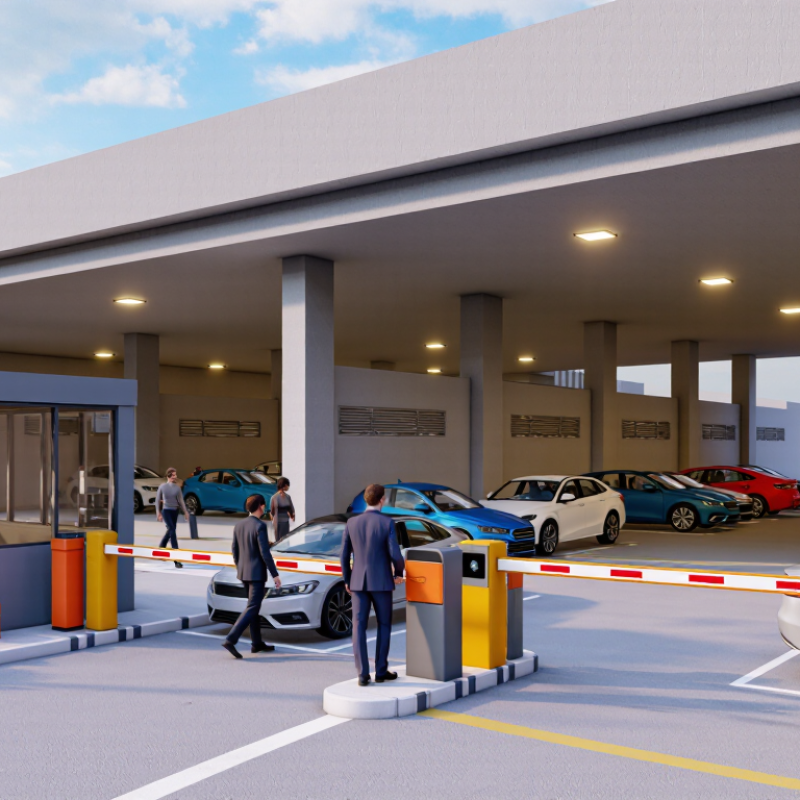
By 2050, nearly 68% of people may live in cities, according to the United Nations. This shift will increase pressure on limited urban land. Parking equipment helps cities use vertical and compact spaces more efficiently. A small site can serve more vehicles when systems are planned carefully.
Global buyers should examine equipment beyond its advertised capacity. They need stable lifting performance, clear controls, emergency stopping functions, and accessible maintenance points. In a busy garage, a slow platform can create queues before morning work hours. Poor drainage can also cause corrosion around motors, sensors, and steel frames. Buyers should request test records, installation guidance, and spare-parts information. Reliable documentation supports safer decisions across different climates and operating conditions.
Garage Lifting Equipment
can support workshops and multi-level parking facilities where floor space is limited. However, higher density does not automatically mean better parking. Noise, user training, inspection routines, and local building requirements still matter. I have seen projects focus heavily on parking quantity and overlook daily movement patterns. That mistake can make a technically capable system frustrating to use. Buyers should measure vehicle sizes, peak arrival times, ceiling height, and expected service frequency before choosing equipment. Some assumptions will be wrong. Regular review keeps the system practical as cities continue to grow.
Core Equipment: Barriers, PARCS, Sensors, Cameras, and Payment Systems
For global buyers, parking equipment shapes safety, traffic flow, and daily operating costs.
A reliable barrier should open smoothly, stop safely, and tolerate rain, dust, and repeated use. In busy sites, even a short delay can create long vehicle queues. Small hardware choices matter.
Parking Access and Revenue Control Systems, or PARCS, connect entry, exit, tickets, permits, and payment records.
Buyers should check whether the system supports local currencies, multiple languages, and flexible operating hours.
Sensors improve space guidance and help detect occupied bays. However, poor calibration can produce false readings.
Testing matters.
Cameras add clearer vehicle monitoring and incident evidence when used within local privacy rules.
Image quality should remain useful at night, during rain, and near reflective license plates.
Payment systems need secure processing, readable screens, accessible layouts, and backup options during network failures.
This is often overlooked.
Barriers, sensors, cameras, and payment terminals must communicate reliably, not operate as isolated devices.
Global projects also require clear installation manuals, spare parts, training, and responsive technical support.
Buyers should request site trials before large orders.
A polished demonstration may hide weak performance in heat, cold, or heavy traffic.
No system is flawless, so measurable service standards and practical maintenance plans are essential.
Capacity Planning: Compare Occupancy, Throughput, Queues, and Peak-Demand Data
Why Is Parking Equipment Important for Global Buyers?
Capacity Planning: Compare Occupancy, Throughput, Queues, and Peak-Demand Data
Parking equipment should match real traffic, not just the number of spaces. During site reviews, I record occupancy at different hours, including rainy mornings and event evenings. Occupancy shows how much capacity is used. Throughput shows how quickly vehicles enter, exit, or change levels. These figures answer different questions.
A 300-space facility may appear large, yet a narrow entrance can create delays. If 90 vehicles arrive per hour but the entry system processes only 70, the queue grows by 20 vehicles hourly.
Small delays become visible quickly. Peak-demand data matters more than the daily average. A five-minute queue at 8:30 a.m. may affect employee arrival, customer satisfaction, and nearby roads.
Measure the queue length, waiting time, payment duration, and recovery time after a rush.
Equipment selection also depends on vehicle movement and available space. Hydraulic Lifting Equipment can support vertical parking where land is limited, but planners must check lifting cycles, safety clearances, maintenance access, and operator training.
I have seen early plans rely on optimistic turnover assumptions. That is a useful warning. Real users pause, reverse, search for spaces, and sometimes press the wrong control. Test the design with observed behavior, not perfect behavior. Clear records, repeat measurements, and local technical inspections make capacity decisions more reliable for global buyers.
Safety Compliance: Apply EN 12453, UL 325, and Local Accessibility Requirements
Parking equipment matters because moving barriers operate close to people, vehicles, and payment areas. In a busy Parking Lot, a closing arm can strike a cyclist, wheelchair user, or distracted driver within seconds. EN 12453 requires risk-based safety for powered doors and gates, including force limits, protective devices, and safe control systems. These details should guide design, installation, and testing.
UL 325 provides another important safety framework for powered gate operators in the United States. It addresses entrapment protection, monitored sensors, warning systems, and control functions. Field inspections often reveal sensors mounted too high or blocked by dirt. Small gaps matter. The World Health Organization’s Global Status Report on Road Safety 2023 reports approximately 1.19 million annual road deaths worldwide. Parking areas are not highways, but poor movement control can still create serious injuries.
Accessibility rules must also reflect local law and real user behavior. The WHO Global Report on Health Equity for Persons with Disabilities estimates that 1.3 billion people experience significant disability. Accessible routes need enough width, clear markings, suitable slopes, and controls reachable from a wheelchair. A gate may pass a basic test yet remain confusing for someone with limited vision. That is not enough. Designers should check opening speed, emergency release, lighting, and pedestrian separation during actual site conditions, not only during installation. Mistakes still happen when compliance becomes paperwork instead of daily safety.
Data and Payment Security: Use GDPR Controls and PCI DSS Standards
Why Is Parking Equipment Important for Global Buyers?
Modern parking equipment handles more than vehicles. It processes license plates, entry times, payment details, and customer identifiers. These records create privacy and payment risks across borders. The 2024 Cost of a Data Breach study reported an average breach cost of 4.88 million US dollars. Parking operators cannot treat cybersecurity as an optional upgrade. A secure gate can still expose sensitive data through weak software or excessive retention.
GDPR controls should guide every purchasing decision. Equipment should collect only necessary information, explain its purpose, and delete records on a defined schedule. Access logs, encryption, privacy impact assessments, and role-based permissions provide practical evidence of control. PCI DSS applies when systems store, process, or transmit payment data. Buyers should request network segmentation, multi-factor authentication, vulnerability testing, and tokenization. The 2024 Data Breach Investigations Report found that human involvement remained present in most breaches. Training matters. Technology alone does not solve careless access.
Tips: Ask suppliers for data-flow diagrams, retention settings, incident procedures, and independent security test results. Confirm whether payment data reaches parking equipment directly. Prefer designs that reduce its exposure. Small details matter, such as locked service ports and automatic session timeouts. A checklist helps, but it is never complete. Recheck controls after firmware updates, new payment methods, or changes in local privacy rules. A camera may be accurate, yet still collect too much.
Investment Evaluation: Measure CAPEX, OPEX, Uptime, and Five-Year TCO
For global buyers, parking equipment deserves the same scrutiny as industrial machinery. A Parking Lift can reduce land pressure, but its purchase price is only CAPEX. Include freight, installation, permits, commissioning, and operator training. A low quotation may become expensive after currency changes or site modifications. Measure every cost in one currency. Record each assumption.
OPEX
requires practical evidence. Estimate electricity, scheduled inspections, lubrication, software support, and replacement parts. Uptime should reflect real operating conditions, not only a brochure promise. Ask for maintenance records, response times, and spare-part availability in the target region. A lift serving 40 cycles daily faces different wear than one serving 10 cycles. Site temperature, dust, drainage, and power quality also affect performance.
Calculate five-year TCO with purchase costs, operating expenses, planned maintenance, downtime losses, and eventual component replacement. Use a simple spreadsheet with optimistic, expected, and difficult scenarios. The difficult scenario matters. Early estimates are often too confident, especially when installation conditions remain unknown.
I would also test manual recovery procedures during acceptance. A delayed vehicle release can damage user trust, even when the equipment still technically operates. Leave room for training gaps and unexpected service visits.
Global Procurement: Verify Certifications, Integration, Support, and ROI Metrics
Why Is Parking Equipment Important for Global Buyers?
Global buyers should verify certifications before comparing prices. Safety, electromagnetic compatibility, and ingress ratings matter in real parking environments. Request current certificates, test reports, and product versions. A certificate for an older model may not protect your project. Check whether the documents match your destination market and installation conditions.
Integration deserves equal attention. Confirm communication protocols, payment interfaces, access-control links, and data formats. Ask for API documentation and a test environment before signing a purchase order. A barrier may open smoothly during demonstrations, yet fail when sensors, cameras, and software exchange data continuously. Small delays can create queues at busy entrances. Test with local networks and realistic traffic volumes. It is easy to overlook this.
Support quality often decides the equipment’s practical value. Clarify response times, remote diagnosis, spare-part availability, training, and escalation procedures. Ask who handles faults during weekends. Measure uptime, average repair time, transaction duration, labor savings, and maintenance cost. Then calculate payback using conservative traffic estimates. A cheap system can become expensive after repeated site visits. Certification paperwork also has limits. It proves compliance, not perfect field performance. A short pilot may reveal weather, network, or user-behavior problems that specifications miss. That extra testing feels slower, but it can prevent a costly replacement.
Why Is Parking Equipment Important for Global Buyers?
Global procurement decisions should verify four measurable areas: certification compliance, system integration, after-sales support, and return on investment. The scorecard below uses a transparent 100-point evaluation model, with higher weights assigned to integration and ROI because they directly affect deployment and operating performance.
How China’s Hydraulic Two-Post Car Parking Lift Elevators Create Smarter Auto Parking Systems
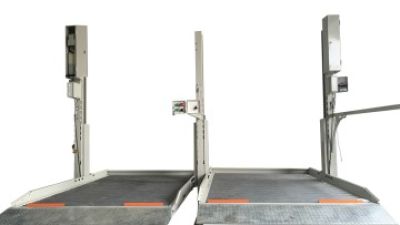
China’s hydraulic two-post car parking lift elevators are helping create smarter auto parking systems for homes, commercial buildings, workshops, and compact urban sites. By using vertical space instead of expanding the parking footprint, this simple parking system provides two parking levels for two vehicles. Its two-post structure supports convenient daily operation, allowing the lower vehicle to be parked or retrieved whenever needed. To access the upper vehicle, the lower vehicle must first be moved, making the system especially suitable for organized residential or private parking areas.
Designed for both sedans and SUVs, the lift offers a maximum lifting height of 2100 mm and selectable lifting capacities of 2300 kg, 2700 kg, or 3200 kg. Hydraulic operation enables stable and efficient vehicle lifting, while the practical layout helps improve space utilization and reduce parking congestion. Three model options are available to meet different installation and usage requirements, and customized dimensions can be supplied for specific site conditions. As a China-based manufacturer and supplier, the factory focuses on dependable construction, consistent quality standards, and adaptable parking solutions for modern vehicle storage needs.
FAQS
It may collect license plates, entry times, payment details, and customer identifiers. That creates privacy risks. Buyers should limit collection to necessary information.
They should define the collection purpose and delete records on a clear schedule. Encryption, access logs, and role-based permissions strengthen control. The checklist may still miss something.
Request network separation, multi-factor authentication, vulnerability testing, and tokenization. Ask whether payment data reaches the parking equipment directly. Less exposure is safer.
Request data-flow diagrams, retention settings, incident procedures, and independent security test results. Review these documents after software or firmware updates. Old evidence can become weak.
Check safety, electromagnetic compatibility, and environmental protection ratings. Confirm that certificates match the current product version and destination market. Paperwork has limits.
Ask for API documentation and a test environment before signing a purchase order. Test barriers, sensors, cameras, payment systems, and software together. Use realistic traffic volumes.
Confirm response times, remote diagnosis, spare parts, training, and escalation procedures. Ask who handles faults during weekends. Small delays can create long queues.
Track uptime, repair time, transaction duration, labor savings, and maintenance costs. Use conservative traffic estimates when calculating payback. A low purchase price may mislead.
A short pilot can expose weather, network, and user-behavior problems. Test busy entrances, local networks, and repeated transactions. It feels slower. Replacement costs may be worse.
Conclusion
Parking Equipment plays a vital role in managing the growing demand for efficient, safe, and convenient urban mobility. As more people are expected to live in cities by 2050, global buyers need to evaluate complete solutions, including barriers, parking access and revenue control systems, occupancy sensors, cameras, and payment technologies. Effective planning should consider parking capacity, vehicle throughput, queue times, occupancy rates, and peak-demand patterns to ensure reliable daily performance.
When selecting Parking Equipment, buyers should also assess safety compliance, accessibility requirements, data protection, and payment security. Investment decisions should compare initial costs, operating expenses, system uptime, maintenance needs, and five-year total cost of ownership. For international procurement, it is essential to verify certifications, integration capabilities, technical support, scalability, and measurable return on investment. A well-evaluated solution can improve operational efficiency, strengthen user safety, protect sensitive information, and deliver sustainable value across different markets.