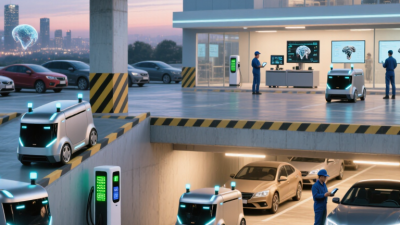
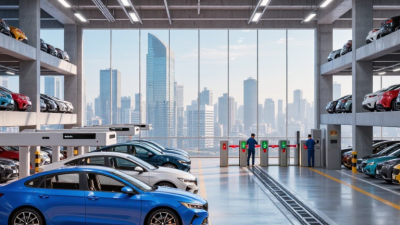
So, you're probably hearing a lot about parking lot robots these days. They're turning into practical tools for facilities that need smoother parking ops, clearer space usage, and less manual oversight. This guide breaks down ten options for international buyers – from autonomous patrol bots to systems designed to guide drivers or assist with parking management. But honestly, what works best really depends on your specific setup. Honestly, a small hotel lot? That's a whole different beast compared to a busy airport, a hospital, or a retail complex. You can't just treat them all the same—each one's got its own quirks and needs.
Comparing robots? Don't just rely on the demo — honestly, you need to look beyond it. Ask about real-world things: how long it can actually run on a charge, how it handles pedestrians in a crowded walkway, whether rain or heat messes with it, and how long charging takes. Also think about integration—will it work with your gates or payment system? And what about support after installation? That's a big one. When you're talking to vendors, push for references, service coverage, warranty details, and performance numbers that feel realistic, not just the best-case ones. And don't skip the little tests: watch how the robot deals with ramps, tight turns, faded floor markings, or something unexpected left in its path. Honestly, those details are what separate a great robot from a frustrating one. Look, having a polished demo doesn't mean you're all set to deploy — that's a whole different ballgame. And hey, specs? They can be all over the place depending on your configuration or even your region. So always double-check with the manufacturer directly before you start crunching numbers for the budget. Trust me, it'll save you headaches later.
So, here's the thing: those ten products I listed? They're more like jumping-off points than a definitive ranking. You really need to weigh each one against your own site size, how many folks you've got on staff, the connectivity, safety protocols, and what you can handle maintenance-wise. My advice? Get a live trial set up in an area that mirrors your typical conditions, then just watch how the robot copes during peak hours and, if you're lucky, in crummy weather. Keep an eye on missed routes, how quick it responds, and the amount of staff babysitting it'll need. And hey, don't be shocked if the results make you rethink your first impressions—that happens more often than you'd think. That’s a good point to keep in mind. You can have the most capable robot in the world, but if service takes forever or it makes your daily workflow more complicated, it’s probably not the right fit. So taking the time to really evaluate things can help you decide based on what actually works, not just what the sales pitch promises.
What Parking Lot Robots Are and How They Support Vehicle Parking
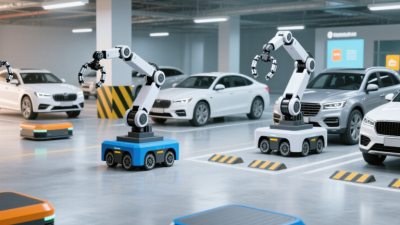
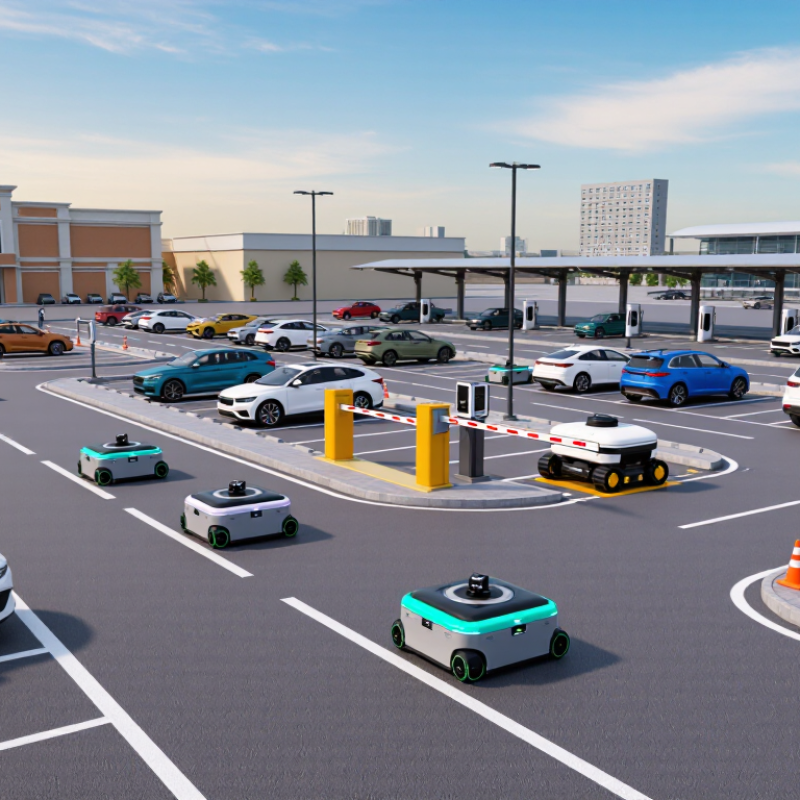
Parking Lot robots are automated machines that help move or organize vehicles inside a parking facility. Some platforms lift a parked car and carry it to an assigned space. Others guide vehicles through marked lanes or support a staffed valet operation. Drivers usually leave their cars at a designated handover area, where sensors and cameras help the system check the vehicle’s position.
The control software assigns spaces and routes, while onboard sensors detect obstacles, pedestrians, and nearby vehicles. A robot may travel slowly around pillars, stop at a crossing, then turn into a narrow aisle. Clear floor markings, reliable communications, and well-planned traffic flow help keep these movements predictable. Not magic. Staff may still need to handle unusual vehicle shapes, blocked routes, or system alerts.
For operators, these robots can use parking space more efficiently and reduce the need for drivers to search crowded aisles. They may also make vehicle retrieval more orderly during busy periods. Performance depends on the site: uneven floors, poor lighting, or frequent layout changes can create problems. That matters. Before installation, buyers should assess vehicle limits, emergency procedures, maintenance support, and how the system works with existing parking operations. A carefully designed pilot can reveal issues that a floor plan alone will miss.
How Parking Lot Robots Navigate, Lift, and Retrieve Vehicles
A parking lot robot must locate a vehicle, approach it safely, and return it without relying on clear floor markings alone. Many systems combine cameras, laser sensors, and ultrasonic distance readings to map walls, pillars, parked cars, and moving obstacles. The robot compares its position with a digital floor plan as it travels. Narrow aisles demand careful speed control. A dusty sensor or changed parking layout can still affect detection, so site surveys and routine checks matter.
At the vehicle, the robot confirms key measurements, including wheel position, ground clearance, and permitted load. It then moves beneath the car and raises a support platform or lifting mechanism to carry it. Small margins matter. Sensors monitor alignment and load balance during the lift, while safety controls can stop movement if readings fall outside set limits. Operators should verify that vehicle data and operating conditions match the equipment’s specifications.
For retrieval, the robot follows a planned route to the handover area and lowers the vehicle onto a marked position. Its navigation system must account for temporary obstacles, other robots, and people entering the zone. A polished demonstration does not prove reliable performance across a full, changing facility. Buyers should review test results for their own site, including retrieval time, error handling, and recovery procedures. Some edge cases will be missed; that deserves honest review.
Types of Parking Lot Robots Available to Global Buyers
Types of Parking Lot Robots Available to Global Buyers
Parking-lot robots serve different jobs, and buyers should match the machine to the site. Automated parking robots move vehicles inside a storage structure, often using lifting platforms or guided carriers. They can reduce the space needed for driving lanes, but require compatible construction and careful vehicle-handling procedures. Autonomous valet systems guide equipped vehicles to parking spaces using sensors and site infrastructure. They suit controlled facilities better than open lots with unpredictable traffic. Small sites differ.
Security patrol robots follow mapped routes, using cameras and sensors to flag unusual activity. Cleaning robots sweep dust, leaves, and light litter from flat surfaces. Inspection robots can check lighting, markings, or equipment, though some findings still need human verification. The International Federation of Robotics reported about 205,000 professional service robot sales in 2023, including roughly 113,000 transportation and logistics units. These figures indicate broader automation uptake, not parking-specific demand. For global buyers, climate, slopes, pedestrian density, charging access, and local service support matter as much as advertised autonomy. A robot that works well indoors may struggle with rain or uneven paving. I would test it during busy hours, too.
Top 10 Parking Lot Robots for Global Buyers
Types of parking lot robots available to global buyers, compared by the core vehicle-handling functions they typically automate.
The 1–4 score counts typical functions performed by the robot or system: vehicle pickup, horizontal movement, vertical movement, and placement or retrieval. It is a functional comparison, not a measure of market share or a guarantee of system performance. Capabilities vary by installation.
Key Features for Comparing Parking Lot Robot Systems
For global buyers, a parking lot robot should fit the site, not just a product sheet. Compare navigation accuracy in narrow lanes, turning clearance, and movement around parked cars. Ask how it performs with faded markings, glare, rain, and uneven pavement. Conditions differ from one facility to another. A short demonstration may not reveal that.
Check payload capacity, operating range, charging time, and daily duty cycle. These figures affect how many vehicles the system can handle during busy hours. Review safety sensors and emergency-stop behavior, too. Ask how the robot detects pedestrians near bumpers or crowded entrances. Integration matters: confirm compatibility with gates, payment systems, and existing parking software. A Smart Parking Lot setup can still create extra work if staff must constantly intervene. Service access and spare-part availability deserve attention. They are easy to overlook.
Tips: Request a site trial during peak traffic. Record missed routes, waiting time, and manual assists. Ask for performance data across different weather and lighting conditions. Do not rely on a single headline efficiency figure; actual results may be less tidy than a vendor’s demonstration.
Top 10 Parking Lot Robots for Global Buyers
For global buyers, the top 10 parking lot robots are best compared by the jobs they perform, not by flashy demonstrations. Options include under-vehicle carriers, automated valet platforms, and autonomous mobile robots that move cars between marked bays. Each design suits different layouts. Measure aisle width, turning space, floor slope, and vehicle mix before requesting proposals. A system that works in a bright showroom may struggle with rain, dust, glare, or uneven paving. Small details matter.
Tips: Ask suppliers for site-specific capacity estimates and service response times. Confirm how the robot handles a blocked aisle, low battery, or a vehicle parked off-center. Request a live trial with representative cars, not only a polished video.
Compare all ten candidates using the same checklist: daily vehicle volume, peak-hour queues, charging needs, staff training, spare-part access, and integration with entry controls. Ask for operating data from a site with similar weather and traffic patterns. Parking Lot Lifts may suit properties with limited floor area, but they bring different access and maintenance requirements. Robot performance also depends on clear markings and consistent operating procedures. I would not assume automation removes every delay; a poorly planned handoff can still create a queue. Choose measurable fit over impressive promises.
How to Evaluate Safety, Standards, and Site Compatibility
Top 10 Parking Lot Robots for Global Buyers
How to Evaluate Safety, Standards, and Site Compatibility
A robot that works in a showroom may struggle on a sloped, rain-darkened ramp. Check turning space, floor joints, drainage, lighting, and pedestrian routes during an actual site walk. Ask for stopping-distance and obstacle-detection test results under comparable conditions. Small details matter. I would revisit after rain, too; a tidy survey can miss puddles and glare.
Request a documented risk assessment and clear guidance on emergency stops, safe operating zones, maintenance, and staff training. ISO 12100 provides a framework for machinery risk assessment. ISO 3691-4:2023 may be relevant to some driverless industrial trucks, but its applicability depends on the robot’s design and use. Ask suppliers to identify the standards that fit their system and provide evidence of testing. A standards list alone is not proof of site safety.
Tips: The International Federation of Robotics’ World Robotics 2024 report recorded 541,302 industrial robot installations in 2023. That figure covers industrial robots, not parking robots, but it shows the wider deployment scale. For each candidate, verify compatibility with your site’s vehicle dimensions, network coverage, charging access, and local safety requirements. Test a representative route before committing.
Costs, Installation, and Ongoing Support for Parking Lot Robots
Parking Lot Systems buyers should compare total operating cost, not just the robot’s purchase price. A MarketsandMarkets report estimated the broader smart-parking market at US$6.5 billion in 2023, with growth projected through 2028. That forecast signals investment, but it does not guarantee savings from a specific robot. Ask suppliers to itemize equipment, site surveys, software, installation, training, and annual support. Include replacement parts and downtime in the calculation.
Installation can be more demanding than a smooth demonstration suggests. A robot may need clear turning space, stable surfaces, reliable connectivity, adequate lighting, and safe pedestrian routes. Slopes, drainage channels, and busy entry lanes can change the design—and the price. Request a site assessment and a written commissioning plan. Confirm response times, spare-part availability, software updates, and who handles after-hours faults. Small details matter.
Tips: Ask for a pilot using your actual vehicles and peak-hour traffic. Record successful moves, retrieval times, and manual interventions. Keep a contingency plan; real sites are messier than test areas. Compare support fees over five years, and ask which costs are estimates. I would treat projected labor savings cautiously until local operating data confirms them.
FAQS
They combine cameras, laser sensors, and ultrasonic readings to map nearby obstacles. The robot checks its position against a digital floor plan. Dust still matters.
It checks wheel position, ground clearance, and permitted load. Sensors monitor alignment and balance during lifting. Small margins matter.
It follows a planned route to a handover area and lowers the vehicle onto a marked position. It must account for people, other robots, and temporary obstacles.
No. One polished demonstration cannot show how a robot performs across a changing facility. Ask for site-specific results on retrieval time, errors, and recovery steps.
Turning space, surface stability, connectivity, lighting, and pedestrian routes all matter. Slopes, drainage channels, and busy entry lanes may change the design and cost.
Include equipment, site surveys, software, installation, training, annual support, replacement parts, and downtime. Compare support costs over five years, not just the purchase price.
Test with actual vehicles and peak-hour traffic. Record successful moves, retrieval times, and manual interventions. Keep a contingency plan; real sites are messier.
No. A report estimated the broader smart-parking market at US$6.5 billion in 2023, with growth projected through 2028. That forecast does not prove savings for a specific site. I would treat labor savings cautiously until local data confirms them.
Conclusion
Parking Lot Robots automate the movement, storage, and retrieval of vehicles, helping parking facilities use space more efficiently and simplify the parking experience. Depending on the system design, robots may drive beneath a vehicle, lift it, and transport it to an assigned space, then retrieve it when requested. Global buyers can compare different robot types and assess factors such as vehicle capacity, navigation methods, operating speed, space requirements, control systems, and integration with existing facilities.
Choosing Parking Lot Robots also involves evaluating site compatibility, safety features, applicable standards, and the needs of drivers and operators. Buyers should consider the full cost of ownership, including equipment, site preparation, installation, maintenance, training, and ongoing technical support. A careful comparison of system capabilities, operational requirements, and long-term service arrangements can help facilities select a solution suited to their layout, traffic patterns, and future plans.