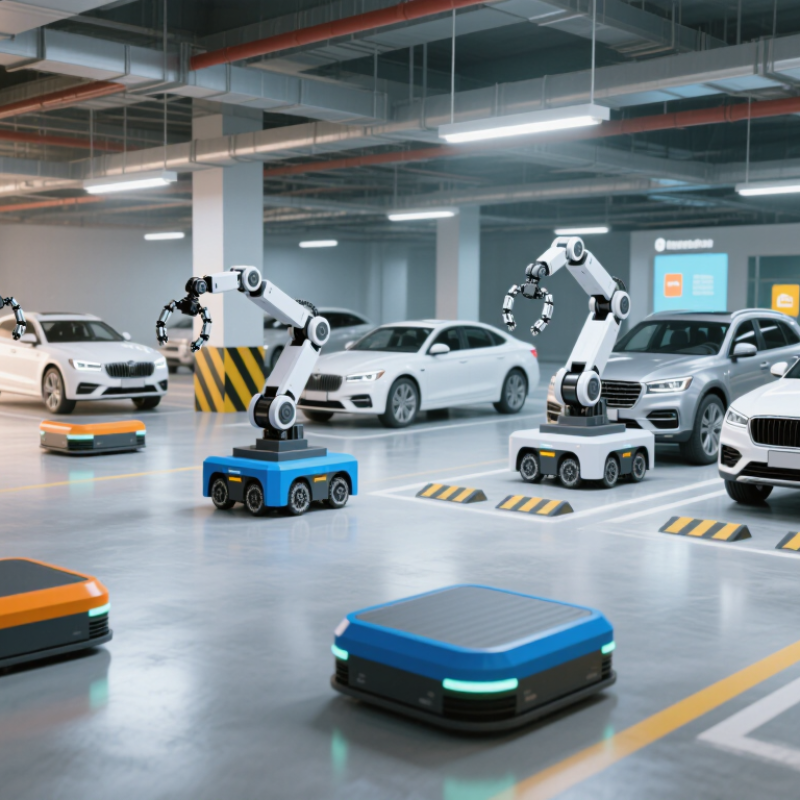
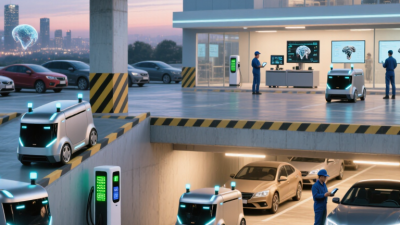
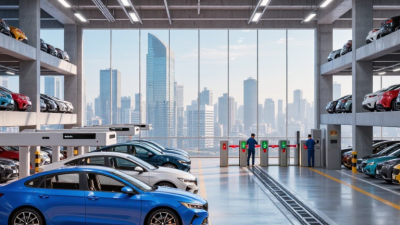
So, when it comes to picking the right Parking Lot Robots, honestly, just staring at those shiny product photos isn't gonna cut it. If you're a global buyer, you really need to dig into the real-world stuff—like actual deployments, operating data, and service records. Because here's the thing: a robot that works like a charm in a dry airport might totally struggle in a humid underground garage. You've got to think about floor slope, turning radius, loading time, safety sensors—and don't forget about local maintenance support. That can make or break the whole experience, trust me.
Alright, if you're scouting for parking lot robots for your business in 2026, you're in for a treat. This guide breaks down the top 10 options for global buyers, featuring heavyweights like Stanley Robotics, Westfalia Technologies, Park Plus, and U-tron. Now, we're not just listing them—we're comparing them on the stuff that actually matters. You've got criteria like vehicle capacity, how well the software plays with your existing systems, install complexity, energy consumption, and, of course, return on investment. Here's the thing: sometimes it's the tiny details that make or break a system. For instance, a well-designed handover zone might not sound like a big deal, but it can shave off minutes from every single vehicle. And over a day, that adds up big time. You know, a weak service network can really mess things up and end up costing you a lot of time and money. And that's something you want to avoid at all costs.
I've been thinking about what Clément Bossut, the co-founder and CEO of Stanley Robotics, said about robotic parking. He put it pretty well: automation should make parking easier, not turn it into some kind of puzzle. That really hits home, doesn't it? Because honestly, just throwing fancy tech at a problem doesn't automatically make the customer experience better. Not by a long shot.
So if you're in the market for this kind of system, don't just take their word for it. Ask to see it in action, ask what happens when something goes wrong, and get references from real sites that actually use it. That's the smart way to go.
Look, no ranking is perfect. The public performance data you see? It's not always consistent across different suppliers. And pricing? That's a whole other ballgame – it shifts depending on region, building design, and project scale. So yeah, this list is just a practical starting point, not something you should base your final purchasing decision on. You've got to test things out yourself. Honestly, sometimes the system that looks less impressive turns out to be the more dependable one.
Parking lot robots are autonomous machines that move, position, or retrieve vehicles with limited human control. They use cameras, distance sensors, mapping software, and onboard computers. After a driver parks at a transfer area, the robot identifies the vehicle’s size and location. It then selects a safe route and moves the vehicle to an available space. Some systems carry the wheels, while others guide the car through controlled movement. The process reduces searching time and can improve space usage in busy facilities.
A reliable system depends on more than smart software. The parking structure needs clear lanes, suitable lighting, stable flooring, and defined safety zones. Robots usually communicate with gates, payment systems, and monitoring platforms. Human operators can review alerts or stop a task when conditions change. In practical testing, rain, dust, reflective surfaces, and unusual vehicle shapes may affect sensor accuracy. No system works perfectly in every site. Buyers should request test records, maintenance procedures, safety certifications, and local compliance documents. Independent verification matters.
Key Technologies Used in Modern Parking Lot Robots
Top 10 Parking Lot Robots for Global Buyers 2026Key Technologies Used in Modern Parking Lot Robots
Modern parking lot robots combine LiDAR, cameras, ultrasonic sensors, and high-precision mapping.
LiDAR measures distance in low light, while cameras identify lane markings, pedestrians, and vehicle shapes. Ultrasonic sensors help during the final parking movement. Field deployments show that sensor redundancy matters. No single sensor is flawless. The International Federation of Robotics reported 541,302 industrial robot installations worldwide in 2023, showing stronger acceptance of automated systems.
Artificial intelligence converts sensor data into driving decisions.
Edge computing reduces communication delays, especially in underground garages with weak signals. Simultaneous localization and mapping helps robots navigate unfamiliar layouts.
Fleet software assigns parking spaces, monitors battery levels, and records unusual events. According to the International Energy Agency’s Global EV Outlook 2024, electric car sales exceeded 14 million in 2023. Therefore, charging detection and safe charging coordination are becoming practical requirements for parking robots.
Cybersecurity is now part of mechanical design.
Encrypted communication, access controls, and secure software updates protect vehicle and facility data. V2X communication can connect robots with gates, elevators, payment systems, and charging equipment.
Yet performance can fall during rain, reflective surfaces, or poor map updates. The review process should include local testing, not only laboratory demonstrations. That uncomfortable step often reveals the real operating limits.
How to Evaluate Parking Lot Robots for Global Markets
How to Evaluate Parking Lot Robots for Global Markets
A reliable Parking Lot robot must fit local vehicles, spaces, ramps, weather, and driving habits. Start with reality. Measure average parking time, peak arrivals, vehicle dimensions, and retrieval queues before comparing suppliers. The International Federation of Robotics reported 541,302 industrial robots installed worldwide in 2023. This shows strong automation adoption, but it does not guarantee parking performance.
Evaluate throughput, positioning accuracy, safety sensors, and recovery procedures together. A robot that moves quickly may still fail when a driver leaves luggage in the trunk. Request test records for rain, dust, steep ramps, low light, and emergency stops. Check compatibility with access gates, payment systems, license-plate recognition, and building software. Cybersecurity matters too. Ask where operational data is stored and how updates are controlled.
Energy planning is becoming more important. The International Energy Agency reported over 17 million electric cars sold globally in 2024. Parking systems may need charging coordination, fire detection, and longer dwell-time management. Review total ownership cost, not only the purchase price. Include maintenance visits, spare parts, training, insurance, and software fees. Local technicians are valuable. A small response delay can create a long queue.
Do not trust a polished demonstration alone. Run a paid pilot with real traffic. Some weaknesses will appear embarrassingly late. That is useful evidence._requirements?
Top 10 Parking Lot Robots to Consider in 2026
The top 10 parking lot robots to consider in 2026 should match your site, traffic pattern, and maintenance capacity. A Smart Parking Lot may use autonomous valet robots, pallet shuttle robots, vertical stackers, robotic parking towers, underground shuttle units, and compact residential parking robots. Other useful options include automated guided vehicles, mobile parking platforms, robotic arm systems, and parking robots designed for electric vehicle charging areas.
From field experience, the best choice is rarely the fastest machine. Check lifting capacity, floor tolerance, emergency access, sensor accuracy, and recovery procedures. A robot that moves quietly at midnight still needs reliable support at 8 a.m. Measure entry width carefully. Small errors can affect every parking cycle. Energy use also matters, especially in high-volume facilities. Some systems perform well in demonstrations but struggle with dust, rain, or irregular vehicle sizes. That deserves honest testing.
Tips: Request a live site assessment and a full-cycle demonstration. Test sedans, SUVs, and vehicles with roof racks. Ask how long manual recovery takes. Review software updates, spare-part availability, warranty limits, and staff training. Keep clear pedestrian routes and visible emergency controls. Do not judge only by storage capacity. A smaller system may offer smoother daily operations. Even experienced buyers can overlook drainage, lighting, and peak-hour queues. Pilot testing is worth the inconvenience.
Comparison of Features, Costs, Capacity, and Performance
Top 10 Parking Lot Robots for Global Buyers 2026
Comparing parking robots requires more than counting automated spaces. Key features include vehicle sensors, license-plate recognition, remote monitoring, emergency recovery, and weather protection.
Some systems support 24-hour operation, while others need scheduled inspections. A realistic throughput is often 30 to 60 vehicles per hour, depending on layout and software response.
Capacity varies widely. Compact parking robots may handle 20 to 80 vehicles in a small facility. Larger modular systems can exceed 500 spaces, but they require stronger floors, wider access lanes, and careful traffic planning.
Vehicle size limits matter. A lift rated for 2,000 kilograms may not safely accept large electric vehicles with heavy battery packs. Small details matter here.
Installed costs can range from about 15,000 to 45,000 US dollars per space for simpler
Parking Lot Lifts.
Advanced robotic systems may exceed 60,000 dollars per space, excluding major construction work.
Energy use, maintenance contracts, spare sensors, and software subscriptions can change the real five-year cost. Performance claims also need testing. A stated retrieval time of 90 seconds may increase during peak demand.
No ranking is perfect. Some buyers may overvalue speed and underestimate repair access, operator training, or local technician availability.
Installation, Safety, Maintenance, and Integration Requirements
Buying a parking robot in 2026 requires more than comparing storage capacity.
Installation begins with a structural survey, floor-flatness checks, drainage review, and accurate vehicle dimensions. Leave service access around motors, sensors, and lifting platforms.
Measure twice.
Safety should follow ISO 3691-4:2023 and ISO 13849-1 principles.
Specify emergency stops, guarded transfer zones, obstacle detection, load monitoring, and controlled pedestrian access. Fire alarms must connect with the parking controller. People still enter.
According to the International Federation of Robotics’ World Robotics 2024 report, 541,302 industrial robots were installed globally in 2023.
That scale shows why competence, training, and documented risk assessments matter. Parking systems need local technicians, not only remote support.
Maintenance contracts should define inspection intervals, spare-part availability, software updates, and recovery times after faults.
Require logs for sensor alignment, brake wear, battery condition, and failed transfers.
Integration also needs clear interfaces with access control, payment systems, building management, and charging equipment.
The IEA’s Global EV Outlook 2024 reported more than 14 million electric cars sold in 2023, increasing pressure on parking operators to manage charging safely.
Use encrypted communications and role-based access, aligned with IEC 62443 practices.
A perfect handover is rare.
Test failure modes with a loaded vehicle, a blocked sensor, and a network outage. Many buyers skip this uncomfortable step.
That gap matters.
How Global Buyers Can Select the Right Parking Robot
Top 10 Parking Lot Robots for Global Buyers 2026
Selecting parking robots requires more than comparing lifting capacity or advertised speed. Global buyers should examine the complete Parking Lot Systems package, including sensors, control software, charging needs, and emergency access. The 2023 INRIX Global Traffic Scorecard reported that US drivers lost 42 hours in congestion, costing about $733 per driver. This highlights the value of faster vehicle movement, but speed alone can create unsafe queueing.
Check the robot’s payload against heavier electric vehicles, not only standard sedans. Measure basement ramps, turning angles, floor gaps, and temperature changes. The system should provide clear fault alerts and manual recovery procedures. Relevant safety documentation matters, especially when equipment operates near pedestrians. A 2024 market forecast from MarketsandMarkets estimated strong growth for automated parking systems through 2028. Forecasts can be optimistic, however. Buyers should request installed-project data, not just market projections.
Tips: Test a full vehicle cycle on-site. Ask for average retrieval time during peak demand. Review spare-part availability, software update policies, and local technician response times. Calculate five-year costs, including maintenance, energy, training, and downtime. A cheaper robot may become expensive after one failed sensor or delayed replacement part. Also inspect the user interface. Drivers need simple instructions, visible status lights, and reliable payment integration. One overlooked detail is noise; a quiet system may perform better in residential buildings. Real-world testing should influence the final decision more than polished brochures.
Top 10 Parking Lot Robots for Global Buyers 2026
How Global Buyers Can Select the Right Parking Robot
The chart compares generic parking robot configurations using two practical buying criteria: rated vehicle load and indicative peak transfer rate. Values are representative engineering benchmarks for passenger-vehicle parking systems; actual results vary with vehicle size, aisle layout, safety requirements, travel distance, charging time, and local regulations. Buyers should verify certified load capacity, site throughput, integration requirements, maintenance access, and total cost of ownership before selecting a system.
Customizable Vertical Puzzle Parking Systems for Commercial and Residential Spaces from China Suppliers
Vertical Puzzle Parking Systems from China suppliers provide a practical way to expand parking capacity in commercial and residential spaces where land is limited. The INRIX Global Traffic Scorecard reported that U.S. drivers spent an average of 17 hours searching for parking in 2017, highlighting the need for more efficient parking infrastructure. By using vertical space instead of requiring additional land, this modular system can help property owners increase vehicle capacity while making better use of existing sites.
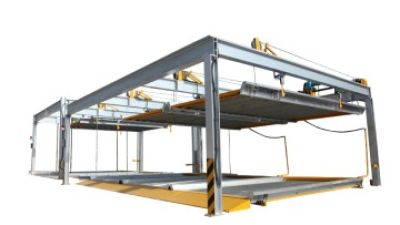
Factory-manufactured configurations are available from one to six levels, with customizable equipment dimensions, platform numbers, and load capacities. The system offers free parking and retrieval for vehicles on the lower level, while retrieving an upper-level vehicle requires temporarily moving the vehicle beneath it. With a maximum lifting height of 3,000 mm and a rated capacity of approximately 2,350–2,500 kg, the system is suitable for many sedans and SUVs. Custom engineering allows the equipment to adapt to ceiling height, driveway access, vehicle dimensions, and site-specific operational requirements.
For apartment buildings, offices, hotels, dealerships, and mixed-use developments, vertical puzzle parking can support a more organized parking layout without extensive excavation. China-based suppliers can provide standardized production combined with tailored specifications, helping buyers select the appropriate number of levels, structural configuration, and vehicle capacity for each project.
What should buyers measure before comparing parking robots?
Measure vehicle sizes, parking times, peak arrivals, retrieval queues, ramps, turning angles, and floor gaps. Start with actual site conditions.
Can a robot’s advertised speed prove good performance?
No. Speed alone can create unsafe queues. Check positioning accuracy, average retrieval time, and full-cycle performance during peak demand.
How should payload capacity be evaluated?
Compare capacity with heavier electric vehicles, not only standard sedans. Include luggage, passengers, and possible future vehicle changes.
What site conditions should testing include?
Test rain, dust, low light, temperature changes, steep ramps, and emergency stops. Real buildings are rarely as clean as demonstrations.
Which safety features deserve close attention?
Review pedestrian detection, emergency stops, fault alerts, manual recovery, and safety documentation. Ask how operators regain control after a sensor failure.
How can buyers check software and system compatibility?
Confirm connections with gates, payment tools, license-plate recognition, charging controls, and building software. Request clear update and data-storage policies.
What costs belong in a five-year ownership estimate?
Include energy, maintenance visits, spare parts, training, insurance, software fees, technician travel, and downtime. A low purchase price can mislead.
Why does local technical support matter?
A small response delay may create a long retrieval queue. Check spare-part availability and technician arrival times. Ask difficult questions early.
Should buyers trust a polished demonstration?
Not by itself. Run a paid pilot with real traffic, luggage, and peak demand. Test the ugly parts.
What user details can affect acceptance?
Drivers need simple instructions, visible status lights, reliable payment, and manageable noise. Quiet operation matters near residential spaces, though it is easy to overlook.
Conclusion
Parking Lot Robots are automated systems designed to improve how vehicles are stored, retrieved, and managed in modern parking facilities. Using sensors, cameras, software controls, automated platforms, and sometimes robotic lifting or transport units, they can reduce parking time, use space more efficiently, and support safer vehicle movement. This overview explains the main technologies behind these systems and provides practical guidance for evaluating options in global markets.
The comparison of the top 10 Parking Lot Robots for 2026 focuses on key differences in features, cost, parking capacity, operating speed, energy use, reliability, and overall performance. It also examines installation conditions, safety functions, maintenance planning, software integration, and compatibility with existing facilities. Global buyers can use these criteria to select a solution that matches local building conditions, traffic demand, vehicle types, budget, service capabilities, and long-term expansion plans. A careful assessment helps ensure that the chosen parking robot delivers dependable operation, efficient space utilization, and a practical ownership experience.
Ethan is a dedicated marketing professional based in the Jiading District of Shanghai, with extensive expertise in the field of mechanical parking systems. He plays a vital role in promoting the company's full-chain services, which encompass research and development, design, manufacturing,......