You know, with everyone looking for better ways to manage vehicles efficiently, it's no surprise that Parking Lot Robots are really starting to take off. I saw in a report from Market Research Future that the global parking management market might hit around USD 10.24 billion by 2026. It's mainly because cities are growing so fast, and there’s this real push to make better use of space. Honestly, it’s pretty exciting to see how tech is stepping in to simplify parking stuff.
A bunch of companies, like Robomatics and TUG Technology, are really making waves here. They’re coming up with solutions that cut down on the need for human staff but also boost efficiency. That said, getting these robots up and running isn’t perfect—there are some hurdles like costs and figuring out how they fit with existing parking setups.
And even though parking robots sound like a game-changer, they’re still a work in progress. People often report issues like glitches or the robots being out of commission now and then. So, it’s clear that continued R&D and more investment are key if we want these solutions to become reliable and really work smoothly in real-world parking lots. Things are definitely heading in an interesting direction, but there’s still some room to grow.
Top Features of Parking Lot Robots Driving Market Demand in China
The Chinese parking lot robot market is rapidly growing. According to recent industry reports, the market is expected to reach USD 1.5 billion by 2026, with a compound annual growth rate (CAGR) of 25%. These robots help streamline vehicle management, addressing issues like space limitations and operational inefficiencies.
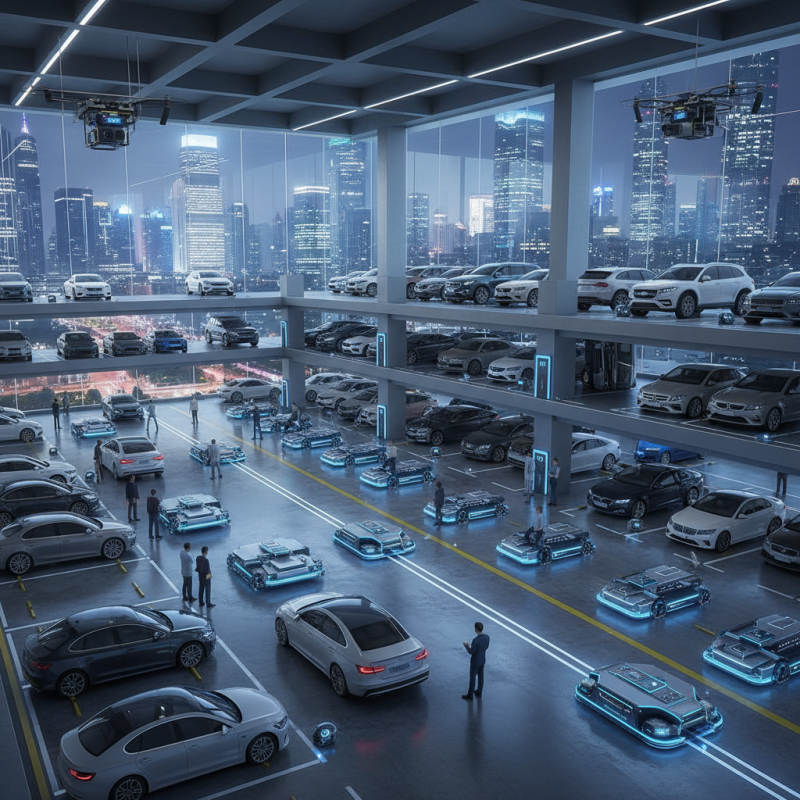
Key features driving this demand include automation and space optimization. Parking lot robots can maneuver in tight areas, maximizing available space. They use advanced sensors and AI technology for navigation. This reduces the risk of accidents and enhances user experience. Furthermore, robots can operate 24/7, ensuring high efficiency. However, maintenance and high initial costs remain challenges for many operators.
The integration of smartphone apps offers a significant advantage. Users can easily locate their vehicles or reserve parking spots. Despite these benefits, user adoption can be slow. Some potential customers express concern over reliability and maintenance costs. The market still needs to address these issues to reach its full potential.
Top 10 China Parking Lot Robots Suppliers for Efficient Vehicle Management
This chart illustrates the market share of the top 10 parking lot robot suppliers in China, showcasing their significant influence in the vehicle management sector.
Current Market Trends in Automated Vehicle Management Solutions
The landscape of automated vehicle management solutions is rapidly evolving. Recent market research shows that the demand for
Parking Lot
robots is growing at an unprecedented rate. The global automated parking system market is projected to reach USD 10.3 billion by 2027, driven by the need for
efficient space utilization and reduced congestion. Companies are looking for smarter ways to manage their parking lots.
Innovative parking lot robots can park multiple vehicles simultaneously, maximizing efficiency. These robots operate autonomously,
freeing up human resources and minimizing the risk of accidents. However, there are challenges to consider. Many facilities struggle
with the integration of new technology into existing infrastructures. Also, the initial investment can be substantial, which makes
some businesses hesitate.
The surge in electric vehicles adds another layer to parking lot management. These vehicles need specific charging
infrastructure, which is often not prepared for in traditional parking lots. Data indicates that about 20%
of drivers experience difficulties finding charging stations. As more electric vehicles hit the roads, the need for adaptable
parking solutions will become even more critical. Companies must not only focus on technological advancements but also address
potential gaps in user experience.
Leading Technology Innovations Among Top Chinese Parking Lot Robot Suppliers
The parking lot robot industry in China is rapidly evolving. Innovations in technology are paving the way for efficient vehicle management. Robots are becoming smarter, offering automated solutions to traditional parking struggles. They enhance space utilization and reduce congestion. Drivers can now expect a seamless parking experience.
Tips: Consider regular maintenance for these robots. Keeping software updated ensures optimal performance. Battery health should not be overlooked either.
Advanced features like AI and machine learning are transforming how these robots operate. They learn user preferences and adapt to different parking scenarios. This enhances their efficiency but also raises questions about data security. Users should seek suppliers that prioritize data protection.
Tips: Always read privacy policies. Understand how your data is being used. Transparency from suppliers can build trust in their technology.
Investing in smart parking systems not only saves time but also minimizes accidents. However, there is a learning curve for operators. Continuous training is essential to maximize capabilities. Adopting new technology is not always smooth. Feedback from users can guide improvements.
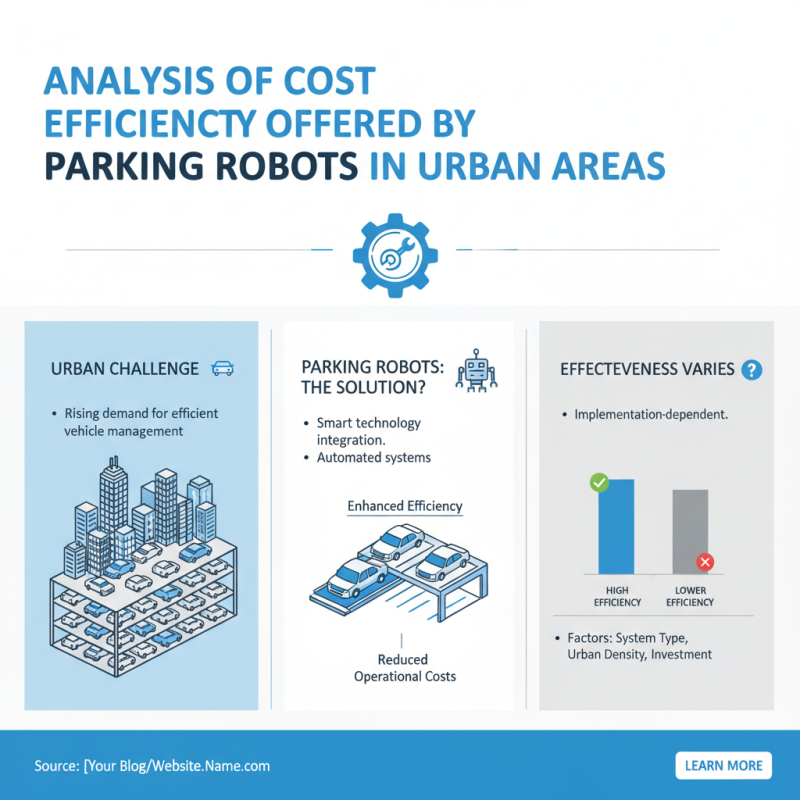
Analysis of Cost Efficiency Offered by Parking Robots in Urban Areas
In urban areas, the demand for efficient vehicle management has risen sharply. The integration of smart technology has led to the emergence of parking robots. These automated systems promise to enhance parking efficiency while reducing operational costs. However, their effectiveness can vary widely among different implementations.
Research shows that parking robots can save time and space. In busy city centers, the space-saving capabilities of these machines can optimize existing areas. They can park vehicles more closely than a typical human driver, leading to a more compact parking layout. Many urban planners are exploring the cost efficiency of Smart Parking Lots. Some initial investment in technology may be offset by operational savings over time. Yet, questions remain about maintenance costs and technology reliability.
User experiences highlight a mix of satisfaction and frustration. Some users enjoy faster parking turnarounds, while others complain about technical glitches. The varying performance of these systems raises concerns about their long-term viability. The reality is that while smart parking lot solutions offer significant benefits, they also demand careful consideration. Ongoing evaluation is critical to ensure they meet city needs without overwhelming users.
Impact of Parking Robots on Traffic Congestion in Major Chinese Cities
Parking robots are transforming vehicle management in major Chinese cities. Their impact on
traffic congestion is significant. These devices offer an
efficient alternative to traditional parking methods. They can park vehicles in tight spaces without human
intervention. This maximizes available parking space, reducing the need for extensive parking lots.
The incorporation of
Parking Lot Lifts enhances the operational
efficiency of these robots. They enable multiple vehicles to be stacked vertically. This not only
increases space utilization but also minimizes the time spent searching for parking. However, there are
challenges, such as the initial investment costs and technical
maintenance requirements. Cities must evaluate these factors when considering widespread adoption.
While parking robots show promise, public acceptance remains a hurdle. Some drivers are skeptical about
relying on machines to handle their vehicles. They worry about potential malfunctions and the safety of
their cars. Addressing these concerns is essential for broader implementation. Ultimately, the role of
parking robots in alleviating traffic congestion in urban areas is still unfolding. They could play a
critical role alongside other transportation
innovations.
Case Studies: Successful Implementations of Parking Robot Systems
The implementation of parking robot systems in China has seen remarkable success, improving efficiency and optimizing space. A recent report indicates that smart parking solutions can enhance parking space utilization by over 30%. This is critical in urban areas, where the demand for parking often exceeds availability. Some cities have documented a reduction in the average search time for parking from 20 minutes to just 5 minutes with the use of parking robots.
A case study in a major metropolitan area highlighted the capabilities of these robots. The system operates with a fleet of automated vehicles that transport cars to designated parking spots. The integration of AI enhances real-time tracking and management. Significant reductions in labor costs have been noted, alongside maintaining high standards of safety and security. However, there are challenges in maintaining the robots, particularly in older infrastructures where adjustments are necessary.
User feedback has been mixed, with many appreciating the convenience while others express concerns about technology reliability. About 15% of participants reported issues with navigation errors. As these systems evolve, ongoing assessments of their performance are crucial. Addressing potential malfunctions will help build greater trust in automated solutions. The future of parking robots hinges on continuous refinement and user education.
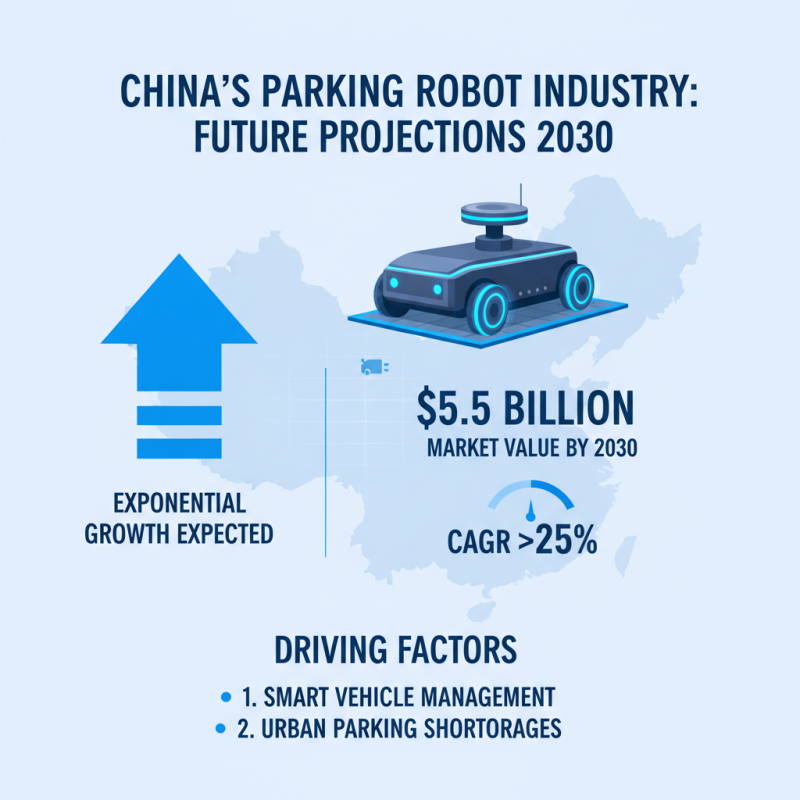
Future Projections for the Parking Robot Industry in China through 2030
The parking robot industry in China is on the brink of exponential growth. By 2030, market projections show it could reach a value of $5.5 billion, with a compound annual growth rate (CAGR) exceeding 25%. This surge reflects the increasing necessity for smart vehicle management systems, particularly in urban areas facing parking shortages.
As cities expand, innovative Parking Lot Systems become vital. Robots enhance efficiency by reducing the time required for parking. In densely populated regions, users can save an average of 30% on parking time. However, the initial implementation costs can be a barrier for some. China’s leading cities are setting benchmarks, yet smaller towns are slow to adopt these advancements.
Tips: Consider the space efficiency these robots provide. They can park vehicles in tighter configurations. In urban centers where land is limited, this can make a significant difference. Analyzing performance metrics is essential for ongoing improvement. Ensuring reliable technology integration will be crucial for long-term success in Parking Lot Systems.
FAQS
: Parking robots enhance parking efficiency and save time and space. They can optimize tight areas, allowing for compact layouts.
Yes, users report mixed experiences with technical glitches. Concerns about maintenance and long-term viability exist.
They maximize parking space, potentially reducing the need for large lots. This can lead to lower traffic congestion.
Initial investment costs and ongoing maintenance needs are crucial. Public acceptance and reliability must also be assessed.
Public acceptance varies. Some are hopeful, while others are skeptical about their reliability and vehicle safety.
They have potential but need to be integrated wisely. Balancing innovation and usability is important for success.
Yes, risks include malfunctions and user frustration. Continuous evaluation is necessary to address these issues.
They can stack vehicles vertically, which increases space efficiency. This reduces the time spent searching for available spots.
Many experience longer wait times due to technical issues. This can detract from the convenience they offer.
It can be offset by operational savings but requires careful calculation. The benefits should outweigh the initial costs.
Conclusion
The demand for Parking Lot Robots in China is driven by their advanced features, which enhance vehicle management efficiency. These automated solutions address current market trends by simplifying parking processes and improving space utilization in urban areas. Recent technological innovations among key suppliers have further propelled the growth of this market, showcasing a significant shift towards automation in vehicle management.
Moreover, the analysis of cost efficiency highlights the economic benefits of Parking Lot Robots, particularly in reducing operational costs associated with manual parking management. Their implementation has been positively correlated with alleviating traffic congestion in major Chinese cities, indicative of their role in smart urban planning. Case studies demonstrate successful deployments of parking robot systems, reinforcing the potential growth and future projections for the parking robot industry in China through 2030. As urban centers continue to modernize, the role of Parking Lot Robots is set to become increasingly prominent.