Leave Your Message
0%

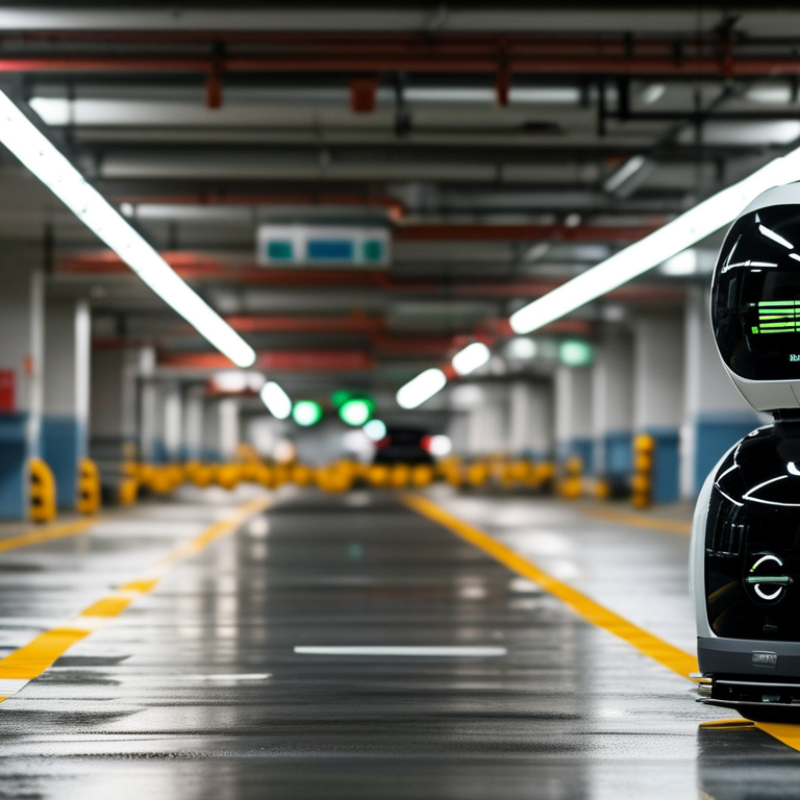
China's parking tech scene is really evolving beyond the basic painted lines, payment gates, and manual patrols we used to see. Nowadays, Parking Lot Robots are decked out with cameras, sensors, mapping software, and even automated lifts. They can grab vehicles from tight spots at narrow entrances and tuck them away into densely packed storage zones. Honestly, the whole process feels more like handling luggage at an airport than your typical parking lot hustle.

In this guide, I’ve rounded up ten of the most notable Chinese suppliers—think Hikvision, Jieshun, Yee Fung, Xizi, Shenzhen Tongbao, and Nanjing Aisen. I didn’t just pick them randomly; I looked at their experience with deployments, how reliable their systems are, how well their software plays along, maintenance support, and whether they can scale up for bigger projects. I also dug into practical stuff—like how long queues tend to get, the size of parking bays, charging requirements, and what happens if the equipment breaks down. Honestly, these everyday details matter way more than flashy demos.

As Dr. Wolfgang Gruel, an expert in automated parking systems, put it: “Automation is only valuable if it actually solves real space and service problems.” That’s the rule I kept in mind while making this comparison. A robot might save land, but if it takes forever to retrieve a car, that’s no win. The same goes for systems that look impressive but are let down by weak after-sales support. Plus, some claims from suppliers are tricky to compare because testing conditions aren’t always consistent, so it’s worth asking questions. Also, things change fast—what’s top-ranked today might not be tomorrow as projects grow and tech improves. Before making any decisions, make sure to check certifications, local service teams, references, and overall costs. This guide is just a practical starting point, not a final verdict.
China Top 10 Parking Lot Robots Suppliers?

China Parking Demand: 336 Million Automobiles Recorded by MPS in 2023

China Top 10 Parking Lot Robots Suppliers?

China’s parking demand is becoming a practical infrastructure issue. The Ministry of Public Security recorded 336 million automobiles in 2023. That figure changes how developers view every Parking Lot. A small site near an apartment tower may receive hundreds of vehicles daily. Drivers expect short waiting times, clear guidance, and safe vehicle handling.

Parking robots can use narrow spaces more efficiently than conventional layouts. They may also reduce indoor driving, exhaust exposure, and repeated searching. When comparing the top ten suppliers, buyers should inspect field experience, control software, lifting accuracy, emergency procedures, and maintenance response. A strong supplier should provide tested load ratings and transparent operating data. Ask for installation records, not only attractive demonstrations.

Details matter. Check whether sensors perform reliably in dust, rain, and low light. Review how the system handles power failure or an incorrectly positioned vehicle. A response delay of several minutes can create a queue at 8 a.m. That is easy to underestimate. Energy consumption and spare-part availability also affect long-term costs. Independent inspections can improve confidence, although they cannot remove every risk. No ranking is perfect. Some suppliers may appear advanced but lack experience in busy residential environments. Others may offer dependable hardware with less polished software. Site conditions should decide the final choice, not marketing language.

China Top 10 Parking Lot Robots Suppliers? — China Parking Demand

China's civil motor vehicle population increased from approximately 260 million in 2019 to 336 million in 2023, highlighting the growing demand for automated parking and parking-management solutions.

Data source: Ministry of Public Security of the People's Republic of China (MPS), year-end civil motor vehicle statistics.

Parking Robot Types: AGVs, AMRs, Shuttles, and Robotic Valets Compared

China Top 10 Parking Lot Robots Suppliers?

Choosing parking robots requires more than comparing advertised lifting capacity. A Smart Parking Lot must match vehicle size, floor height, traffic flow, and local maintenance skills. AGVs follow mapped routes and use guided navigation. They suit predictable layouts with marked lanes and fixed pickup points. Their performance is stable, but route changes may require careful system updates.

AMRs use sensors, cameras, and software to select paths independently. They handle changing layouts better than AGVs. However, crowded floors, poor lighting, or unclear markings can reduce reliability. Shuttles move vehicles on rails or platforms between parking levels. They offer high density and precise positioning. The trade-off is construction complexity. A small mechanical fault can affect an entire lane.

Robotic valets drive vehicles into prepared bays and retrieve them through automated commands. They can reduce walking distance and improve space usage. Yet, entry alignment, tire condition, and emergency access need strict attention. During supplier evaluations, request live demonstrations, recovery procedures, battery data, and service response times. Ask how the system behaves when a sensor becomes dirty. That detail matters.

No option fits every building. A mixed system may work better. For example, shuttles can serve dense storage zones, while AMRs handle flexible transfer areas. Cost estimates often miss software updates and night-shift support. I have found that the cheapest design is not always the least expensive to operate. Performance should be checked during rain, peak arrival periods, and partial equipment failure.

How Parking Robots Work: Sensors, Mapping, Lifts, and Retrieval Workflows

China’s top parking robot suppliers typically build systems around four coordinated functions: sensing, mapping, lifting, and retrieval. Sensors detect vehicle edges, nearby walls, and unexpected obstacles. Cameras may read license plates, while ultrasonic units measure tight side gaps. Some systems also use laser scanning for higher positioning accuracy.

The robot creates a digital map of each parking bay, travel lane, and lift entrance. Software checks this map before moving a vehicle. A low platform then slides beneath the tires, raises the car slightly, and carries it to an assigned space. In multi-level facilities, elevators connect different floors. During retrieval, the system verifies the vehicle location, clears the route, and returns the car to a collection zone. Small errors matter. A misplaced wheel or weak sensor signal can delay the entire sequence.

Tips: Ask suppliers for sensor-failure tests, emergency-stop records, and retrieval-time data. Watch a live demonstration, not only an animation. Confirm how the system handles large vehicles, wet floors, narrow ramps, and communication loss. Maintenance access is important too. A clever design may still become expensive when one sensor is difficult to replace. Operators should review logs regularly and test manual recovery procedures. Real sites are messier than showroom floors.

Top 10 China Parking Robot Suppliers: Products, Projects, and Certifications

China’s top ten parking robot suppliers typically offer automated guided vehicles, pallet systems, lifting platforms, and shuttle-based parking equipment. Their product ranges serve residential towers, hospitals, airports, offices, and commercial complexes. Some suppliers also provide parking management software, license-plate recognition, payment integration, and remote fault monitoring. The strongest proposals show parking layouts, vehicle dimensions, charging points, fire routes, and expected turnover times.

Project experience deserves close attention. A supplier with installations in humid coastal cities may understand corrosion better than one with only indoor references. Sites in northern regions require different protection against freezing temperatures. Ask for project capacities, daily vehicle movements, maintenance records, and actual handover dates. Photos are useful, but operating data is stronger evidence. Some suppliers present impressive case studies without explaining downtime or redesign costs. That gap matters.

Certifications can support reliability, but they do not replace testing. Look for a valid ISO 9001 quality system, ISO 14001 environmental management, and ISO 45001 occupational safety certification. For export projects, verify applicable CE documentation, electrical safety reports, and machinery risk assessments for the exact model. Chinese GB standards may also apply to structural, electrical, and fire-safety components. Certification names should match the supplying entity and product scope. I would also inspect software recovery procedures, emergency release design, spare-parts availability, and technician response times. No supplier is flawless. A careful comparison should record both documented strengths and unresolved weaknesses.

Technical Benchmarks: Capacity, Retrieval Time, Accuracy, Uptime, and ROI

When evaluating the top ten parking automation suppliers, compare measured performance, not brochure capacity. A 2024 industry market review reports that automated facilities can increase usable parking capacity by roughly 30–60% over conventional layouts. That gain depends on vehicle dimensions, column spacing, and circulation design. Parking Lot Lifts should be assessed by occupied footprint, not the number of advertised bays.

Retrieval time is more practical than headline capacity. Field studies commonly report 90–180 seconds for standard vehicle delivery, while peak queues can exceed five minutes. Demand a written cycle-time test with cold starts, full occupancy, and mixed vehicle sizes. Positioning accuracy should stay within approximately 10–20 millimeters for reliable pallet transfer, based on benchmarks in automated material-handling systems. Uptime above 98% is desirable, but suppliers should disclose whether this excludes scheduled maintenance. That detail matters.

ROI requires local evidence. A 2023 automated-parking cost study found that land savings often create the strongest financial benefit, especially in dense urban projects. Labor reduction helps, but energy, software, maintenance, insurance, and replacement parts can erode payback. A simple model should test five-, ten-, and fifteen-year scenarios. One uncomfortable issue remains: many projections assume perfect user behavior. Real drivers misplace keys, exceed weight limits, or arrive simultaneously after events. Test those failures before signing. The best supplier is not always the one with the fastest demo.

Safety and Procurement: GB/T 51408-2021, JGJ 100-2015, and Due Diligence

Choosing among China’s top ten parking lot robot suppliers requires more than comparing speed and storage capacity. Parking Lot Systems must fit local fire, structural, electrical, and evacuation requirements. GB/T 51408-2021 should guide technical review for mechanical parking facilities. JGJ 100-2015 remains important for garage and parking-lot planning. Neither standard should be treated as a simple marketing certificate.

Market data explains the urgency. Grand View Research estimated the global automated parking system market at about USD 1.9 billion in 2023, with strong growth expected through 2030. MarketsandMarkets also identifies urban land shortages and vehicle-density increases as major demand drivers. However, market growth does not prove safe operation. A narrow ramp, poor sensor calibration, or delayed emergency release can create serious risks underground.

Procurement teams should request load calculations, brake test records, fire-control integration documents, software logs, and maintenance response times. Ask for a live demonstration with a heavy vehicle, power loss, blocked sensors, and manual recovery. Check whether technicians are available near the project site. Inspect one operating installation, not only a polished showroom. Confirm civil-interface drawings before signing. Costs are often underestimated when pits, drainage, ventilation, and reinforced slabs change during construction. One uncomfortable question remains: who takes responsibility when the robot, building system, and vehicle owner interact during an incident? That answer should be written into the contract.

China Top 10 Parking Lot Robots Suppliers? - Safety and Procurement: GB/T 51408-2021, JGJ 100-2015, and Due Diligence

Evaluation Dimension Procurement Requirement Applicable Reference Evidence to Request Acceptance or Verification Method Risk Indicator
Supplier legal identity Confirm the bidding entity, manufacturing entity, registered address, and responsible legal representative. Applicable Chinese company-registration and procurement requirements Business licence, company registration record, authorization letter, tax-registration information, and ownership declaration. Match all names, registration numbers, addresses, seals, and signing authorities across submitted documents. Different legal entities appear on the quotation, contract, certificates, and invoices.
Compliance with parking-equipment standards The design, installation, commissioning, and acceptance plan should identify the standards applicable to the specific parking system. GB/T 51408-2021; other applicable national, industry, local, and project specifications Compliance matrix, design calculations, equipment drawings, risk assessment, inspection records, and acceptance procedures. Independent technical review against the approved design and the final as-built configuration. A generic declaration is supplied without a clause-by-clause compliance matrix.
Garage layout and vehicle access Verify vehicle dimensions, turning paths, ramp arrangement, headroom, pedestrian separation, drainage, ventilation, and emergency access. JGJ 100-2015, Code for Design of Garage Buildings; approved architectural and fire-safety design Site survey, civil drawings, traffic simulation, vehicle envelope data, ramp drawings, and coordination drawings. Check the largest specified vehicle and the required clearance at every operating position. The proposal uses nominal vehicle dimensions but does not state maximum length, width, height, or mass.
Load capacity and vehicle compatibility Define rated vehicle mass, axle-load assumptions, wheelbase range, tyre dimensions, ground clearance, and vehicle-type exclusions. Approved structural calculations and equipment technical specification Load calculations, material certificates, drive-system data, platform drawings, and vehicle compatibility table. Static and dynamic tests using representative vehicles at the maximum declared load. Capacity is advertised as a single weight figure without axle-load or dimensional limits.
Functional safety and protective devices Provide monitored doors, presence detection, anti-collision protection, overload protection, position confirmation, emergency stops, and safe restart logic. GB/T 51408-2021; equipment safety design; applicable electrical and machinery-safety requirements Safety circuit diagram, sensor list, failure-mode analysis, emergency-stop layout, and protection-device certificates. Test each protective function independently and under simulated sensor, power, and communication faults. Safety functions rely solely on software or cannot be tested separately during commissioning.
Fire, evacuation, and emergency coordination Coordinate robot operating areas with fire compartments, evacuation routes, smoke-control provisions, fire-fighting systems, and emergency access. JGJ 100-2015; approved fire-protection design; current local fire-code requirements Fire-protection coordination drawings, emergency operating procedure, evacuation assessment, and authority review records where required. Joint test with the owner, fire-safety contractor, facility operator, and relevant inspecting parties. The robot system is evaluated separately from the building’s fire and evacuation strategy.
Electrical supply and power-loss response Define voltage, frequency, protection, grounding, standby requirements, controlled stopping, manual release, and recovery after power restoration. Approved electrical design; applicable Chinese electrical and low-voltage requirements Single-line diagram, protection-settings schedule, grounding test, battery or backup-power specification, and recovery procedure. Interrupt power during controlled tests and verify that vehicles remain protected and recover without unsafe motion. No documented manual-recovery procedure or unclear responsibility for trapped vehicles.
Cybersecurity and data protection Control access to dispatch software, cameras, payment interfaces, remote maintenance, logs, and personal or vehicle-related data. Contractual information-security requirements and applicable Chinese cybersecurity and data-protection laws Network diagram, access-control policy, vulnerability-management process, backup policy, retention schedule, and incident-response plan. Review user privileges, audit logs, remote-access controls, software-update procedures, and data-hosting location. Default passwords, unrestricted remote access, unsupported operating systems, or undocumented cloud storage.
Performance and service capacity Set measurable requirements for retrieval time, throughput, availability, queue length, noise, energy use, and peak-period operation. Project performance specification and approved traffic model Factory test results, reference operating data, capacity calculation, maintenance records, and service-level proposal. Run a witnessed test using agreed arrival patterns and record the complete cycle time, including queueing and error recovery. Only theoretical cycle time is provided, excluding queueing, scanning, positioning, and fault recovery.
Installation, commissioning, and acceptance Assign responsibilities for civil readiness, equipment installation, calibration, trial operation, defect correction, and final handover. GB/T 51408-2021; approved project quality and acceptance plan Method statement, inspection-and-test plan, calibration records, punch list, as-built drawings, and operation manuals in Chinese. Use signed hold points for civil inspection, installation inspection, no-load testing, loaded testing, and final acceptance. The supplier requests final payment before completing safety tests or closing critical defects.
Maintenance and spare-parts support Require preventive-maintenance intervals, response times, critical-spares availability, technician qualifications, and lifecycle support. Contract service-level agreement and manufacturer maintenance documentation Maintenance schedule, spare-parts list, recommended inventory, training plan, escalation contacts, and warranty terms. Verify service coverage in the installation location and conduct a maintenance demonstration before handover. Long-lead parts are excluded from the quotation or warranty exclusions are broadly worded.
Financial and commercial due diligence Assess the supplier’s ability to complete the project, support warranties, and maintain supply continuity. Internal procurement policy and contract-risk controls Audited financial information where available, litigation search, tax-compliance evidence, bank details, insurance, and customer references. Use independent corporate-record, court-record, sanctions, and credit checks before contract award. Frequent legal-entity changes, payment-account mismatch, unresolved litigation, or unusually low pricing.
Contract protection and payment controls Link payments to documented milestones and retain amounts for successful commissioning, acceptance, training, and defect closure. Project contract, purchase conditions, and applicable commercial law Detailed bill of quantities, delivery schedule, liquidated-damages clause, warranty clause, insurance, and change-control procedure. Confirm that every milestone has objective documentary evidence and an authorized sign-off process. Large advance payment, vague delivery dates, no remedy for delay, or no ownership definition for software and data.

Note: Standards and regulatory requirements should be confirmed against the latest official edition, local authority requirements, the approved building design, and the specific parking-system configuration before procurement.

CE-Certified Hydraulic 2-Post Car Stackers: A Practical Guide for SUVs and Sedans

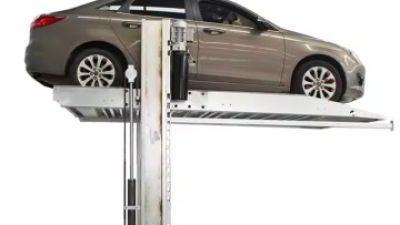
CE-certified hydraulic 2-post car stackers provide a practical way to create two parking levels without expanding the footprint of a garage, workshop, or private parking area. Designed for both SUVs and sedans, this system uses two vertical posts to lift one vehicle above another. The lower vehicle can be parked or retrieved at any time, while accessing the upper vehicle requires moving the vehicle below. This arrangement is especially useful where space is limited and organized vehicle storage is essential.

Three models are available to suit different vehicle weights and requirements, with load capacities of 2,300 kg, 2,700 kg, and 3,200 kg. The maximum lifting height reaches 2,100 mm, allowing sufficient clearance for many sedans and selected SUVs. Before installation, users should confirm vehicle dimensions, roof height, wheelbase, and total weight to select the appropriate model. Hydraulic lifting components, stable two-post support, and CE certification contribute to dependable operation when the equipment is installed and used according to its specifications. As a China-based factory and supplier, the manufacturer can customize platform dimensions and system configurations to match individual parking layouts, vehicle types, and available ceiling space.

FAQS

: Why is parking automation becoming important?

: A large vehicle population creates pressure on limited urban parking space. A small site may receive hundreds of vehicles daily. Drivers expect short waits and clear guidance.

What should buyers check before choosing a supplier?

Review installation records, load ratings, control software, and maintenance response. Ask for operating data, not only polished demonstrations. Field experience matters more than attractive marketing.

How do AGVs and AMRs differ?

AGVs follow mapped routes and suit fixed layouts. AMRs choose routes using sensors, cameras, and software. AMRs adapt better, but crowded floors can reduce reliability.

When are shuttle systems suitable?

Shuttles move vehicles on rails or platforms between levels. They provide dense storage and accurate positioning. Construction is more complex. One fault may affect an entire lane.

What are robotic valet systems?

Robotic valets drive vehicles into prepared parking bays. They can reduce walking distance and improve space usage. Entry alignment, tire condition, and emergency access require careful control.

Can parking robots operate reliably in difficult conditions?

Buyers should test sensors in dust, rain, and low light. Dirty sensors may cause delays or incorrect vehicle positioning. Performance can change during peak arrival periods. Testing is often too limited.

How should emergency and equipment failures be evaluated?

Ask how the system handles power loss, sensor faults, and misplaced vehicles. Request recovery procedures and service response times. A delay of several minutes can create an 8 a.m. queue.

Is the cheapest parking robot usually the best choice?

Not always. Software updates, spare parts, energy use, and night support affect long-term costs. A cheaper system may become expensive during repeated faults. Cost estimates can still miss important details.

Is one parking robot type suitable for every building?

No single design fits every site. Vehicle size, floor height, traffic flow, and maintenance skills should guide selection. A mixed system may work better. For example, shuttles can serve dense zones while AMRs manage flexible areas.

Can supplier rankings guarantee the best decision?

No ranking is perfect. Some systems look advanced but lack busy residential experience. Others offer reliable hardware with less polished software. Independent inspections help, but they cannot remove every risk.

Conclusion

China’s parking challenge is growing alongside the country’s expanding vehicle population, creating demand for smarter and more space-efficient solutions. This article explains how Parking Lot Robots—including AGVs, AMRs, shuttle systems, and robotic valet platforms—support automated vehicle storage and retrieval. It introduces their operating workflow, from sensor detection and digital mapping to lifting, transporting, positioning, and returning vehicles with minimal human intervention.

The guide also compares key technical benchmarks, such as parking capacity, retrieval time, positioning accuracy, system uptime, energy efficiency, and potential return on investment. It presents a practical framework for evaluating leading Chinese suppliers through their products, completed projects, engineering capabilities, and certifications, without focusing on individual brand names. Finally, it highlights essential procurement and safety considerations, including compliance with GB/T 51408-2021 and JGJ 100-2015, site assessment, maintenance planning, emergency procedures, data verification, and supplier due diligence.

Liam

Liam

Liam is a dedicated marketing professional based in Jiading District, Shanghai, who plays a pivotal role in promoting the company's innovative mechanical parking systems. With a deep understanding of the industry, he consistently updates the company's professional blog, sharing insights on......
Previous 2026 Best Hydraulic Garage Lift for Global Buyers?