Leave Your Message
As cities get more crowded and land becomes more expensive, finding enough space for parking is getting trickier than ever. That’s where a Car Parking Hoist really comes in handy. It can stack two or even more vehicles within the same footprint, which is a game-changer, especially in busy residential areas, commercial zones, or workshops. At first glance, it seems pretty straightforward—just a simple piece of equipment, right? But trust me, the engineering behind it is anything but simple.
According to Grand View Research, the global market for automated parking systems is booming—driven by urban growth, more cars on the roads, and the constant need for more space. MarketsandMarkets adds that automation, smart city projects, and compact infrastructure are major drivers shaping this market. But here’s the thing: different reports don’t always agree on how big the market really is, so it’s worth paying closer attention. If you’re thinking about buying one, don’t just rely on those fancy forecasts. It’s smart to check out real-world installation records and actual user experiences.
Parking expert Donald Shoup once said, “Parking is a land use, not a transportation mode.” That’s a pretty powerful statement that really hits home here. Using a hoist changes how land gets used, but it also affects daily habits—how people park, how often they need maintenance, and so on. So, if you’re considering getting a hoist, make sure it has the right platform size, verified load capacity, and solid lifting cycles. Emergency controls and easy maintenance access are a must. In humid coastal areas especially, protecting the equipment from rust is crucial. And let’s not forget—good service support is just as important as the machine itself.
This guide to the Top 10 Car Parking Hoists available worldwide takes a close look at equipment from well-known manufacturers and specialists. We evaluate based on the lifting structure, safety features, how flexible the installation can be, energy efficiency, warranty support, and overall value over the long run. Some models are perfect for private garages, while others work better for car dealerships, apartment complexes, or busy facilities with lots of turnover. Keep in mind, this isn’t a one-size-fits-all list. Your specific site conditions can tip the scales. Plus, just because a hoist is cheaper doesn’t mean it’s the best deal—poor after-sales support can end up costing you a lot more in the long run. That’s something a lot of comparison guides tend to overlook, but it really makes a difference.
What Are Car Parking Hoists and How Do They Work?
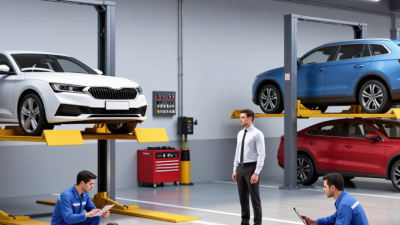
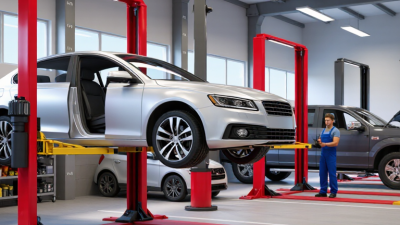
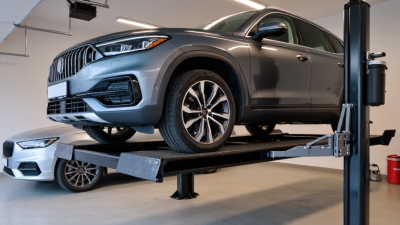
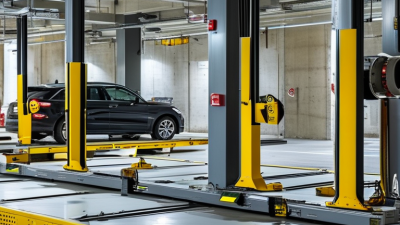
A Parking Hoist is a mechanical system that stores vehicles above or below another vehicle. It uses steel platforms, guide posts, motors, and locking devices. Some models lift one car vertically. Others slide platforms sideways, creating a compact parking grid. Hydraulic cylinders or electric screw drives provide the lifting force. Mechanical locks should hold the platform before anyone parks beneath it.
Urban pressure makes this equipment increasingly relevant. UN DESA’s World Urbanization Prospects projects that 68% of people will live in cities by 2050. The International Energy Agency reported nearly 14 million electric car sales in 2023. Heavier vehicles may require higher platform ratings and stronger drive systems. Buyers should check rated load, usable platform length, ceiling height, drainage, and power requirements. A shiny frame alone proves very little.
In practical use, the driver aligns the wheels with guide rails, applies the parking brake, and leaves the vehicle. Sensors can detect poor positioning, while emergency stops interrupt movement. Daily inspections should examine cables, hydraulic leaks, locks, bolts, and unusual noise. Applicable lift and machinery standards must guide installation and testing. A small mistake in measurements can waste the entire bay. I would also question advertised capacity when the specification omits dynamic loads, maintenance intervals, or rescue procedures.
Car parking hoists are lifting systems that raise one or more vehicles to create additional parking space vertically. They generally use hydraulic cylinders, mechanical screw systems, or linked lifting mechanisms, together with locking devices, ramps, platforms, and safety controls. The specifications below represent common commercially available configurations; exact dimensions and capacities vary by manufacturer, local regulations, and installation conditions.
| Rank | Hoist Type | Typical Vehicle Capacity | Typical Platform Size | Typical Lift Height | Drive System | Best Application | Main Safety Features |
|---|---|---|---|---|---|---|---|
| 1 | Two-Post Parking Lift | 2,700–3,600 kg | 2,500–2,800 mm wide 4,800–5,200 mm long |
1,500–2,000 mm | Hydraulic cylinder with chain or cable synchronization | Garages, workshops, and residential driveways | Mechanical locking positions, anti-drop valves, automatic arm restraints |
| 2 | Four-Post Parking Lift | 2,700–4,000 kg | 2,500–2,900 mm wide 5,000–5,500 mm long |
1,600–2,100 mm | Hydraulic or cable-driven synchronized lifting | Long-term vehicle storage and collector-car parking | Lock ladders, wheel stops, safety cables, and platform restraints |
| 3 | Scissor Parking Lift | 2,000–3,500 kg | 2,300–2,700 mm wide 4,800–5,300 mm long |
1,200–2,000 mm | Hydraulic scissor mechanism | Space-efficient indoor parking and display areas | Hydraulic flow controls, mechanical locks, toe guards, emergency stop |
| 4 | In-Ground Single-Post Lift | 2,000–3,500 kg | 2,300–2,700 mm wide 4,700–5,200 mm long |
1,500–2,000 mm | Hydraulic ram installed below floor level | Premium garages where clear floor space is important | Mechanical locks, hydraulic overload protection, sealed cylinder system |
| 5 | Double-Stacker Parking Lift | 2,000–3,200 kg per platform | 2,400–2,800 mm wide 4,800–5,300 mm long |
1,600–2,000 mm | Hydraulic posts with synchronized chains | Doubling parking capacity in a single bay | Multiple locking points, anti-fall devices, wheel chocks, limit switches |
| 6 | Dependent Tandem Lift | 2,000–2,700 kg per platform | 2,400–2,700 mm wide 8,500–10,500 mm total length |
1,500–1,900 mm | Hydraulic or screw-driven platform | Two vehicles parked one behind another | Mechanical locks, end stops, anti-slip platform surface, emergency lowering |
| 7 | Portable Mobile Column Lift | 3,000–7,500 kg total | Vehicle-dependent typically 2,000–2,600 mm axle width |
1,500–1,900 mm | Electro-hydraulic synchronized columns | Flexible workshops and temporary parking operations | Column interlocking, overload detection, automatic stopping, wheel locking |
| 8 | Screw-Driven Parking Lift | 2,500–3,500 kg | 2,400–2,800 mm wide 4,800–5,300 mm long |
1,500–2,000 mm | Electric motor and synchronized screw columns | Indoor facilities requiring precise lifting control | Self-locking screw mechanism, position sensors, mechanical restraints |
| 9 | Pit-Style Vertical Parking Lift | 2,000–3,000 kg per platform | 2,300–2,700 mm wide 4,800–5,400 mm long |
2,000–3,500 mm | Hydraulic platform lift installed in a pit | Basement parking and concealed vehicle storage | Pit drainage, platform locks, perimeter guards, obstruction sensors |
| 10 | Automated Puzzle Parking Lift | 2,000–2,500 kg per vehicle | 2,400–2,700 mm wide 4,800–5,500 mm long |
Variable; commonly 2–6 vehicle levels | Motorized platforms, chains, hydraulic units, or screw drives | Commercial buildings and high-density urban parking | Presence sensors, access control, emergency stop, anti-collision monitoring |
Note: Load ratings, clearances, platform dimensions, power requirements, anchoring methods, and safety provisions must be verified against the actual product documentation and applicable local standards before purchase or installation.
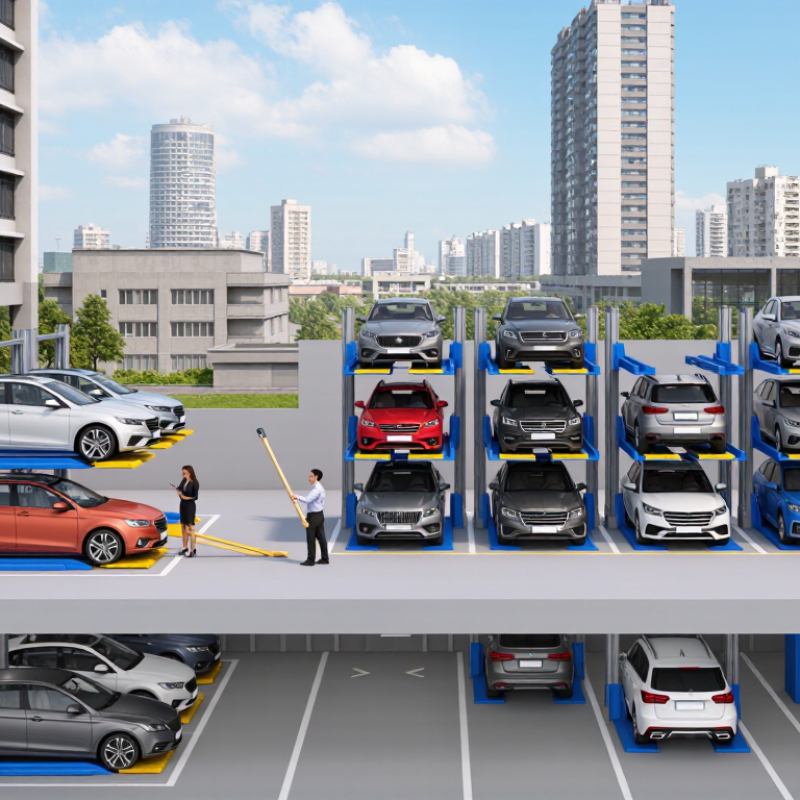
Vertical Lifting Mechanical Parking Systems offer a smart high-rise solution for urban parking challenges, especially in communities, commercial developments, and specialized parking lots where land is limited. By moving vehicles vertically instead of relying on extensive horizontal space, the system creates multiple parking levels within a compact footprint. Its mid-rise structure is suitable for customized projects and can be adapted to different site dimensions, traffic requirements, and parking capacities.
Designed with intelligent control technology, the system supports efficient vehicle access, organized parking management, and convenient operation. Its flexible configuration allows developers to make better use of narrow or irregular sites while reducing the need for large-scale excavation or expansion. The streamlined structure and refined exterior can blend with modern, traditional, or mixed architectural environments, helping minimize the visual impact often associated with conventional parking equipment. For urban areas where vertical space is available but land resources are increasingly restricted, this solution provides a practical balance between capacity, functionality, and architectural harmony.
It is a mechanical parking system that stores one vehicle above or below another. Steel platforms, guide posts, motors, and locks support the movement. Some units lift vertically. Others slide sideways. Measure twice.
Hydraulic cylinders or electric screw drives provide the lifting force. The platform moves along guide posts or rails. Mechanical locks should secure it before anyone parks underneath. Never rely on power alone.
Measure ceiling height, driveway slope, column width, and door clearance. Check the usable platform length and drainage points. A platform may fit one car but block another. Small errors matter.
They can, but some electric vehicles are heavier than similar petrol vehicles. Check the rated load, including the vehicle and dynamic movement. Platform size alone proves little. Weight matters more.
Look for mechanical locks, emergency stops, limit switches, and anti-slip surfaces. Sensors may detect poor vehicle positioning. Visible load labels also help prevent misuse. Do not bypass safety devices.
Examine locks, cables, hydraulic hoses, bolts, and anchor points. Watch for oil stains, unusual noise, slow lifting, or platform movement. Keep tracks free from dust and grit. Stop immediately.
Align the wheels with the guide rails and apply the parking brake. Keep people and loose tools away from the platform. Never exceed the rated capacity or load one side unevenly. Training should include practical operation.
Follow a documented maintenance schedule based on actual usage and weather exposure. Outdoor systems may corrode faster than indoor equipment. A yearly inspection may be insufficient in harsh conditions. That is easy to overlook.
A Car Parking Hoist is a mechanical parking system that lifts, lowers, or stores vehicles in vertical or stacked spaces, helping maximize limited parking areas. Common options include two-post, four-post, puzzle, hydraulic, and platform-based systems, each suited to different vehicle sizes, property layouts, and usage needs. When comparing the top 10 car parking hoists for sale worldwide, buyers should assess lifting capacity, platform dimensions, operating speed, control systems, power requirements, construction quality, and available safety features. Ease of use, noise levels, space efficiency, and compatibility with local building conditions are also important factors.
Professional installation is essential to ensure stable operation, correct anchoring, and safe vehicle positioning. Regular inspections, lubrication, cleaning, and maintenance should follow the equipment supplier’s guidance. Before purchasing, customers should compare total costs, including shipping, installation, training, spare parts, warranty coverage, and after-sales support. Reliable suppliers should provide clear technical documentation, responsive service, and suitable solutions for residential, commercial, and institutional parking environments.