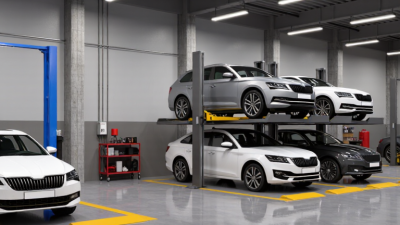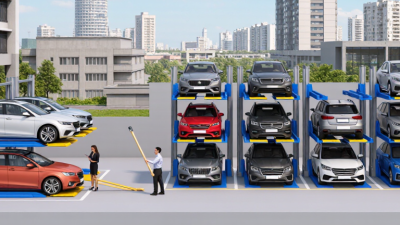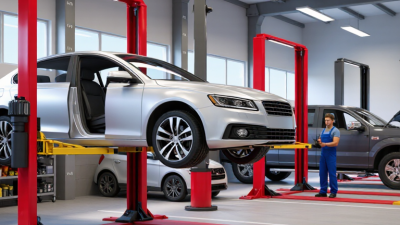
China’s Car Parking Machine industry has moved pretty fast. These systems now show up in residential towers, hospitals, hotels, and busy commercial districts. In this guide, we look at ten Chinese suppliers worth knowing, like Mutrade, Dayang Parking, XIZI iParking, Tongbao Parking, and Qingdao CIMC Special Vehicles. We also mention a few newer manufacturers, each with its own technical strengths.
When comparing suppliers, it helps to focus on engineering experience, product range, installation support, and after-sales reliability. But a serious comparison shouldn’t stop there. You’ll want to check lifting capacity, platform size, sensor accuracy, emergency lowering, corrosion protection, and maintenance access. A shiny showroom? Not enough. The real test happens in daily traffic.
Parking researcher Donald Shoup once wrote, “Parking is a land use.” That line still works well when you’re evaluating any Car Parking Machine project. A machine doesn’t just store vehicles. It affects circulation, construction depth, waiting time, and how confident users feel. So suppliers should provide clear drawings, load calculations, safety procedures, and commissioning records.
No ranking is perfect, of course. Public information can be incomplete, and a supplier’s capabilities may change after publication. Some companies are great at compact residential systems, while others are better suited to automated garages or large commercial projects. Buyers should ask for recent project references, factory videos, spare-parts policies, and local service contacts. And don’t skip a practical test. Watch how the machine handles a wet platform, a misaligned vehicle, and repeated peak-hour cycles. Often, those details tell you more than any catalogue.
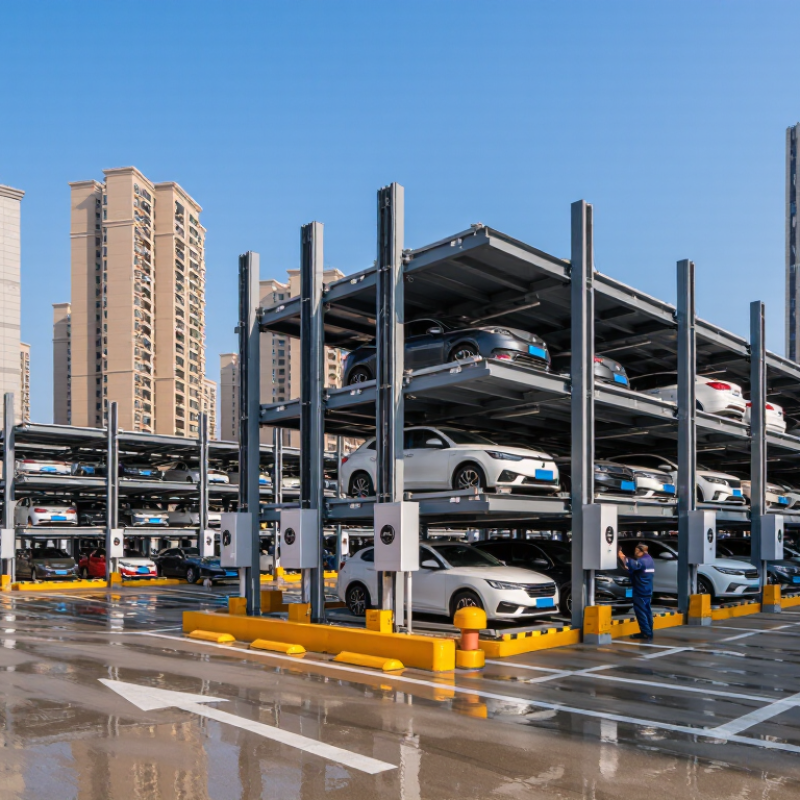
A Parking Machine is a mechanical or automated system that stores vehicles in limited space. It may lift, slide, rotate, or move cars between parking positions. Unlike a traditional garage, it uses equipment instead of wide driving lanes. Common systems include puzzle parking, tower parking, and stacker parking designs.
The working process begins when a driver stops at an entry bay. Sensors check vehicle height, width, weight, and position. The control panel then selects an available space. Motors, platforms, lifts, and safety locks move the vehicle carefully. Infrared sensors detect obstacles, while emergency controls stop movement during unusual conditions. Operators should also inspect cables, brakes, sensors, and drainage regularly. Small faults can become expensive. Real sites often reveal problems that drawings miss, such as poor turning space or water near electrical components.
Tips
Measure the largest expected vehicle, not the average one. Confirm local fire, accessibility, and structural requirements before installation. Ask suppliers for maintenance schedules, load ratings, emergency procedures, and response times. Visit an operating project when possible. Watch the entry process closely. Is it slow? Is the control panel clear? Noise, lighting, and user training also affect daily reliability. A cheaper system may require more maintenance, so purchase price alone can mislead. Human mistakes remain possible, even with automation.
China’s car parking machine industry is built around rapid vehicle growth and limited urban land. The China Association of Automobile Manufacturers reported 30.09 million vehicle sales in 2023. New-energy vehicles reached 9.5 million units. This mix increases demand for compact, reliable parking capacity near apartments, offices, and transport hubs.
The supply chain has several layers. Steel fabricators produce frames, platforms, and guide rails. Control-system companies provide sensors, software, and safety interlocks. System integrators combine these parts into an Automated Parking Machine for a specific site. Installation contractors then manage foundations, wiring, commissioning, and maintenance. The China Urban Parking Development Report identifies public parking, residential parking, and shared facilities as separate demand segments. Each segment requires different access speeds and operating schedules.
Procurement is rarely based on equipment price alone. Buyers examine lifting cycles, emergency release design, corrosion protection, noise levels, and spare-parts response. International market research reports also show strong global growth in automated parking systems, but Chinese figures are not always consistent. Some reports count equipment only. Others include construction and software services. That difference matters.
A practical supplier review should test a loaded platform on site. Watch the door clearance. Measure retrieval time. Ask for maintenance records. Published data can look precise, yet field performance may vary. The industry is organized, but not perfectly transparent. That remains a weakness worth examining.
China Top 10 Car Parking Machine Suppliers?
When evaluating China’s top suppliers, start with engineering evidence, not attractive brochures. A reliable Car Lifting Machine should show rated load data, platform dimensions, lifting speed, and tested safety margins. Ask for factory inspection records, component specifications, and recent test reports. Independent verification adds credibility. Photos alone are weak evidence.
Site conditions matter. Measure ceiling height, driveway width, drainage, and vehicle clearance before comparing designs. A capable supplier should provide layout drawings, foundation guidance, wiring diagrams, and installation training. Watch the control panel during a live demonstration. Emergency stops, anti-fall locks, overload protection, and manual lowering should work smoothly. Small delays can become expensive during daily operation.
Service quality often separates a strong supplier from an average one. Check response times, spare-parts availability, warranty terms, and technician coverage in your region. Request references from projects with similar traffic levels, not just impressive installations. Calculate total ownership cost, including maintenance, electricity, installation, and downtime. A low purchase price can hide frequent sensor replacement. No checklist is perfect. A supplier may pass document reviews yet perform poorly under repeated cycles. Keep room for doubt, and require clear answers before signing.
| Rank | Evaluation Criterion | What to Verify | Recommended Evidence | Suggested Weight | Practical Benchmark |
|---|---|---|---|---|---|
| 1 | Product Safety and Compliance | Whether the parking system is designed and manufactured according to applicable machinery, electrical, fire-safety, and local building requirements. | Technical drawings, risk assessment, test reports, conformity documents, and project-specific compliance records. | 20% | Complete documentation before contract signing. |
| 2 | System Capacity and Layout Efficiency | The number of vehicles accommodated, required clear height, footprint, loading dimensions, and compatibility with the site. | Scaled layout drawings, structural calculations, vehicle-size limits, and confirmed site measurements. | 15% | Layout confirmed through a site-specific design. |
| 3 | Mechanical Reliability | Strength, stability, lifting mechanism design, corrosion protection, and resistance to repeated operating cycles. | Load-test records, maintenance manuals, component specifications, and references for comparable installations. | 15% | Documented testing at rated load and operating conditions. |
| 4 | Control System and User Interface | Control logic, sensors, access control, emergency operation, displays, payment integration, and remote monitoring. | Control-system architecture, software demonstration, interface language list, and cybersecurity or access-control procedures. | 10% | Live demonstration of normal, fault, and emergency modes. |
| 5 | Installation and Commissioning Capability | The supplier’s ability to coordinate foundations, electrical work, delivery, assembly, testing, and handover. | Installation method statement, project schedule, technician qualifications, and commissioning checklist. | 10% | Clearly assigned responsibilities and documented acceptance testing. |
| 6 | After-Sales Service and Spare Parts | Availability of technical support, preventive maintenance, replacement parts, troubleshooting, and warranty service. | Warranty terms, spare-parts list, service-level agreement, response procedure, and maintenance intervals. | 10% | Written response targets and parts-identification system. |
| 7 | Manufacturing Quality Control | Inspection of raw materials, welding, machining, coating, electrical assembly, final testing, and traceability. | Quality-control plan, inspection records, material certificates, factory audit results, and nonconformity procedures. | 8% | Defined inspection checkpoints from incoming material to shipment. |
| 8 | Total Cost of Ownership | Purchase price together with installation, civil works, electricity, maintenance, consumables, downtime, and replacement parts. | Itemized quotation, energy data, maintenance schedule, lifecycle assumptions, and five-year operating-cost estimate. | 5% | Compare equivalent scope and lifecycle assumptions. |
| 9 | Delivery and Project Management | Production lead time, packaging, export preparation, shipping coordination, documentation, and schedule control. | Production schedule, quality release plan, packing list, shipping documents, and delay-management process. | 4% | Milestone-based schedule with clear delivery responsibilities. |
| 10 | Commercial Transparency and References | Clarity of specifications, exclusions, payment terms, change-order rules, and independently verifiable project experience. | Detailed contract, technical annex, customer references, site-visit options, and company registration information. | 3% | No material exclusions or unsupported performance claims. |
China’s Top 10 Car Parking Machine Suppliers
China’s top 10 car parking machine suppliers are usually judged by engineering depth, production control, and after-sales support. The list should not rely on advertising alone. A reliable supplier can explain load capacity, platform dimensions, motor power, and emergency lowering procedures clearly.
These suppliers commonly manufacture two-post stackers, puzzle parking systems, rotary units, and hydraulic lift platforms. Strong factories use laser-cut steel, controlled welding, and factory load testing. Ask for inspection records, wiring diagrams, installation drawings, and spare-parts schedules. A real project reference matters more than polished photographs. Visit the workshop when possible. Look closely.
Site conditions also shape the right choice. A basement may require lower noise and careful drainage. An outdoor project needs corrosion protection, weather-resistant controls, and stable foundations. Suppliers should support local electrical standards and provide training for operators and maintenance teams. Safety sensors, mechanical locks, anti-fall devices, and manual release systems deserve close attention.
Rankings can change quickly. Some suppliers have excellent hardware but weak documentation. Others respond quickly but lack experience with complex sites. I would compare at least three quotations using the same technical specification. The cheapest option may create higher maintenance costs later. That point is easy to underestimate. A dependable supplier welcomes factory audits, practical questions, and independent testing before shipment.
Typical parking capacity by automated parking system type
Automated parking systems are commonly evaluated by the number of vehicles they can accommodate within one installation. Representative capacities range from two spaces for basic stackers to approximately forty spaces for high-density shuttle systems. Actual capacity depends on site layout, vehicle dimensions, safety requirements, and configuration.
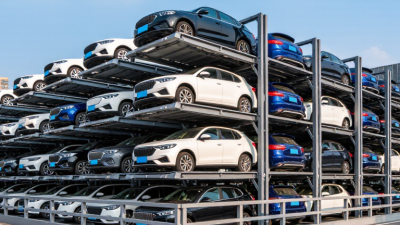
China’s leading car parking machine suppliers offer several system types for different building conditions. Puzzle parking systems stack vehicles vertically and horizontally, using automated platforms to save floor space. Tower systems lift cars through multiple levels, making them suitable for narrow urban sites. Rotary systems move parking platforms around a central axis. They can provide quick access, but entry planning matters.
Many suppliers also produce pit parking systems, pallet systems, and simple two-post or four-post lifts. These machines serve apartments, offices, hotels, and repair facilities.
Experienced manufacturers usually provide customized layouts after checking ceiling height, soil conditions, vehicle dimensions, and traffic flow. That practical step prevents expensive redesigns. Still, some proposals appear too optimistic about installation time.
Current technologies include programmable controllers, barcode or license-plate recognition, touch-screen interfaces, and mobile monitoring. Sensors detect platform position, door status, vehicle height, and abnormal movement. Variable-frequency drives help reduce noise and improve starting control. Emergency stop buttons, mechanical locks, overload protection, and backup power support safer operation. Reliable suppliers also conduct factory testing and provide installation training.
The strongest systems connect hardware with clear maintenance procedures. Remote diagnostics can reveal motor faults before a breakdown occurs. However, software cannot replace regular inspection. Dust, water, and poor sensor calibration remain common problems. Buyers should request load tests, safety documentation, warranty terms, and spare-part availability. A technically impressive machine may still perform poorly if local service is weak.
Urban land is becoming more valuable. UN DESA projects that 68% of the world’s population will live in cities by 2050. This pressure supports demand for automated parking systems. Grand View Research estimates the global automated parking system market could reach about USD 3.1 billion by 2030. These figures matter, but a supplier’s practical capability matters more. Check its experience with projects similar to yours, including climate, traffic volume, and building structure.
Ask for factory audit records, engineering drawings, load calculations, and recent installation references. A reliable supplier should explain equipment cycles, emergency release procedures, maintenance access, and spare-part availability. For a Car Lift Parking project, inspect platform strength, anti-drop protection, sensor accuracy, and motor noise. Request a Factory Acceptance Test before shipment. Confirm product certificates and local compliance requirements with qualified inspectors. A polished website is not proof.
Tips: Compare the full lifecycle cost, not only the quotation. Ask how quickly technicians respond to faults. Test a real unit, if possible. Measure one parking cycle yourself. Small delays become expensive in busy garages. I once underestimated drainage design; that mistake still bothers me. No checklist is perfect. Leave room for independent technical review, especially when drawings change after approval. Use payment milestones linked to documented testing, delivery, installation, and commissioning. Industry guidance from ISO 9001 principles also supports traceable quality records and corrective actions.
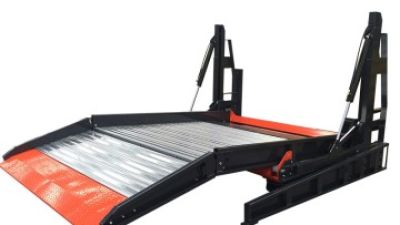
Low-headroom parking is becoming increasingly important as urban properties seek more vehicle capacity without major structural alterations. Grand View Research’s 2024 analysis of the automated parking system market indicates a market value of roughly US$2 billion in 2023 and anticipates double-digit annual growth through 2030, reflecting demand for space-efficient parking technologies. Within this trend, tilting parking systems offer a practical hydraulic approach for basements, villas, and residential developments where conventional lifts may require excessive overhead clearance.
Designed for compact sites, this tilting system uses a 1.5kW motor to deliver rapid platform movement and efficient vehicle retrieval. Its hydraulic configuration supports smooth lifting while helping reduce energy and operational demands compared with unnecessarily oversized equipment. Waterproof construction improves resilience in basement environments, while minimal civil engineering requirements can simplify installation and reduce disruption to existing structures. Optional 110V and 220V configurations also allow adaptation to different electrical conditions.
The system is CE-certified and manufactured for dependable daily operation, with straightforward controls suited to private and residential parking facilities. Custom engineering is available for site dimensions, access limitations, and local installation requirements. By combining low-headroom compatibility, compact infrastructure needs, and responsive hydraulic performance, the tilting design aligns with the market’s broader movement toward flexible parking solutions for space-constrained properties.
It is a mechanical or automated system that stores vehicles in limited space. It may lift, slide, rotate, or move cars.
The driver stops in an entry bay. Sensors measure height, width, weight, and position. Motors and platforms then move the vehicle.
Infrared sensors detect obstacles. Safety locks secure platforms. Emergency controls stop movement during unusual conditions.
They should check cables, brakes, sensors, drainage, and control systems. Small faults matter. Delayed repairs can become expensive.
Measure the largest expected vehicle, not the average car. Check turning space, door clearance, and platform load ratings.
Retrieval speed, lighting, noise, and control-panel clarity all matter. Training also reduces human mistakes. Automation is not perfect.
Steel fabricators produce frames and platforms. Control companies supply sensors and safety systems. Integrators combine these parts for specific sites.
Review maintenance schedules, lifting cycles, corrosion protection, spare-parts support, and emergency response times. A cheaper system may require more maintenance.
Some reports count equipment only. Others include construction and software services. The numbers may look precise, but definitions differ.
Watch a loaded platform operate. Measure retrieval time. Check entry speed, door clearance, lighting, and possible water near electrical components.
This article provides a practical overview of the Car Parking Machine industry in China, explaining how these systems work to maximize parking capacity, improve vehicle handling, and support efficient space management. It examines the structure of the Chinese supplier market, including manufacturers, engineering companies, system integrators, and service providers. Readers will also learn the key criteria for evaluating leading suppliers, such as product quality, safety features, customization capabilities, production capacity, certifications, installation support, and after-sales service.
The article introduces ten representative categories of Chinese suppliers without focusing on specific brand names, while comparing the main technologies they offer, including lift systems, stackers, puzzle parking systems, rotary solutions, and automated parking equipment. It concludes with practical guidance for selecting the right supplier based on project size, site conditions, budget, local regulations, maintenance requirements, and long-term reliability.