Leave Your Message
Picking a Car Elevator Lift isn't just about checking prices or looking at shiny product photos. In an actual garage, the real decision starts with stuff like vehicle weight, wheelbase, ceiling height, and how much traffic you deal with every day. A family SUV can quickly show where the planning fell short. Same goes for a narrow entrance. So this guide walks through ten practical tips for judging lift design, capacity, safety, and the support you'll get down the road. Basically, it zeroes in on all those little details buyers tend to miss—right before they go ahead with installation.
If you're buying a lift, don't just go by the brochure. You'll want to look at things like the rated load, platform size, travel speed, and how the emergency lowering system works. Also keep in mind that hydraulic, screw-drive, and traction lifts don't all hold up the same way when they're used again and again. It's worth asking what happens if the power cuts out—how does the lift behave then? And don't skip the safety details: door interlocks, overspeed protection, limit switches, drainage, and the manual release procedure. A supplier you can trust should be able to hand over drawings, manuals, inspection records, and warranty terms that are actually clear. Oh, and real-world installation experience counts for a lot, too. You know, even a technically impressive unit can still end up failing if the pit, headroom, or electrical supply just isn't right.
Those ten tips also take into account things like maintenance access, noise, weather exposure, user training, and whether parts will still be available down the road. And honestly? Talk to installers who've actually worked on similar sites, not just sales reps. Their photos can show you things you might otherwise miss, like uneven floors, weird doors, or control panels nobody's bothered to look after. But even really good guidance has its limits. You'll still need qualified pros to check local building rules and whatever's going on at your actual site. Think of this article as a decision framework—not as a replacement for a real engineering review. At the end of the day, the best lift isn't the one that sounds fancy on paper; it's the one that keeps working safely, day after day.
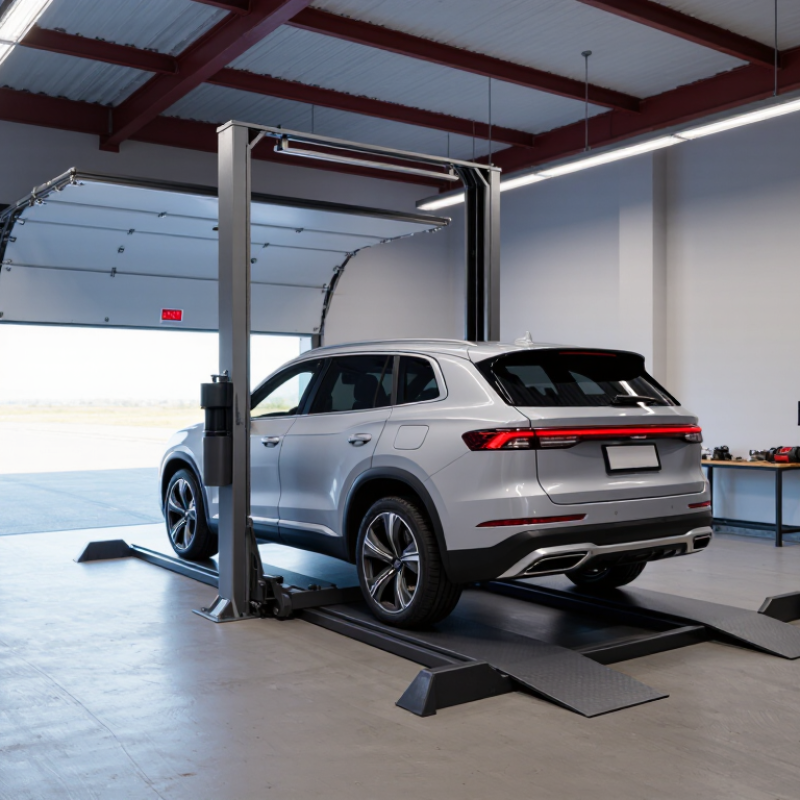
Choosing the best Car Elevator Lift starts with measurements, not glossy specifications. Record the vehicle’s curb weight, maximum loaded weight, wheelbase, width, and height. Add passengers, tools, and seasonal equipment. A compact vehicle may fit the platform yet exceed its rated load. That mistake is expensive. Use certified load data, not estimates from memory. Leave practical clearance around mirrors, doors, and tires. Tight spaces create stress during daily operation.
Wheelbase determines balance. A long-wheelbase vehicle can place unexpected force near platform edges. Measure axle positions and compare them with the platform’s recommended loading zones. Check approach angle and ramp length, especially in basements with shallow entries. Floor thickness matters too. A structural engineer or qualified installer should verify the supporting surface, drainage, ventilation, and emergency access. These details are easy to overlook. I would not rely on a single site photograph.
Then match the lift type to the actual use. A vertical platform lift suits limited travel between levels, while a parking lift may prioritize storage efficiency. Scissor, four-post, and pit-mounted designs change installation demands, clearance, and maintenance access. Confirm lifting height, cycle frequency, control placement, safety locks, and manual lowering procedures. Ask for inspection records and service guidance. Do not compare price alone. My early comparisons focused too much on capacity; that was incomplete. Real suitability depends on the whole site, not one impressive number.
| Tip | Key Dimension to Define | Typical Planning Reference | Why It Matters | What to Check Before Comparing Models |
|---|---|---|---|---|
| 1. Confirm the maximum vehicle weight | Rated load capacity | Passenger vehicles commonly range from about 1,200 to 2,500 kg; larger SUVs and light commercial vehicles may exceed 2,500 kg. | The lift must safely support the heaviest intended vehicle, including passengers, cargo, and optional equipment. | Use the vehicle's gross vehicle weight rating or the lift manufacturer's required design load. Do not select a lift based only on average curb weight. |
| 2. Measure wheelbase and overall length | Wheelbase, vehicle length, and platform length | Many passenger cars have a wheelbase of approximately 2.4–3.1 m and an overall length of approximately 4.0–5.3 m. | Wheel position affects platform balance, while overall length determines whether the vehicle fits with adequate front and rear clearance. | Compare the maximum vehicle length and wheelbase allowed by the lift, not just the platform's external dimensions. |
| 3. Select the appropriate lift type | Lift mechanism and operating purpose | Common types include hydraulic lifts, traction lifts, screw-driven lifts, and scissor lifts. Platform lifts and car elevators serve different space and access requirements. | The mechanism influences installation depth, headroom, speed, maintenance, noise, and emergency operation. | Decide whether the system is for parking, garage access, vehicle storage, or regular passenger-vehicle transport. |
| 4. Check pit depth and overhead clearance | Pit, shaft, and headroom requirements | Requirements vary considerably: some surface-mounted systems need little or no pit, while enclosed car elevators may require substantial pit and overhead space. | Existing buildings may not have enough structural depth or vertical clearance for a selected configuration. | Obtain a site survey covering finished floor levels, ceiling height, drainage, foundations, and the full travel path. |
| 5. Allow enough platform width and door clearance | Platform width, cabin width, and clear opening | A typical passenger vehicle is approximately 1.7–2.0 m wide excluding mirrors; additional clearance is needed for mirrors, doors, and safe positioning. | A platform that fits the tires may still be uncomfortable or unsafe for entry, exit, and alignment. | Compare usable internal width and doorway width rather than the outer frame width. |
| 6. Review travel height and operating speed | Vertical travel, lifting speed, and cycle frequency | Car elevators are generally designed for controlled vertical travel rather than high-speed passenger-elevator performance; actual speed depends on system design and local requirements. | Travel height and daily cycles affect motor size, heat generation, waiting time, and long-term durability. | Specify the number of floors, total travel distance, expected trips per day, and acceptable loading time. |
| 7. Verify safety and emergency features | Safety interlocks, overload protection, anti-fall protection, and emergency lowering | A complete system should include landing-door interlocks, platform-position sensors, emergency-stop controls, overload detection, and a suitable backup or rescue procedure. | These features help prevent operation with an open door, overloading, unintended movement, or unsafe access. | Request the safety circuit description, inspection procedure, emergency release method, and applicable certification documents. |
| 8. Confirm power supply and environmental conditions | Electrical supply, weather exposure, drainage, and temperature range | Power requirements depend on motor size and local voltage; outdoor installations may require weather-resistant enclosures and corrosion protection. | Insufficient electrical capacity, water ingress, or poor drainage can reduce reliability and increase maintenance needs. | Check available voltage, phase, circuit capacity, ingress protection, drainage, ventilation, and local climate conditions. |
| 9. Compare structural and installation requirements | Foundation loads, anchoring, shaft construction, and installation access | The required foundation and support structure depend on total system weight, rated load, dynamic forces, travel height, and site conditions. | A suitable lift can still be impractical if the building cannot support its loads or if components cannot reach the installation area. | Have a qualified structural professional review slab strength, anchoring, openings, seismic or wind conditions, and delivery access. |
| 10. Evaluate total ownership cost | Purchase price, installation, energy use, servicing, and replacement parts | Total cost varies with capacity, travel height, enclosure, controls, civil works, electrical work, inspection requirements, and service frequency. | The lowest initial price may result in higher construction, downtime, maintenance, or compliance costs. | Request a lifecycle-cost estimate covering installation, scheduled maintenance, warranty terms, response time, consumables, and spare-part availability. |
Note: Dimensions and capacity ranges are general planning references. Final selection should be based on the vehicle specifications, site survey, engineering review, and applicable local regulations.
Urban density is intensifying the demand for smarter parking infrastructure. The United Nations’ *World Urbanization Prospects* projects that approximately 68% of the global population will live in urban areas by 2050, while the INRIX *Global Traffic Scorecard* reported that drivers in major cities can spend around 17 hours annually searching for parking. These pressures make smart, efficient vertical lift car parking systems an attractive alternative to space-intensive surface lots. By using vertical capacity, this mid-level mechanical solution can substantially increase parking volume within a compact footprint, making it suitable for urban communities, commercial buildings, and dedicated parking facilities where horizontal land or headroom is limited.
Designed for customized China supplier and factory solutions, the system supports 2,000 kg and 2,350 kg load capacities for standard sedans and SUVs. Project layouts can be adapted by adjusting the number of levels, parking-bay arrangement, and equipment dimensions, including irregular sites. An 18.5 kW motor enables coordinated vertical lifting and horizontal movement, balancing reliable performance with energy-conscious operation. Fully automated vehicle entry and retrieval reduce manual handling and operational errors, while remote password control allows administrators to monitor equipment, troubleshoot issues, and manage multiple spaces through a dedicated platform. Its streamlined structure also integrates more easily with different architectural environments.
Record curb weight, loaded weight, width, height, wheelbase, and door clearance. Include passengers, tools, and seasonal equipment. Do not trust memory. Use certified vehicle data and leave room around mirrors, tires, and doors.
Wheelbase affects balance and platform loading. Measure axle positions and compare them with recommended loading zones. A long vehicle may stress platform edges. That detail is easy to miss.
Ask a structural engineer to verify slab capacity, pit walls, anchors, and load distribution. Include the vehicle, platform, passengers, and moving equipment. A photograph is not enough. The floor may look strong and still need reinforcement.
Confirm voltage, phase, motor capacity, starting current, and backup requirements. A qualified electrician should check peak demand. Poor planning can affect other building systems. Simple controls help in dim, tight spaces.
Vertical platform lifts suit limited movement between levels. Parking lifts may prioritize storage efficiency. Scissor, four-post, and pit-mounted designs need different clearances. The highest capacity is not automatically the best choice.
Check delivery access, lifting routes, weather protection, construction timing, and testing responsibilities. Also review lighting, drainage, noise, emergency lowering, and safety interlocks. Written schedules prevent confusion. Drawings can be optimistic.
Include inspections, replacement parts, technician response times, warranty limits, cleaning, and lubrication. Some low quotations exclude electrical work, structural changes, or commissioning. The cheaper option may cost more later. My early comparison focused too much on purchase price; that was incomplete.
Request inspection records, service guidance, manual lowering procedures, and safety-lock testing details. Confirm local requirements and emergency access. Keep controls clear. A practical choice should reduce downtime, though no plan is perfect.
Choosing the best Car Elevator Lift starts with understanding your vehicles and facility. Define each vehicle’s weight, wheelbase, dimensions, and intended lift type before comparing models. Rated capacity should match the vehicle’s gross weight and axle loads, rather than relying only on curb weight. Also confirm that the platform length and width, maximum rise, and available headroom can safely accommodate your largest vehicle.
Before purchasing, verify compliance with recognized safety standards such as ANSI/ALI ALCTV-2017 or EN 14010. Compare hydraulic, screw, and scissor designs according to lifting speed, frequency of use, and duty cycle. Carefully review safety locks, emergency lowering systems, anti-drop protection, and access controls. Finally, calculate floor loading, electrical requirements, installation conditions, maintenance, and service expenses. A complete evaluation of performance, safety, compatibility, and long-term operating costs will help you select a dependable lift that suits both your vehicles and your site.