In cities these days, space is really at a premium, which is why cool ideas like Parking Towers are becoming more and more relevant. I read that, according to the International Parking & Mobility Institute (IPMI), the need for smart parking solutions is expected to jump by about 15% over the next five years. Parking Towers are these clever structures designed to pack in lots of cars without taking up too much space — kind of like a compact city-saving secret. They can hold hundreds of vehicles but only in a tiny footprint compared to regular parking lots. Pretty neat, right?
Carl M. McNulty, a well-known expert in the parking world, mentioned, 'Parking Towers not only save space but also make city life smoother.' That really hits the point home — these towers are a big deal in helping cities fight congestion. Of course, it’s not all perfect; there are some hurdles to clear. Maintenance can get pretty costly, and sometimes folks find it hard to access or use these towers easily. Some operators are stuck trying to find the right balance between fitting in as many cars as possible and keeping customers happy.
As the demand for smarter parking keeps growing, these Parking Towers are gonna play a huge role in shaping how our cities develop. It’s important to get a good handle on how they work and what possible issues they might bring so that cities can grow sustainably. Honestly, the future of urban planning might really depend on how well we can make these innovative structures work for us.

What is a Parking Tower?
A parking tower, also known as a robotic parking system, is an innovative solution for urban parking challenges. It efficiently utilizes vertical space, maximizing the number of vehicles it can accommodate. Unlike traditional parking lots, these structures automatically park and retrieve cars without human intervention. This design not only saves valuable land area but also reduces the need for extensive maneuvering space.
Each parking tower operates with a series of automated lifts and platforms. Vehicles are parked into designated slots as guided by a sophisticated software system. After a driver exits, the system takes over, eliminating the hassle of searching for a parking spot. However, this technology is not without its drawbacks. Some users might experience anxiety in trusting a machine with their vehicle. Reliability can vary, and maintenance issues may arise, leading to temporary service disruptions.
The parking tower concept supports sustainability. By optimizing space, it encourages more efficient land use in crowded cities. Nonetheless, as with any emerging technology, there is room for improvement. User interface designs could enhance accessibility. Regular feedback from users helps refine the overall experience. Understanding and addressing these nuances are crucial for the continued success of this parking innovation.
The History of Parking Towers
The concept of parking towers dates back to the early 20th century. Initially, they emerged in response to urban growth and increasing vehicle ownership. The need for efficient parking solutions drove their development. In 1905, the first mechanical parking garage was built in Paris, indicating a significant shift in urban infrastructure. Reports suggest that by 1960, over 1,000 parking structures were established worldwide. These towers maximized space in congested areas.
Today, parking towers employ advanced technology. They can accommodate hundreds of vehicles while minimizing land usage. A recent industry report revealed that automated parking systems can reduce land requirements by up to 60% compared to traditional parking lots. However, the implementation of such systems is not without challenges. High initial costs and the need for regular maintenance pose significant barriers. Many cities grapple with the limited adoption of these structures. Despite the evident benefits, skepticism still lingers. This reflects a need for continued advocacy and innovation in urban planning and transportation solutions.
How Parking Towers Function Mechanically
Parking Tower are innovative solutions for modern urban parking challenges. They use a mechanical system to stack vehicles vertically, saving space in crowded areas. This technology reduces the footprint of traditional parking lots, making it a practical choice for cities with limited land.
The mechanics behind a parking tower involve multiple levels and automated systems. When a driver parks, the vehicle is scanned and securely transported to an available space. A combination of elevators and rotating platforms moves the car efficiently. This process minimizes the time spent searching for parking and reduces the risk of damage often seen in conventional lots. However, these systems can be complex and may require regular maintenance to ensure reliability.
While parking towers offer numerous benefits, they also come with challenges. Technical malfunctions can lead to delays or even vehicle retrieval issues. Not every driver may be comfortable with automation, as human interaction is limited. The initial investment in building a parking tower can be high, making it essential for operators to weigh costs against benefits.
Types of Parking Towers Available Today
Parking towers have become popular solutions for urban parking challenges. Various types are available today, each designed to optimize space and efficiency. Mechanical parking systems are among the most common types. These use lifts and platforms to park vehicles automatically, minimizing the area needed for parking. They often include multiple levels, improving capacity without expanding the footprint.
Another type is the robotic parking tower. Users simply drive their car into a designated area, and the system takes over. It maneuvers the vehicle to an open spot. This method enhances safety and reduces the chances of parking accidents. Still, these systems can be complex. Maintenance should be a consideration when opting for advanced technology.
**Tip:** Always research the reliability of any parking system before installation. Look for user reviews and expert evaluations.
A simpler variant is the stack parking system. This setup allows cars to be stacked directly on top of one another. While it saves space, it may not be suitable for all vehicles. Some users find accessing their cars challenging.
**Tip:** Evaluate your parking needs and vehicle types before choosing a parking solution. Consider height and weight restrictions.
Ultimately, the best option depends on urban needs and personal preferences. Assessing the pros and cons of each Car Parking Tower type can lead to better decision-making for both users and urban planners.
Types of Parking Towers Available Today
Advantages of Using Parking Towers
Parking towers, also known as automated parking systems, are innovative solutions for urban parking challenges. Their primary advantage lies in efficient space utilization. Research from the International Parking Institute highlights that a parking tower can save up to 60% of land compared to traditional parking lots. This is particularly significant in dense urban environments where space is at a premium.
Another benefit is reduced vehicle emissions. A study by the Transportation Research Board notes that drivers spend an average of 8-10 minutes searching for parking. With a Tower Parking System, vehicles are parked automatically. This minimizes the time spent looking for a spot, subsequently reducing congestion and lowering emissions. Efficiency is key in urban planning, and these systems contribute to overall sustainability.
However, challenges persist in the wider adoption of parking towers. High initial investment costs can deter city planners. Additionally, public perception may view these systems as complicated or unnecessary. While technical reliability is improving, some may find it unsettling to entrust their vehicles to automation. A balanced approach is needed to address these concerns while maximizing the benefits that a Tower Parking System can offer.
Challenges and Considerations in Parking Tower Design
Parking towers, also known as automated parking systems, present unique challenges in design and implementation. One key consideration is space optimization. These structures often aim to maximize vehicle storage while maintaining accessibility. According to a 2022 report by the International Parking Institute, parking efficiency can increase by up to 60% with the right design. However, this requires careful planning and a deep understanding of local regulations.
Another factor to consider is user experience. Although automated systems can streamline parking, they may also introduce complexities for drivers. Research indicates that user preference plays a significant role in successful design. A study from the American Society of Civil Engineers found that 30% of users reported discomfort with unfamiliar technology. Designers must address these concerns while ensuring safety and ease of use.
Environmental impact is also worth noting. Parking towers have a reputation for high energy consumption. However, recent advancements in sustainable technology can mitigate this. Incorporating energy-efficient systems, like solar panels, may lower operating costs by approximately 25%. Yet, the initial investment remains a hurdle. Balancing aesthetics, technology, and sustainability is an ongoing challenge. Each project requires unique solutions and a commitment to continuous improvement.
What is a Parking Tower and How Does It Work? - Challenges and Considerations in Parking Tower Design
| Aspect |
Description |
| Definition |
A structure for automated vehicle parking and retrieval. |
| Height |
Typically ranges from 30 to 100 feet depending on capacity. |
| Capacity |
Can accommodate up to several hundred vehicles. |
| Mechanism |
Automated lifts, conveyors, and shuttles move vehicles to parking spots. |
| Advantages |
Maximizes space, reduces land footprint, minimizes emissions. |
| Challenges |
High initial investment, technology reliability, and maintenance. |
| Considerations |
Local regulations, user acceptance, and site-specific factors. |
Future Trends in Parking Tower Technology
As urban areas grow, parking space becomes scarce. This challenge has given rise to the concept of the
Automated Parking Tower.
These systems utilize vertical space, allowing for efficient car storage. Studies show that parking towers can save up to 60% of land compared to traditional parking lots.
Future trends suggest that advancements in technology will make these systems even more efficient. Innovations such as AI and IoT are being integrated into parking towers. These technologies help manage space, predict parking demand, and enhance the user experience.
A report from the International Parking Institute indicates the global market for automated parking is expected to reach $1.5 billion by 2025, reflecting growing interest and investment.
However, challenges remain. The initial investment in Automated Parking Towers can be high. Maintenance costs and the complexity of technology may deter some developers. Addressing these concerns is crucial for broader adoption.
Balancing upfront costs with long-term benefits will require careful consideration and planning.
The future of parking solutions depends on overcoming these hurdles effectively.
Maximizing Parking Efficiency: A Comprehensive Overview of Heavy Duty Hydraulic 4 Post Parking Systems from Chinese Manufacturers
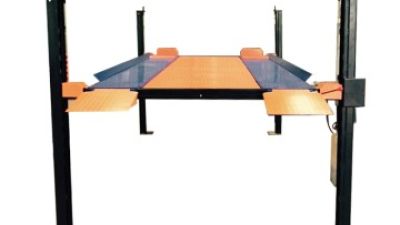
Maximizing parking efficiency is a crucial concern in today's urban landscape, where space is often a premium commodity. The heavy-duty hydraulic 4 post parking system offers a revolutionary solution by transforming traditional parking layouts. Designed primarily for a diverse range of applications—including residential areas, shopping malls, and custom projects—this system effectively doubles parking capacity without requiring additional land.
Manufactured in China, the hydraulic-driven 4 post parking system is engineered to optimize space utilization. It not only tackles the challenge of limited parking spots but also caters to the increasing vehicle ownership trends in modern society. Its robust construction ensures durability and longevity, making it suitable for both families and commercial venues looking to expand their parking capabilities. By investing in this innovative parking solution, property developers and managers can enhance both functionality and efficiency, ultimately leading to better space management and increased customer satisfaction.
FAQS
: Parking towers are vertical parking solutions designed for urban areas. They maximize space in densely populated locations.
The concept emerged in the early 20th century, with the first mechanical parking garage built in 1905 in Paris.
They use a mechanical system to stack cars vertically. Automated systems transport vehicles to available spaces efficiently.
They can accommodate many vehicles while reducing land usage. Automated systems also lessen the time needed to find parking.
High initial costs and complex maintenance are significant obstacles. Additionally, technical issues can lead to delays in vehicle retrieval.
Some drivers may feel uneasy with automation. Limited human interaction can make users uncomfortable at times.
Automated parking systems can reduce land requirements by up to 60% compared to traditional parking methods.
Despite benefits, many cities struggle to adopt these structures, indicating a need for ongoing innovation and advocacy.
The high construction costs require operators to carefully consider the balance between long-term benefits and immediate expenses.
Conclusion
A Parking Tower is an innovative solution designed to address urban parking challenges by efficiently utilizing vertical space. These structures have evolved over time, with a rich history that showcases their growing importance in metropolitan areas. Mechanically, Parking Towers function through various automated systems that transport vehicles to designated spots, maximizing space and minimizing the time spent looking for parking.
Today, there are several types of Parking Towers, each catering to different needs, from residential to commercial use. The advantages of these systems include reduced land use, decreased congestion, and enhanced convenience for users. However, challenges exist in their design and implementation, such as engineering constraints and initial costs. Looking ahead, future trends in Parking Tower technology promise smarter integrations and improved sustainability, continuing to reshape the way we view parking in urban environments.