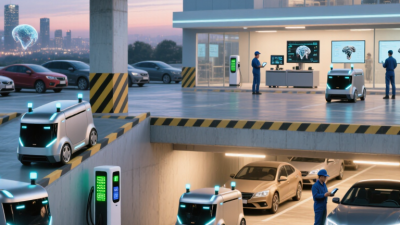
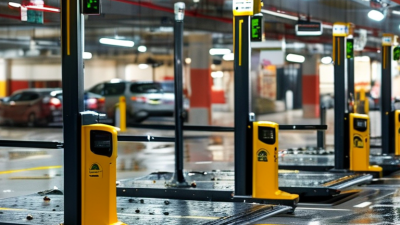
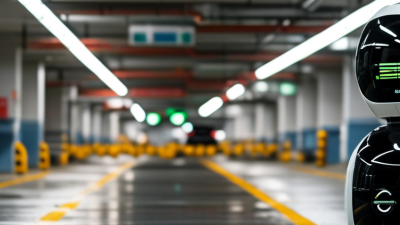
You know, urban growth is really pushing property values up everywhere. According to the United Nations, by 2050, about 68% of the world’s folks will be living in cities. And because of that, parking issues are no longer just about convenience—they're turning into real infrastructure problems. It’s a headache for cities trying to keep things running smoothly.
In fact, INRIX found that in 2022, American drivers spent around 51 hours just hunting for a parking spot. That’s a ton of time—worth roughly $818 on average per driver. That’s where a good Car Parking Robot can make a difference. It helps cut down on circling around, makes better use of space, and even keeps things safer for everyone. But, let’s be honest—just having fancy tech doesn’t automatically mean it’ll work perfectly. You’ve gotta look into specifics like vehicle sizes, how fast it loads, how it handles emergencies, noise levels, how easy it is to maintain, and the actual conditions of the place where you want to install it.
People are definitely interested in this stuff. MarketsandMarkets, for example, sees automated parking systems growing pretty quickly, especially in busy cities where land isn't cheap and digital building management is on the rise. Meanwhile, the International Energy Agency reports that global electric car sales topped 17 million in 2024—that’s a game-changer because future parking tech might need to include charging features and battery safety measures. The numbers are promising, for sure, but forecasts can be all over the place, so don’t take them as gospel—it's wise to stay cautious.
For anyone looking to get a Car Parking Robot, I’ve put together ten practical tips to help out. The key is focusing on proven performance, not just glossy brochures. It’s a good idea to ask for factory test reports, service response details, spare parts plans, and references from similar projects. Also, standards like ISO 12100 and IEC 60204-1 are great for safety info, but don’t forget local certifications—they’re super important. Remember, a robot that works perfectly in a showroom might have issues dealing with dust, sloped floors, or winter weather. No project is ever perfect out of the box. Asking the right questions up front can save you from costly surprises down the line.
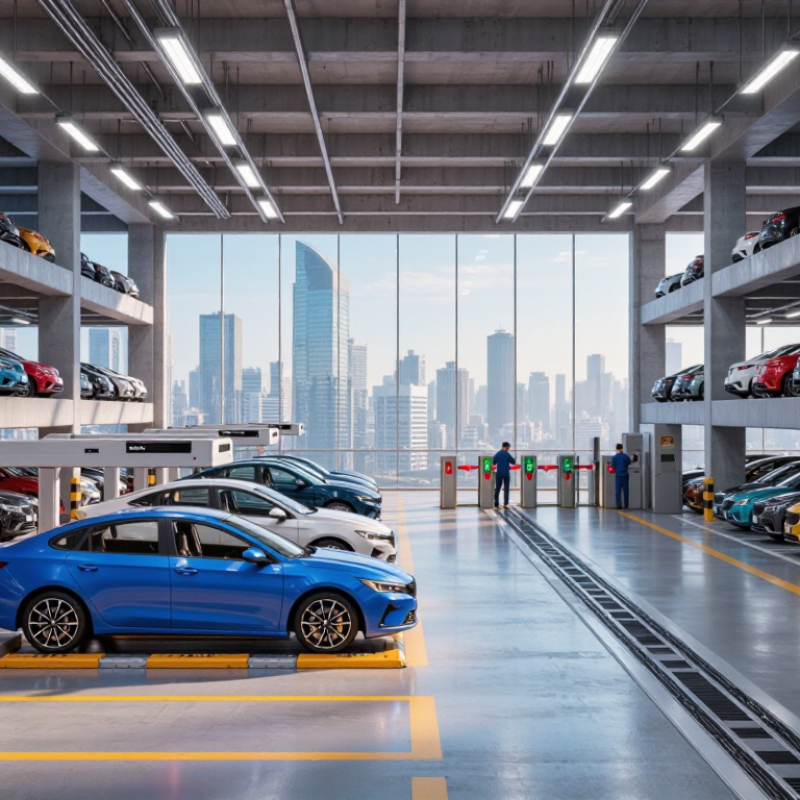
Define Your Parking Demand and Available Installation Space
A reliable Robot Parking purchase starts with demand, not equipment.
Count vehicles during weekday mornings, evenings, weekends, and event peaks. Record arrival times, parking duration, vehicle sizes, and monthly occupancy. A quiet Tuesday can hide a serious Friday shortage.
INRIX reported that American drivers spent about 17 hours searching for parking annually, costing roughly 345 US dollars per driver in 2017. The figure is dated, and local conditions vary. Still, it shows how poor parking access creates measurable costs. Use current site data before trusting any market statistic.
Available installation space matters just as much. Measure the full footprint, clear ceiling height, ramp width, turning radius, column positions, drainage, and emergency access. Leave room for pedestrians and maintenance teams. A basement may appear suitable, yet low beams or water seepage can stop installation.
Check the largest vehicle, not the average one. Include SUVs, delivery vans, and future electric vehicles. UN DESA projects that 68% of the world’s population may live in urban areas by 2050, increasing pressure on limited land. That projection does not guarantee local demand. It only supports careful planning. Measure twice. Reconsider once. Expect a few assumptions to fail.
Compare Car Parking Robot Types and Operating Methods
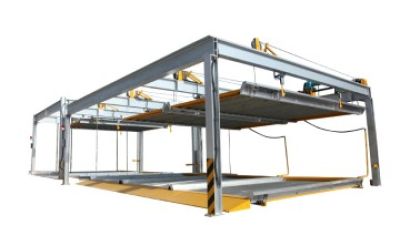
When comparing a Parking Robot, start with its operating method, not its appearance. Puzzle systems move platforms horizontally and vertically, making them suitable for compact sites with moderate parking demand. Tower systems use lifts to store vehicles upward, saving ground space but requiring careful height planning. Stacker systems are simpler and often cost less, although drivers may need to follow stricter positioning instructions.
Automated guided vehicles and shuttle systems move cars across a parking floor without fixed platforms for every space. They can support flexible layouts and higher throughput. However, sensors, charging areas, and route control deserve close inspection. During a site review, measure the longest vehicle, turning radius, entrance width, ceiling height, and expected peak arrivals. A beautiful layout can fail when two large vehicles meet near a narrow ramp.
Operating methods also affect daily reliability. Some systems depend on driver terminals, while others use staff-controlled or app-based commands. Check how the system handles power loss, misplaced keys, sensor errors, and emergency release. Ask for real maintenance records, response times, noise readings, and training procedures. These details reveal more than a showroom demonstration.
No type wins every site. A high-rise system may look efficient, yet slow retrieval can frustrate hotel guests. A puzzle system may fit a small building, but uneven driver behavior can reduce performance. I would test several retrieval cycles with realistic vehicles, because theoretical capacity sometimes feels optimistic in practice.
10 Car Parking Robot Buying Tips for Global Buyers
Compare car parking robot types and operating methods using practical evaluation criteria.
Scores use a practical 1–5 scale, where 5 represents a stronger characteristic.
Tower and shuttle systems generally provide high space efficiency, while AGV systems
offer greater layout flexibility. Puzzle systems are often easier to expand in stages,
and rotary systems are suitable for compact installations with relatively simple vehicle movement.
Check Capacity, Vehicle Compatibility, and Performance Specifications
10 Car Parking Robot Buying Tips for Global Buyers
Begin with capacity, not appearance. A
Valet Parking Robot
must safely carry the heaviest vehicle expected on site. Check its rated load, platform dimensions, wheelbase range, tire width, and ground-clearance limits. Add a practical safety margin for luggage and seasonal vehicle changes. A compact sedan may fit easily, while a long electric SUV may not.
Measure the real parking route before requesting quotations. Record ramp gradients, turning radii, floor gaps, ceiling height, and drainage conditions. Confirm whether the robot handles front-wheel, rear-wheel, and all-wheel-drive vehicles. Some systems require precise wheel placement. That small detail can slow operations during busy periods. Ask for tested vehicle profiles, not only general compatibility claims.
Performance specifications deserve equal attention. Compare lifting speed, driving speed, charging time, operating noise, and cycles per hour. Review sensor accuracy in dim garages, dust, rain exposure, and reflective surfaces. Request emergency-stop behavior and recovery procedures. Maintenance access matters too; technicians need room to inspect wheels, batteries, and control units. I have seen projects underestimate this space. The result was longer downtime and frustrated drivers. Test a loaded unit repeatedly, because one successful demonstration proves very little. Availability of spare parts, service training, inspection records, and local technical support should influence the purchase decision.
Evaluate Safety Systems, Software, and Regulatory Compliance
When buying a car parking robot, safety should be tested, not simply promised. Ask the supplier to demonstrate obstacle detection, emergency stops, anti-drop controls, and safe recovery after power loss. During a site visit, watch a vehicle move through narrow spaces. Listen for unusual noise. Small delays matter.
Review the control software with the operators who will use it daily. The interface should show vehicle position, system status, alarms, and maintenance needs clearly. Test manual override procedures, access permissions, audit logs, and remote support controls. Software updates should be documented and safely reversible. I have seen attractive interfaces hide confusing fault messages. That weakness deserves attention.
Regulatory compliance must match the installation country and local site conditions. Request current test reports, electrical safety documents, structural calculations, fire protection evidence, and accessibility assessments. Confirm that the system supports local vehicle weight, height, climate, and emergency access requirements. Independent inspection is valuable before payment and after installation. Certificates alone are not enough. Ask who issued them, what they cover, and when testing must be repeated. Data protection also matters when cameras, license-plate records, or user accounts are involved. A reliable supplier should provide clear maintenance intervals, technician qualifications, spare-part plans, and written responsibility for corrective work.
Assess Installation Requirements, Maintenance, and Supplier Support
10 Car Parking Robot Buying Tips for Global Buyers
Assess the installation site before comparing prices. Measure ceiling height, turning radius, drainage, floor strength, and access for delivery equipment. A robotic parking system may need reinforced concrete, accurate leveling, and stable electrical capacity. Ask the supplier for a written site survey checklist. Do not rely on attractive drawings alone. Local fire protection, accessibility, and electrical rules can change the design.
Tip 1:
Request installation evidence from similar climates and building types. Review the installation schedule, foundation drawings, commissioning procedure, and operator training plan. Confirm who handles permits and on-site coordination. Small omissions can delay a project for weeks. I have seen buyers overlook door clearance and later redesign the entrance. That mistake is expensive.
Maintenance deserves equal attention.
Ask for preventive maintenance intervals, spare-parts availability, software update procedures, and emergency response times. A dependable supplier should explain failure alerts in plain language. Request a sample service report. Check whether technicians can support your time zone and language.
Tip 2:
Clarify warranty limits, travel charges, and response commitments in the contract. Test manual recovery procedures before opening the facility. Real conditions are messier than demonstrations.
Supplier support is not just a hotline; it includes documentation, training, diagnostics, and accountable personnel. Keep room for review, because the first maintenance plan may prove too optimistic.
Calculate Total Ownership Costs and Compare Global Vendors
Buying a Robot Parking System requires more than comparing equipment prices. In project reviews, I calculate total ownership costs over ten years. The spreadsheet starts with racks, lifts, sensors, software, and installation. It also includes civil works, drainage, ventilation, permits, freight, insurance, and local taxes. A low quotation can grow after foundation changes or voltage adjustments. Check the site survey carefully. Hidden work matters.
Request itemized proposals from at least three global vendors. Compare capacity, retrieval time, energy use, warranty length, and required staffing. Ask who stocks critical parts within your region. A failed door sensor can stop an entire bay. Downtime has a cost. Include preventive maintenance, remote support, technician travel, training, and software renewals. Confirm whether prices use fixed currency or allow annual increases. Contract wording deserves technical review.
Use a common cost model, not optimistic vendor assumptions. Test peak-hour demand with real arrival patterns and oversized vehicles. Ask for performance data from comparable climates and operating hours. References should include an operating facility, not only a showroom. I would also price a five-year retrofit for controllers and batteries. That estimate may be uncomfortable, but ignoring it is worse. Some calculations remain uncertain. Record assumptions openly, then stress-test them.
Vertical Puzzle Parking Systems: Custom Automatic Solutions for Commercial and Residential Spaces
As urban populations continue to grow, parking operators and property developers are under pressure to create more capacity without expanding their land footprint. The United Nations’ *World Urbanization Prospects* projects that approximately 68% of the global population will live in urban areas by 2050. This trend strengthens the case for Vertical Puzzle Parking Systems, which use stacked platforms to convert limited ground space into efficient, high-density parking for commercial buildings, apartments, offices, and mixed-use developments.
Designed with a modular structure, the system can be customized from one to six levels according to site conditions and operational needs. Lower-level vehicles can be parked and retrieved independently, while an upper vehicle may require the temporary movement of the vehicle below. With a maximum lifting height of 3,000 mm and a load capacity of 2,350–2,500 kg, the equipment can accommodate many sedans and SUVs. Industry parking studies have also indicated that drivers may spend more than 15 hours annually searching for parking in congested urban areas, making faster, better-organized parking increasingly valuable.
Customized planning can include platform dimensions, number of levels, lifting configuration, and rated capacity. For residential projects, the system can improve parking availability within compact sites; for commercial properties, it can help increase usable floor-area efficiency while supporting orderly vehicle management. Site-specific engineering and installation planning ensure that the selected configuration matches vehicle types, access conditions, and daily parking demand.
FAQS
Count vehicles on weekday mornings, evenings, weekends, and event days. Record arrival times, parking duration, vehicle sizes, and monthly occupancy. A quiet Tuesday can hide a Friday shortage. Use current local data.
Measure the full footprint, ceiling height, ramp width, turning radius, and column positions. Check drainage, floor gaps, emergency access, and pedestrian routes. Leave inspection space for maintenance teams. Measure twice.
Vehicle sizes vary widely. Test long electric SUVs, delivery vans, and vehicles carrying luggage. Check platform length, wheelbase, tire width, load rating, and ground clearance. The average vehicle can mislead you.
Compare lifting speed, driving speed, charging time, noise, and cycles per hour. Review sensor accuracy in dim garages, dust, rain, and reflective areas. Ask how the system behaves during emergency stops. A showroom demonstration proves very little.
Request tested vehicle profiles, not broad compatibility claims. Confirm support for front-wheel, rear-wheel, and all-wheel-drive vehicles. Check whether drivers must position wheels precisely. Small positioning errors may slow busy operations.
Include equipment, installation, civil works, drainage, ventilation, permits, freight, insurance, and taxes. Add maintenance, software renewals, training, spare parts, and technician travel. Also estimate controller and battery replacements after five years. The uncomfortable costs matter.
Request itemized proposals from at least three suppliers. Use one shared model for capacity, retrieval time, energy use, staffing, and warranty. Check currency rules and possible annual price increases. Cheap quotations may expand later.
Ask where critical spare parts are stocked. Confirm local technical support, inspection records, training, and remote assistance. Check whether technicians can reach wheels, batteries, sensors, and control units safely. Service space is easy to underestimate.
Recreate real arrival patterns with oversized vehicles and full operating hours. Test repeated loading, retrieval, emergency recovery, and charging cycles. Use references from operating facilities, not only showrooms. Some assumptions will fail.
Conclusion
Choosing the right Car Parking Robot requires more than comparing prices. Global buyers should first define parking demand, site dimensions, vehicle flow, and available installation space. Different systems may use various operating methods, such as automated lifting, moving platforms, or robotic transfer technology, so buyers should compare capacity, parking speed, vehicle size limits, weight ratings, and overall performance. It is also essential to review safety features, control software, emergency functions, and compliance with applicable local standards.
Before making a purchase, evaluate installation conditions, construction requirements, maintenance procedures, spare-parts availability, training, and long-term technical support. A reliable supplier should provide clear documentation, responsive service, and solutions suited to the project’s location and operating environment. Finally, calculate total ownership costs, including equipment, installation, energy use, maintenance, upgrades, and potential downtime. Comparing vendors through these factors will help buyers select a practical, safe, efficient, and cost-effective parking solution for long-term use.