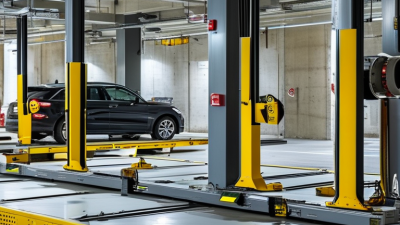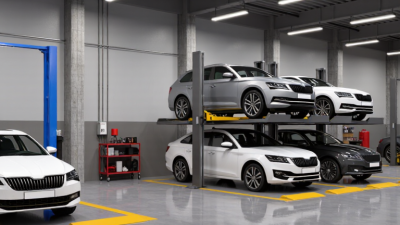
Choosing the right Car Parking Machine isn’t just about flipping through a product brochure — it really starts with understanding the site itself. Every entrance, ramp, ceiling height, and traffic flow puts different demands on the equipment. According to Grand View Research’s Automated Parking System Market Report, factors like urban density and limited land are major drivers for this industry. But let’s be honest—just because the market’s growing doesn’t mean every machine is a perfect fit for every location. A high-end tower might have a fancy machine that works great, but try installing the same in a busy public garage, and it might not do so well. The key is in the details, really. You need real, measurable evidence before making a call. The International Parking & Mobility Institute highlights the importance of user experience, operational efficiency, maintenance ease, and safety when choosing parking systems. So, take a close look at vehicle sizes, parking volume, peak-hour traffic, payment options, and emergency access routes. And don’t forget to actually measure a real vehicle—mirrors, roof boxes, charging cables—they all matter. Little things often get overlooked but can make a huge difference. Technology should actually help people out, not confuse them. Today’s modern parking machines might feature license-plate recognition, contactless payments, remote monitoring, or even automated retrieval. Market reports, like the one from Research and Markets, point out that automation, smart-city investments, and sensor tech are really shaping the industry. But here’s the deal—don’t just go on what’s advertised. You should ask suppliers for data on uptime, retrieval speed, service response times, and references from similar sites. And don't rely solely on shiny demos; actual performance says a lot more. Plus, think about the whole lifecycle cost: installation fees, ongoing software updates, spare parts, inspections, electricity, and staff training. The British Parking Association keeps stressing the importance of clear info and accessible operations—something that’s easy to overlook. Sure, a super tech-savvy machine sounds amazing, but if it’s hard to operate or frustrating in practice, what’s the point? Before you buy, spend some time observing the site during different conditions—rain, rush hour, even late at night. No system is perfect, but a careful look can save you from costly mistakes down the line. In the end, good planning and thorough testing make all the difference—because when it comes to parking solutions, you really don’t want to wing it.
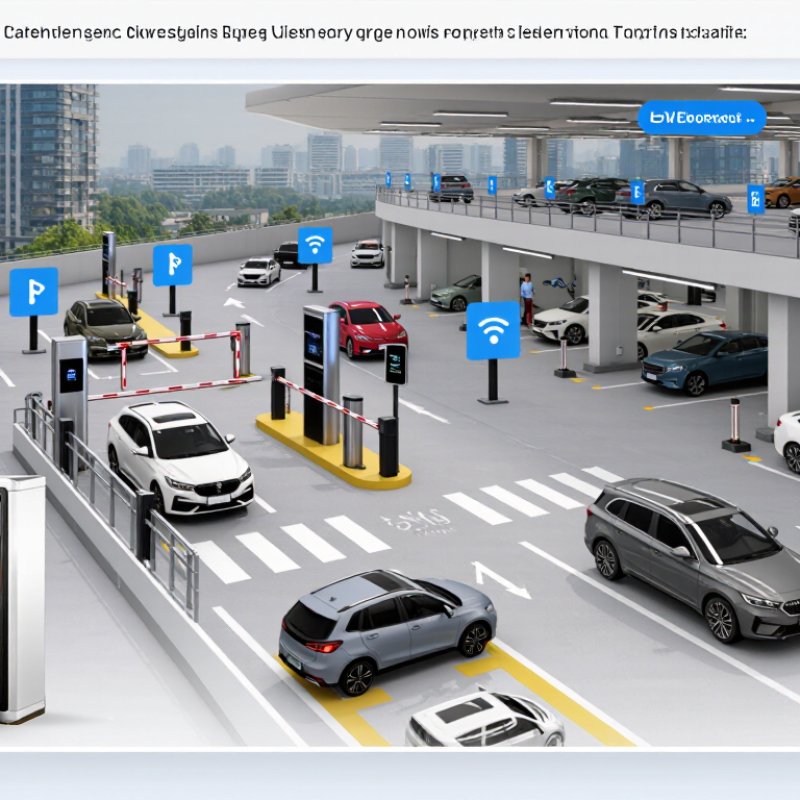
Choosing a car parking machine starts with site evidence, not equipment catalogs. Measure arrivals, departures, stay duration, vehicle types, and peak-hour queues. The U.S. Federal Highway Administration recommends using observed traffic patterns when evaluating access and circulation. A parking count taken only at noon can mislead. Morning commuters and evening visitors behave differently.
INRIX reported in its 2017 Global Traffic Scorecard that American drivers spent about 17 hours searching for parking annually. This figure shows why vehicle-flow data matters. Record queue length at entrances, turning movements, payment time, and blocked aisles. Then compare demand with layout capacity. A narrow ramp may reduce usable spaces, even when the site appears large. Vehicle dimensions also matter. Larger vehicles need wider bays, clearer turning radii, and safer equipment spacing. The Parking Generation Manual from the Institute of Transportation Engineers can support demand estimates, but local observations should adjust those estimates. A perfect forecast is unrealistic.
Tips: Test the busiest 30 minutes, not the daily average. Use temporary counters or manual observations for several weekdays and one weekend. Check whether drivers can see available spaces before entering. I would also simulate an equipment failure. One closed lane can quickly create a queue. That uncomfortable scenario is often ignored, yet it reveals whether the proposed parking machine and circulation plan are genuinely resilient.
| Site Type | Parking Spaces | Peak Arrival Demand (vehicles/hour) |
Peak Departure Demand (vehicles/hour) |
Available Queue Length (vehicles) |
Driveway Width (m) |
Typical Vehicle Size | Recommended Processing Capacity (vehicles/hour) |
Recommended Machine Configuration | Primary Selection Reason |
|---|---|---|---|---|---|---|---|---|---|
| Small Office Building | 80 | 24 | 18 | 3 | 6.0 | Sedan / Compact SUV | 30 | Single-lane automatic payment machine | Moderate demand and limited traffic volume require a compact, cost-efficient setup. |
| Residential Apartment | 150 | 20 | 28 | 4 | 5.5 | Sedan / SUV | 35 | Barrier gate with license plate recognition | Frequent resident access benefits from automated identification and fast exit processing. |
| Shopping Center | 450 | 95 | 110 | 12 | 8.0 | SUV / Large Sedan | 130 | Multi-lane ticketless entry and payment system | High turnover and concentrated peak flows require multiple processing lanes and short transaction times. |
| Hospital | 320 | 62 | 58 | 8 | 7.0 | Sedan / SUV / Accessible Van | 80 | Dual-lane barrier system with accessible lane | Reliable flow, clear lane separation, and accessibility are more important than maximum throughput. |
| Railway Station | 700 | 145 | 180 | 18 | 9.0 | Compact Car / Sedan | 210 | High-throughput, multi-lane ticketless system | Large commuter peaks and synchronized departures require high capacity and generous queue storage. |
| Hotel | 220 | 35 | 42 | 5 | 6.5 | Sedan / SUV / Luxury Sedan | 55 | Ticketless entry with staffed payment option | Variable guest usage calls for flexible payment, visitor validation, and moderate processing capacity. |
| University Campus | 900 | 120 | 135 | 15 | 8.5 | Compact Car / Sedan / SUV | 165 | Permit-based access control with multiple lanes | Permit validation reduces transaction time while multiple lanes handle class-change and event-related peaks. |
| Public Event Venue | 1,200 | 260 | 320 | 30 | 10.0 | Sedan / SUV / Large Vehicle | 380 | Event-mode multi-lane entry and exit system | Short, intense demand peaks require surplus capacity, wide lanes, and long vehicle queues. |
How to Choose the Right Car Parking Machine?
Peak throughput determines whether a parking entrance feels smooth or frustrating. Measure the busiest arrival period, not the daily average. Record vehicle arrivals for fifteen-minute intervals over several busy days. Then convert the highest interval into vehicles per hour. For example, 30 vehicles in fifteen minutes equals 120 vehicles per hour. A Parking Machine processing one vehicle every 45 seconds has a theoretical capacity of 80 vehicles per hour. Real capacity is lower because drivers pause, search for tickets, or need assistance.
Calculate each entry lane separately. Two lanes may provide 160 theoretical vehicles per hour, but a practical operating rate near 70% may be safer. Queue capacity also needs a physical check. Count available spaces from the machine back to the public road. If arrivals exceed processing capacity by 20 vehicles per hour, even a small queue can grow quickly. Rain, unfamiliar drivers, and payment errors can change the result. My estimates often need revision after observing real traffic.
Tips: Test the system during the busiest 30 minutes. Leave space for a short queue beyond normal demand. Track blocked transactions and average service time. A clear display can reduce hesitation. Also, do not treat theoretical throughput as guaranteed performance. That assumption is easy to make, and often wrong.
Peak throughput is estimated from the average processing time per vehicle using 3,600 ÷ processing seconds, then adjusted for an 85% practical operating factor. Queue capacity represents the recommended number of vehicles that can be held before the entry lane begins to affect surrounding traffic. Select a system that matches both expected peak demand and available queue space.
Choosing an Automated Parking Machine starts with the driver’s routine, not the screen design. Ticketing systems remain practical for visitors and short-stay facilities. A driver takes a paper ticket, parks, and pays before leaving. However, lost tickets create queues, especially during evening peaks. INRIX’s 2017 Global Traffic Scorecard estimated that American drivers spent 17 hours searching for parking annually. That delay still matters.
License-plate recognition removes the ticket step. Cameras record the vehicle plate at entry and exit, then calculate the parking fee. This method suits hospitals, airports, and busy commercial sites. Yet dirt, glare, snow, or unusual plate angles can reduce reading reliability. The system also needs clear privacy controls and regular camera checks. It feels seamless. Not always.
RFID access works differently. A windshield tag opens the barrier for approved users, making it effective for offices, apartment buildings, and monthly parking. The process is fast, but visitors still need another payment method. A 2023 MarketsandMarkets report projected strong growth in automated parking and access-control technologies through 2028, driven by urbanization and contactless operations. The forecast is useful, but it is not a guarantee. Site testing remains essential. Managers should measure queue length, lighting conditions, network stability, and peak-hour traffic before choosing. In practice, a hybrid setup may perform better than one method alone. That costs more. Sometimes, it prevents bigger operational problems.
Payment security should guide every car parking machine purchase. A convenient screen means little if card data remains exposed. PCI PTS evaluates payment devices for secure PIN entry, tamper resistance, and protected payment functions. For unattended parking equipment, confirm the approval covers the exact device configuration. Do not rely on a general certificate.
EMVCo requirements add another layer. They support reliable chip and contactless payment processing across approved payment methods. Check whether the terminal has relevant Level 1 and Level 2 approvals. Ask for current approval documents, certificate numbers, expiry dates, and supported hardware versions. Small details matter. An outdated approval can create operational problems.
Inspect the machine on site. Open the service panel only through controlled procedures. Look for sealed payment modules, protected cables, and visible tamper alerts. Test a failed transaction, a reversed payment, and a network interruption. The receipt should not reveal sensitive payment data. The same checks apply when a Car Lifting Machine connects with a parking payment system.
Security also depends on software updates, key management, access control, and maintenance records. A strong terminal can still become weak through poor servicing. I once underestimated the importance of update ownership; that was a useful warning. Ask who patches the system, how quickly, and how every change is recorded. Choose equipment supported by clear evidence, not attractive claims.
How to Choose the Right Car Parking Machine?
Choosing outdoor protection starts with the IEC 60529 IP rating. The first digit measures protection from solid particles. The second digit measures water resistance. An IP54 Car Lift Parking system resists limited dust entry and water splashes from different directions. It suits covered outdoor areas with moderate exposure.
IP65 offers stronger protection. Its enclosure is dust-tight and can resist low-pressure water jets. This rating is more suitable for open driveways, exposed ramps, and rainy locations. Still, IP65 does not mean waterproof for flooding or underwater use. Heavy storms can expose weak cable glands, damaged seals, or poorly fitted panels. Small details matter.
I once considered IP54 sufficient for a sheltered parking entrance. That decision needed more questioning. Wind-driven rain reached the control cabinet from the side. For an outdoor Car Lift Parking installation, inspect drainage, roof coverage, cable entry points, and panel orientation. Ask for test documentation linked to IEC 60529, not only a printed rating. Also check corrosion resistance, operating temperature, UV exposure, and maintenance access. IP testing may not cover every environmental condition. A sealed cabinet can still fail when condensation remains inside. That part is easy to overlook. Choose IP65 when direct rain and cleaning spray are likely, but confirm the complete system design. The enclosure rating alone is never the whole answer.
How to Choose the Right Car Parking Machine?
Choosing a car parking machine requires more than checking payment speed or screen size. Under the ADA 2010 Standards, operable parts should generally remain within a 15- to 48-inch reach range. This includes keypads, card readers, ticket slots, displays, and help buttons. A control placed above 48 inches may exclude a driver using a wheelchair. Small differences matter.
Measure the machine from the finished floor, not from the base platform. Check every user-operated feature. A sloped curb, raised island, or protective barrier can make an acceptable height difficult to reach. Provide clear floor space beside the machine, allowing a wheelchair user to approach and turn without striking nearby equipment. Keep payment areas free from poles, bollards, and parked vehicles. Visibility also matters. Glare, dim lighting, or a crowded interface can create another barrier.
A practical site inspection should test the machine from a seated position. Try inserting a card, reading instructions, pressing assistance controls, and collecting a receipt. Do not rely only on drawings. Field conditions often change after installation. I have seen accessible layouts weakened by added signs and protective rails. That mistake is easy to make. Review reach heights, approach space, audio guidance, tactile markings, and maintenance access with a qualified accessibility professional. Local building and parking regulations may add requirements beyond ADA standards. Consistent inspections help preserve access when the machine, pavement, or surrounding traffic pattern changes.
Choosing a car parking machine requires more than checking entry speed or screen size. Study how it integrates with gates, payment systems, sensors, and management software. A smooth connection reduces manual checks during busy hours. Ask for documented communication protocols and test the system with your existing network. Compatibility can look convincing in a brochure, then fail during installation.
Maintenance costs deserve equal attention. Review cleaning schedules, spare-part availability, technician response times, and remote diagnostic options. A dusty ticket reader or damaged barrier sensor can stop traffic quickly. Small faults matter. Calculate routine labor, software fees, energy use, and emergency repairs over several years. Warranty terms should clearly define coverage, exclusions, response times, and replacement procedures. Longer coverage is not always better if exclusions are vague. I have seen low purchase prices become expensive after repeated service visits.
Tips: Request a five-year total cost estimate, not only the purchase quote. Ask to inspect a working installation with similar traffic volume. Test payment recovery after network failure. Check whether staff can replace common parts safely. Record every assumption in the contract. A spreadsheet helps, but it cannot predict every disruption. Leave a realistic contingency budget for unexpected repairs and integration changes.
Count arrivals during fifteen-minute intervals on several busy days. Multiply the busiest interval by four. For example, 30 vehicles in fifteen minutes equal 120 vehicles per hour. Daily averages can hide serious congestion.
A machine processing one vehicle every 45 seconds has an 80-vehicle theoretical capacity. Drivers may pause, search for tickets, or request assistance. Payment errors also consume time. Real performance is usually lower.
Yes. Measure every lane independently. Two lanes may provide 160 theoretical vehicles per hour. A practical operating rate near 70% may be safer. Theoretical capacity is not guaranteed.
Count the physical spaces from the machine back toward the public road. Leave room beyond normal demand. If arrivals exceed capacity by 20 vehicles per hour, queues can grow quickly. A short queue may become a road obstruction.
Rain, unfamiliar drivers, and payment errors can slow each transaction. Test the system during the busiest 30 minutes. Track blocked transactions and average service time. My estimates often need revision.
IP54 provides limited protection from dust and water splashes. It can suit a covered outdoor entrance with moderate exposure. Wind-driven rain may still reach side panels or cable openings. Sheltered does not mean fully protected.
IP65 is dust-tight and resists low-pressure water jets. It suits exposed ramps, open driveways, and rainy locations. However, IP65 does not protect against flooding or underwater use. That distinction matters.
Inspect drainage, roof coverage, cable glands, and panel orientation. Check corrosion resistance, operating temperature, ultraviolet exposure, and maintenance access. Ask for test documents connected to IEC 60529. A printed rating alone is not enough.
Yes. Condensation can remain inside a sealed cabinet. Damaged seals and poor cable fittings may also cause trouble. Heavy storms can reveal weak design details. I once considered limited protection sufficient. That judgment needed more questioning.
Choosing the right Car Parking Machine starts with a clear understanding of the site. Assess parking demand, available layout, vehicle-flow patterns, peak arrival rates, and queue capacity to determine the required throughput in vehicles per hour. The access method should match user needs and operating conditions, whether using tickets, license-plate recognition, or RFID. Payment functions must also be reviewed carefully, with attention to PCI PTS and EMVCo requirements to support secure transaction processing.
For outdoor installations, select suitable protection such as IEC 60529-rated IP54 or IP65 enclosures, depending on exposure to dust and water. Accessibility is equally important: the design should support ADA 2010 requirements, including the 48-inch reach limit where applicable. Finally, compare system integration options, maintenance requirements, warranty coverage, software support, and expected service life. Evaluating total cost of ownership—not only the initial purchase price—will help ensure the machine remains reliable, practical, and cost-effective over time.