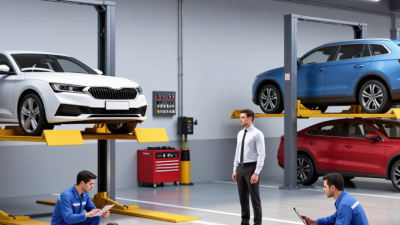
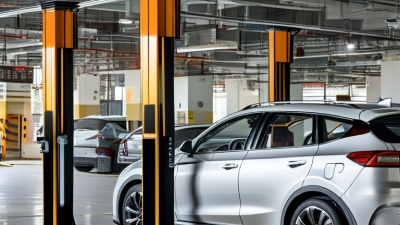
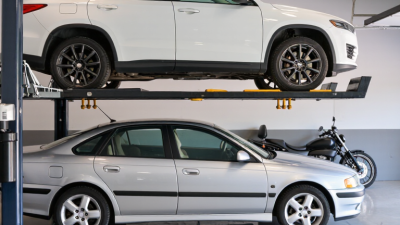
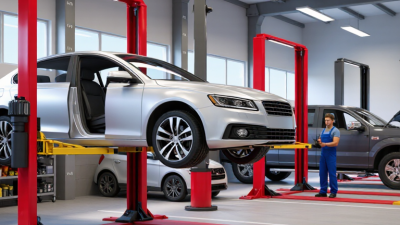
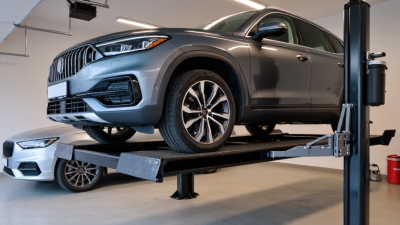
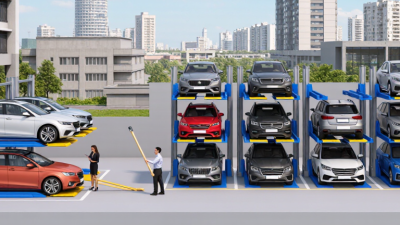
Picking the right Car Lift Stacker really starts with a good look at your space, the vehicles you’ve got, and how your day-to-day workflow runs. A small garage is going to need something pretty different from a busy service center. Before you start comparing models, measure ceiling height, floor width, approach distance, and vehicle weight. Those little details? They often decide whether a lift ends up working safely and smoothly.
If you’ve done this before, you’ll want to check rated capacity, platform dimensions, locking positions, hydraulic performance, and emergency lowering features. The best Stacker Car Lift should fit your vehicles without making you park at weird, awkward angles. Look at the steel structure, weld quality, control layout, and how easy it is to get to for maintenance. A clear manual and responsive tech support matter too—they can save you hours when small issues pop up.
Installation conditions deserve just as much attention. A level concrete floor, the right power supply, and enough clearance can keep you from dealing with costly adjustments later. Ask suppliers for load data, inspection guidance, spare-part availability, and documented testing. Independent reviews can help, sure, but feedback from real workshops often tells you more. Listen to the operators.
There’s no perfect lift for every property. Some buyers get obsessed with lifting height and totally overlook platform length. I’ve seen that mistake create tight clearances around bumpers and mirrors. Price matters, no question, but unstable operation or annoying servicing can cost more over time. Compare the whole ownership experience, not just the purchase number. A reliable Car Lift Stacker should feel predictable when you’re loading, lifting, parking, and lowering. Before you choose, push back on the advertised specs and double-check every measurement. That extra caution might feel slow. Usually, though, it’s worth it.
Define Your Vehicle Storage and Lifting Requirements
Define Your Vehicle Storage and Lifting Requirements
Choosing a Car Lift Stacker starts with accurate measurements, not attractive photographs. Measure the vehicle’s length, width, height, wheelbase, and total weight. Record the highest point, including roof racks or antennas. Measure twice. Small errors can create serious clearance problems.
Check your garage carefully. Measure ceiling height, doorway width, floor level, and available walking space. A taller lift may store two vehicles, but it can become impractical under low ceilings. Leave enough room for doors, mirrors, and safe vehicle access. The platform should suit your tire width and wheelbase without awkward overhang.
Think about daily use. Will you park one vehicle for months, or move cars every day? Frequent movement requires smooth controls, reliable locking points, and convenient access. Ask a qualified installer to assess the concrete floor and anchoring conditions. Manufacturer load ratings must exceed the fully loaded vehicle weight, not just its empty weight. I once underestimated roof clearance by a few centimeters, and the installation became inconvenient. That mistake taught me to include lighting, storage items, and future vehicle changes in the plan. Safety features matter too, including mechanical locks, emergency lowering procedures, and clear operating instructions. Do not choose by capacity alone. Evaluate the entire storage routine.
Compare Car Lift Stacker Types and Operating Designs
How to Choose the Best Car Lift Stacker?
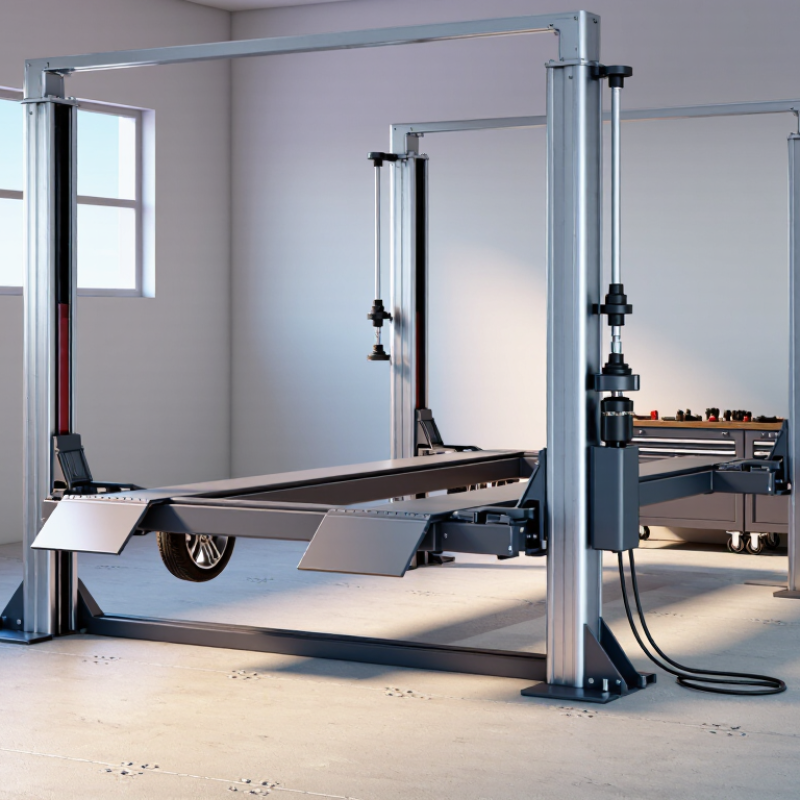
Choosing a Car Stacker Lift starts with the available space and daily parking routine. Measure ceiling height, driveway width, and the vehicle’s actual weight. A two-post stacker saves floor space, but it may require careful wheel positioning. A four-post design supports the vehicle more broadly and usually feels steadier during loading. It also needs more room.
Operating design changes the user experience. Dependent stackers move one platform, so the lower vehicle may need removal before accessing the upper car. Independent systems allow each parking position to operate separately. That convenience often requires more complex controls and stronger structural planning. Hydraulic lifts provide smooth movement and strong lifting force. Electric screw systems can offer precise positioning, but noise and maintenance deserve attention. Watch the platform during movement.
In real installations, small details create practical problems. A low ceiling can make the upper car unusable, even when the lift fits on paper. Uneven concrete may cause vibration or uneven loading. Check rated capacity, platform width, locking positions, emergency lowering, and manual controls before purchase. Ask for maintenance intervals and inspection records from the supplier. Experienced installers also examine drainage, lighting, and pedestrian clearance. I have seen owners focus on lifting height and overlook vehicle door clearance. That mistake is easy to avoid, but not always noticed early. Choose the design that matches repeated daily use, not only the maximum number of parked cars.
Check Load Capacity, Platform Size, and Vehicle Compatibility
Choosing a car lift stacker starts with load capacity, not appearance. Check the lift’s rated capacity against the vehicle’s curb weight, passengers, fuel, and stored items. Add a safety margin for uneven loading and repeated daily use. A 3 Car Stacker Lift may hold three vehicles, but its total capacity can vary between levels. Read the technical plate and installation instructions carefully.
Platform size also decides whether the lift works in real conditions. Measure vehicle length, width, wheelbase, tire width, and ground clearance. Leave space for mirrors and door opening. A narrow platform may accept a small sedan but reject a wider utility vehicle. Measure the garage ceiling too. A few centimeters can determine whether the upper vehicle clears lights, beams, or a closed door.
Vehicle compatibility requires more than matching weight. Confirm the recommended lifting points, axle spacing, tire position, and underbody clearance. During an installation I inspected, the stated length looked suitable, but a rear-mounted accessory reduced usable space. That detail was easy to miss. It changed the parking arrangement. Ask a qualified installer to verify the slab, anchoring method, drainage, and electrical supply. Follow the maintenance schedule and inspect locks, cables, hydraulic lines, and platforms before use. Never rely only on photographs or a sales description. They can be incomplete. Recheck your measurements after delivery, because the actual vehicle may differ from its brochure dimensions.
Evaluate Safety Systems, Stability, and Structural Quality
Choosing an Auto Stacker Car Lift requires more than checking its rated capacity. Safety systems should include mechanical locking positions, overload protection, emergency stops, and upper travel limits. Hydraulic pressure alone should never support a raised vehicle. According to the U.S. Bureau of Labor Statistics, transportation incidents caused 1,942 fatal workplace injuries in 2023, representing about 37% of all occupational deaths. This figure reinforces the need for controlled vehicle movement and clear operator visibility.
Stability begins with the floor, not the platform. Verify concrete thickness, anchoring requirements, wheel placement, and the lift’s center-of-gravity limits. A vehicle parked only a few centimeters off-center can create uneven loading. Look underneath. Inspect welds, cross-members, pins, hoses, and corrosion-prone corners. Structural claims should be supported by documented load testing and inspection procedures aligned with ANSI/ALI ALCTV-2022 or an equivalent recognized standard. Rated capacity is not a suggestion; it includes the vehicle, accessories, and uneven loading risks.
A practical evaluation should include a complete lowering test with an empty bay and a loaded platform. Listen for jerking, abnormal vibration, or delayed lock engagement. Small details matter. The controls should prevent accidental activation, while the manual should state inspection intervals and failure responses clearly. Some buyers focus too heavily on lifting height. That is a mistake worth reconsidering. Long-term reliability depends equally on steel quality, fatigue resistance, maintenance access, and the installer’s documented qualifications. (Sources: U.S. Bureau of Labor Statistics, Census of Fatal Occupational Injuries, 2023; ANSI/ALI ALCTV-2022.)
Review Installation Space, Power Needs, and Maintenance Access
How to Choose the Best Car Lift Stacker?
Begin with the installation space, not the lifting capacity. Measure ceiling height, bay width, vehicle length, and door clearance. Leave room for mirrors, walking paths, and emergency movement. The floor also matters. Confirm its thickness, levelness, and load-bearing condition with a qualified structural professional. A rushed measurement is an expensive lesson. I have seen compact garages lose useful access because the upper platform blocked lighting and storage doors.
Power needs should match the lift’s motor, control system, and daily workload. Check the required voltage, circuit capacity, grounding, and disconnect location before delivery. Avoid relying on extension cords. They can create heat, clutter, and unexpected voltage drops. Ask an electrician to verify the supply under operating conditions, especially in older buildings.
Tips: Keep at least one service side open. Mark the platform’s highest point on the wall. Test the vehicle’s approach angle. Store the manual near the controls. Schedule inspections before unusual noises become failures. Maintenance access is often overlooked. Technicians need space to inspect hydraulic lines, locks, cables, sensors, and fasteners safely. If every panel is trapped against a wall, routine servicing becomes slower and more costly. I would rather sacrifice a small amount of parking space than create an inaccessible machine. This choice may feel inefficient at first, but it usually protects uptime and safer daily operation.
How to Choose the Best Car Lift Stacker?
Review the available installation space, electrical capacity, and maintenance access before selecting a car lift stacker. The chart shows representative planning benchmarks for a passenger-car installation; always confirm final dimensions and power requirements with the equipment specification and local regulations.
Compare Costs, Warranty Coverage, and Long-Term Value
How to Choose the Best Car Lift Stacker?
Compare Costs, Warranty Coverage, and Long-Term Value
A car lift stacker may look affordable until installation, floor preparation, and electrical work appear on the quote. In my experience, the lowest purchase price rarely shows the complete cost. Ask for a written breakdown covering delivery, assembly, training, and future servicing. A clear quote is a useful trust signal. So is a detailed load rating.
Warranty coverage deserves careful reading. Some warranties cover the frame for years but limit hydraulic parts, seals, controls, or labor. Check whether technicians must be approved by the supplier. Confirm response times for breakdowns. Also ask who pays for replacement shipping. Small exclusions can become expensive surprises. I once saw a buyer overlook a short coverage period for control components. That decision caused avoidable downtime.
Long-term value depends on daily use, not showroom appearance. Measure lifting speed, available ceiling height, platform width, and parking frequency. A stronger unit may cost more but reduce interruptions and maintenance visits. However, overbuying capacity can waste money. Review inspection records, service intervals, and replacement-part availability before deciding. Ask an experienced installer to examine your floor and electrical conditions. Their advice may challenge your original plan. That is useful. Leave room in the budget for maintenance, because even a reliable stacker needs attention.
How to Choose the Best Car Lift Stacker? - Compare Costs, Warranty Coverage, and Long-Term Value
| Lift Type |
Typical Rated Capacity |
Typical Purchase Cost
(USD, excluding installation) |
Typical Installation Cost
(USD) |
Common Warranty Pattern |
Estimated Annual Maintenance |
Best Long-Term Advantage |
Value Score
(10) |
| Two-Post Lift Stacker |
9,000–12,000 lb
(4,080–5,440 kg) |
$2,500–$5,500 |
$700–$1,500 |
Structural parts: commonly 5–10 years
Other parts: commonly 1–2 years
Labor: often excluded |
$150–$350 |
Lowest initial cost for frequent underbody service and general repair work. |
8.5 |
| Four-Post Lift Stacker |
8,000–10,000 lb
(3,630–4,540 kg) |
$3,500–$7,500 |
$300–$1,000 |
Structural parts: commonly 5–10 years
Other parts: commonly 1–2 years
Labor: often excluded |
$120–$300 |
Stable platform, convenient vehicle storage, and generally easier vehicle positioning. |
9.0 |
| Scissor Lift Stacker |
6,000–10,000 lb
(2,720–4,540 kg) |
$2,500–$6,500 |
$500–$1,500 |
Structural parts: commonly 3–5 years
Other parts: commonly 1–2 years
Labor: often excluded |
$180–$450 |
Space-efficient design with good wheel and brake access, but more moving joints require inspection. |
7.5 |
| Portable Single-Column Lift |
6,000–9,000 lb
(2,720–4,080 kg) |
$3,500–$8,000 |
$100–$600 |
Structural parts: commonly 3–5 years
Other parts: commonly 1–2 years
Labor: often excluded |
$150–$400 |
Flexible placement and storage; higher purchase cost may be justified where mobility is important. |
7.8 |
| Heavy-Duty Four-Post Lift |
12,000–18,000 lb
(5,440–8,165 kg) |
$7,000–$15,000 |
$1,000–$3,000 |
Structural parts: commonly 5–10 years
Other parts: commonly 1–2 years
Labor: often excluded |
$250–$600 |
Best capacity margin for trucks and commercial use, with a higher upfront investment. |
8.2 |
Comparison Notes:
The prices and maintenance figures are indicative U.S. market ranges for new equipment and can vary by capacity, accessories, shipping, local labor rates, and site requirements. Warranty terms differ by supplier and product series; always confirm coverage for the frame, hydraulics, motor, cables, replacement parts, labor, shipping, and corrosion before purchase. Installation should follow the applicable local building, electrical, and workplace-safety requirements.
High-Capacity Rotary Car Parking Systems: Insights from Grand View Research and Mordor Intelligence Reports
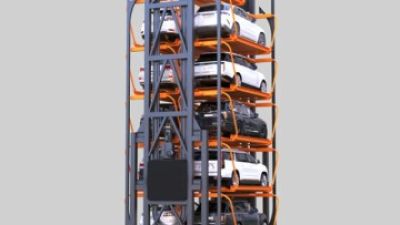
Demand for high-capacity rotary car parking systems is rising as cities, shopping centers, and hospitals face limited land and growing vehicle volumes. Grand View Research projects strong expansion in the automated parking system market through 2030, driven by urbanization, rising land costs, and the need for faster vehicle handling. Mordor Intelligence similarly identifies smart parking as a rapidly developing market, supported by digital management, space optimization, and reduced congestion. These trends highlight the value of compact, automated solutions for commercial properties.
The vertical rotating parking system is designed for projects where every square meter matters. With a compact footprint of approximately 7 × 5.8 meters, it can accommodate vehicles vertically while minimizing the land required for conventional parking. Its rapid retrieval process helps reduce waiting times during peak periods, making it suitable for busy hospitals, retail complexes, and other high-traffic facilities. A powerful 15–22 kW motor supports dependable operation, while load capacities of 2,000 or 2,350 kg cover most common passenger vehicles.
CE certification reflects compliance with rigorous safety and quality requirements. The system can also be customized to suit site dimensions, traffic patterns, and project specifications. For Chinese manufacturers, suppliers, and commercial developers, this heavy-duty parking solution offers an efficient way to increase parking capacity, improve circulation, and deliver a smoother user experience without expanding the site footprint.
FAQS
Measure vehicle length, width, height, wheelbase, and fully loaded weight. Include roof racks and antennas. Measure twice.
Measure ceiling height, doorway width, floor level, and walking space. Check room for mirrors, doors, and safe access.
No. The rating must exceed the vehicle’s fully loaded weight. Include tools, luggage, fuel, and other stored items.
Two-post systems save floor space but require careful wheel positioning. Four-post systems support the vehicle more broadly and usually feel steadier.
Independent systems let each parking position operate separately. They suit frequent vehicle movement. Controls and structural planning may be more complex.
Look for mechanical locks, emergency lowering, manual controls, and clear operating instructions. Watch the platform during movement.
A low ceiling can make the upper space unusable, even when measurements seem acceptable. Check vehicle height and future roof accessories.
A qualified installer should assess concrete strength, floor level, anchoring, drainage, lighting, and pedestrian clearance.
Hydraulic systems offer smooth movement and strong lifting force. Electric screw systems may position precisely. Noise and maintenance still matter.
A few missing centimeters can create awkward clearance. I once overlooked roof space. Include lights, storage items, and possible future vehicles.
Conclusion
Choosing the right Car Lift Stacker begins with clearly identifying your vehicle storage and lifting requirements. Consider the number and types of vehicles involved, available floor and ceiling space, lifting frequency, and whether the equipment is intended for private, commercial, or workshop use. Compare different stacker types and operating designs, such as hydraulic or mechanical systems, while checking load capacity, platform dimensions, ground clearance, and vehicle compatibility. The lift should safely support the intended vehicles without restricting access or movement.
Safety, stability, and structural quality are equally important. Look for reliable locking systems, balanced lifting performance, emergency protection, and durable construction. Before purchasing, confirm installation requirements, power supply, ventilation, and maintenance access. Finally, compare the total cost rather than focusing only on the initial price. Consider installation, operation, servicing, warranty coverage, replacement parts, and expected service life. A well-selected Car Lift Stacker should provide safe, practical, and efficient vehicle storage while delivering dependable long-term value.