When you're thinking about choosing Parking Lot Robots for global sourcing, keep in mind that it’s really about more than just comparing prices per unit. A robot that looks super impressive in a clean showroom might not perform so well in real-world conditions — like dealing with dust, rain, uneven ramps, or a crowded underground entrance. It’s important to check out things like how fast it operates, what its payload limits are, how accurately it navigates, how many charge cycles it can handle, software compatibility, and procedures for recovering from failures. Don’t forget to ask for references of sites where they’ve installed these robots, maintenance records, and independent test results too.
Industry data actually shows why it’s so crucial to evaluate this thoroughly. The International Federation of Robotics reported over 540,000 industrial robot installations worldwide in 2023, which just confirms how much automation is spreading. But remember, parking lot robots are a whole different ballgame — they work in public spaces, not in controlled factory environments. So, things like safety design, human detection capabilities, remote support options, and how quickly they respond to problems need to be checked independently. Fortune Business Insights estimates that the global market for automated parking systems will grow a lot by 2032. Still, market forecasts can be a mix of different tech solutions, and they shouldn’t replace proper technical due diligence.
For teams sourcing globally, it’s really about looking at the whole picture — not just the sticker price. Make sure to factor in freight costs, customs, local installation, software subscriptions, spare batteries, and technician training. It’s also a smart move to test the robots under real-world conditions — think wet ramps, narrow turns, full loads, or even network hiccups. And don’t forget to verify all the certifications relevant for your market through proper testing bodies; honestly, this step is often overlooked, but it really shouldn’t be. A thorough supplier audit, factory inspection, cybersecurity checks, and clear warranty terms all help boost confidence in the product. Still, no single report can predict every issue you might face once the robots are in use. Running a pilot program can uncover hidden weaknesses that spreadsheets or presentations just can’t reveal. Ultimately, the best decision balances measurable performance, the ability of local support, and a realistic understanding that some operational hiccups are inevitable.
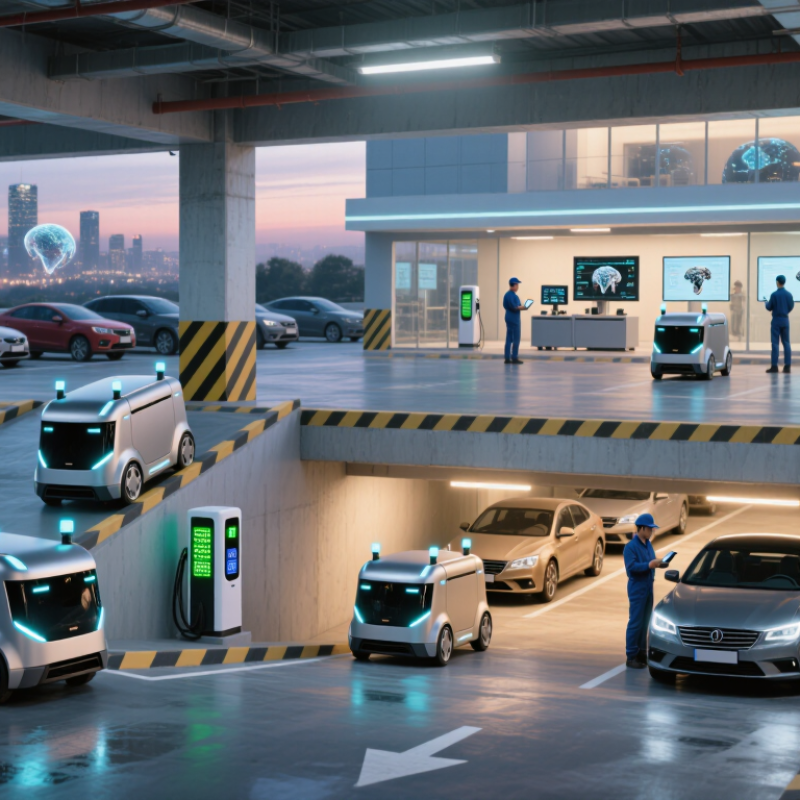
Parking lot robots are not simply moving platforms. They combine sensors, lifting mechanisms, navigation software, safety controls, and parking management systems. Their core job is clear: receive a vehicle, identify an available space, and position the vehicle accurately. Some systems use mobile robots beneath tires. Others use platforms, conveyors, or robotic arms.
Demand is shaped by dense cities. The United Nations World Urbanization Prospects projects that 68% of the global population will live in urban areas by 2050. Space efficiency therefore matters during global sourcing. The International Federation of Robotics reported 541,302 industrial robot installations in 2023. This figure does not measure parking robots directly, but it shows the growing maturity of automated equipment. Buyers should examine positioning accuracy, obstacle detection, emergency stopping, charging duration, and recovery procedures. A robot that parks quickly but fails during a sensor fault is not efficient.
Test the difficult moments.
Supplier evaluation should include vehicle size ranges, floor tolerances, ramp gradients, weather resistance, and software integration. Request documented cycle times, not optimistic demonstrations. The system should provide manual recovery access and clear maintenance records. Industry analyses from Grand View Research forecast strong growth for automated parking systems, yet market estimates differ by report scope. That is worth remembering. A cheaper unit may require more civil work, training, or replacement parts. I would compare total ownership cost over five years, then run a pilot with real vehicles, uneven surfaces, and peak-hour traffic. Perfect conditions can hide practical weaknesses.
Choosing parking lot robots starts with the site, not the catalog. Measure every lane, parking bay, ramp, doorway, and overhead obstruction. Record ceiling height, floor flatness, drainage, lighting, and available turning space. Small errors matter. A robot designed for standard bays may struggle with narrow columns or uneven concrete. Check vehicle dimensions, including mirrors, roof racks, and ground clearance. Define the largest and smallest vehicles the system must handle.
Operating conditions should reflect real daily use. Estimate arrival peaks, average parking duration, retrieval frequency, and acceptable waiting time. A facility near an airport may face sudden demand, while an office garage may experience predictable morning surges. Consider heat, cold, humidity, dust, water exposure, and power interruptions. If electric vehicles are included, identify charging locations and additional cable safety requirements. These details affect capacity, sensors, battery life, and maintenance access.
During global sourcing, request performance records, inspection procedures, spare-part plans, and operator training materials. Confirm that documentation supports local electrical, construction, fire, and workplace safety requirements. Ask how the system behaves during sensor faults or communication loss. A controlled stop is essential. Run a site simulation before purchase, using actual vehicles and peak traffic assumptions. Our first capacity estimate once looked sufficient, but a pilot revealed slower retrieval during shift changes. That mistake changed the specification. Keep testing assumptions instead of treating supplier claims as final evidence.
A Parking Lot robot should be selected by operating conditions, not appearance. Autonomous mobile robots suit open floors and changing routes. Automated guided vehicles work better with fixed paths and repeatable traffic. Stacker robots use vertical space efficiently, but require stronger structural planning. Shuttle systems can deliver high throughput in dense facilities, though installation is more complex.
Compare payload, vehicle size, lifting height, turning radius, and travel speed. A 2,500-kilogram payload may support large vehicles, but it can increase floor stress and energy use. Check positioning accuracy, often measured in millimeters. Review sensor coverage around tires, walls, pedestrians, and low obstacles. Battery capacity, charging time, noise level, and operating temperature also matter. An IP-rated enclosure may help in dusty or damp areas. Yet, a higher rating does not solve poor drainage or careless maintenance. Field tests are essential.
Tips: Request a live demonstration with your own parking layout. Measure ramp gradients, ceiling height, lane width, and peak arrival rates. Ask for emergency-stop response time and manual recovery procedures. Confirm software integration, data security, spare-part access, and technician training across target regions. Do not trust a perfect specification sheet. Real floors are uneven, traffic patterns change, and our first capacity estimate may be wrong. Test during rain, rush periods, and partial system failure before global sourcing.
Comparing robot types, features, and technical specifications
Uses a lifting platform to move a complete vehicle. Check load rating, platform dimensions, and floor-level tolerance.
Transfers vehicles through wheel or chassis support. Check wheelbase range, tire clearance, and positioning accuracy.
Runs on guided tracks or dedicated lanes. Check rack compatibility, cycle time, redundancy, and maintenance access.
Navigates dynamically through a parking area. Check mapping, obstacle detection, fleet management, and charging time.
Benchmark values are representative engineering figures for global sourcing comparisons and should be validated against the supplier’s certified technical specification.
When sourcing a Smart Parking Lot robot, safety should guide every comparison. Check obstacle detection, emergency stopping, speed control, and manual override functions. Ask for test records, maintenance procedures, and failure-response instructions. A robot should stop safely when a person, trolley, or fallen barrier enters its path. Small details matter.
Compliance is not transferable by assumption. Requirements can differ between countries, cities, and even industrial zones. Verify electrical safety, radio equipment approval, machinery standards, data protection, and accessibility obligations. Request complete certificates, test reports, and software update records. Do not rely on a translated sales sheet alone. I have seen documents that looked official but lacked traceable testing information. That mistake can delay installation.
Site compatibility needs practical checking before purchase. Measure lane width, turning radius, slope, drainage, surface condition, lighting, and pedestrian crossings. Consider rain, dust, snow, heat, and underground parking ventilation. A robot may perform well on a flat demonstration floor but struggle on uneven concrete. It happens. Confirm charging locations, network coverage, fire access, and recovery space for manual handling. Ask the supplier to review drawings, visit the site, or test a representative section. No checklist is perfect. Record every assumption, because one overlooked kerb can affect safety, uptime, and compliance.
Choosing Parking Lot Lifts for global sourcing requires more than comparing quoted prices.
Supplier evaluation should begin with production evidence. Ask for factory audit records, weld inspection results, load-test videos, and serialised quality reports. ISO 9001 certification helps, but it does not replace process verification. The International Federation of Robotics reported 541,302 industrial robot installations in 2023. This figure suggests growing automation capacity, yet automation alone cannot prove reliable assembly. A technician should still inspect hydraulic seals, sensors, emergency stops, and surface coatings.
Manufacturing quality must include repeatability. Request samples from different production batches, not one polished unit. Check platform alignment with a laser level, then measure lowering speed under rated load. Small variations matter when vehicles enter narrow spaces.
The World Bank’s 2023 Logistics Performance Index highlights reliability, tracking, and shipment timeliness as critical supply-chain factors. Therefore, suppliers should provide export packaging drawings, spare-part lists, inspection checkpoints, and real-time shipment updates. Wooden crates need moisture protection, especially during long sea transport.
Service support often exposes weak sourcing decisions. Ask whether remote diagnostics, multilingual manuals, and technician training are available in the destination market. The UNCTAD Review of Maritime Transport reports that maritime shipping carries over 80% of global merchandise trade by volume. Delays and damaged components are realistic risks.
I would not assume the cheapest supplier is inefficient, or the largest factory is dependable. That judgment needs evidence. Test the support team with a simulated sensor fault before signing. Their response time may reveal more than a sales presentation.
Provide local installers with torque specifications, maintenance intervals, and clear escalation contacts. Service gaps remain expensive.
Choosing Parking Lot Systems for global sourcing requires more than comparing purchase prices. Calculate the full cost across five years. Include equipment, software licenses, shipping, installation, training, energy use, inspections, and replacement parts. A low quotation may hide expensive integration work. Check whether local technicians can service motors, sensors, and control panels. Small details matter.
Deployment risks often appear during site preparation. Measure ceiling clearance, drainage, electrical capacity, traffic flow, and emergency access before signing contracts. Review local safety rules and data requirements with qualified advisers. Ask for installation drawings, testing procedures, cybersecurity controls, and documented response times. A realistic pilot should cover rain, dust, peak-hour queues, and a power interruption. Pilot it carefully.
Long-term value depends on reliable daily performance, not impressive demonstrations. Track parking capacity, retrieval time, failed cycles, energy consumption, and maintenance hours. Request references from comparable climates and operating volumes. Our early cost models were sometimes too optimistic because they ignored delayed permits and staff overtime. That mistake changed our evaluation process. Leave a contingency budget for civil work and software adjustments. Also examine upgrade paths, spare-part availability, warranty limits, and training refreshers. A system that reduces driver waiting by two minutes may deliver greater value than one with a lower initial price. Yet promised savings need measured evidence, not attractive projections.
Check obstacle detection, emergency stopping, speed control, and manual override functions.
Request electrical safety certificates, radio approvals, machinery test reports, and data protection records.
Measure lane width, turning radius, slopes, drainage, lighting, and pedestrian crossings.
Review performance in rain, dust, snow, heat, and poorly ventilated underground areas.
Include peak-hour queues, power interruptions, rain, dust, and manual recovery procedures.
Include equipment, software licenses, shipping, installation, training, energy, inspections, and replacement parts.
Track capacity, retrieval time, failed cycles, energy use, and maintenance hours.
Reserve funds for civil work, delayed permits, overtime, software changes, and unexpected site repairs.
Choosing the right Parking Lot Robots for global sourcing requires a clear understanding of their core functions, such as vehicle transportation, automated parking, retrieval, and space optimization. Buyers should first define their parking capacity, vehicle types, site layout, traffic volume, climate, and operating conditions. Comparing robot designs, navigation systems, payload limits, charging methods, control platforms, and maintenance requirements can help identify the most suitable solution for each project.
Safety, regulatory compliance, and compatibility with existing facilities are equally important. Buyers should evaluate suppliers based on manufacturing quality, testing procedures, delivery capabilities, technical documentation, training, spare parts, and after-sales support. In addition to the purchase price, a complete assessment should include installation, software integration, energy use, maintenance, labor savings, downtime risks, and expected service life. By considering total cost and long-term value, organizations can make a practical sourcing decision that supports reliable operation, scalable deployment, and sustainable parking management.