In today's super busy world, businesses are always on the lookout for new and smarter ways to boost efficiency. One hot trend right now? Parking lot robots. You can check out some options at Parking Lot Robots. As Dr. John Stevens, a well-respected expert in automation, puts it, “The right parking lot robots can totally change the way we manage space.” His words really highlight how these machines are becoming increasingly important in making operations smoother and more hassle-free.
Picking the right parking lot robots for your business isn’t something to take lightly. They can save you a bunch of time and even make things better for your customers. But here’s the thing—figuring out which ones are the best fit isn’t always straightforward. You have to dig a little deeper than just the surface features. Think about things like whether they’ll work well with your current setup and how easy they are to get up and running.
Of course, even with all the good stuff, there are some hurdles. Not every robot is perfect for every situation. Some might be too complicated or just too pricey—especially for smaller businesses. So, taking the time to really consider all these factors can help you make a smarter decision. When it all boils down to it, choosing parking lot robots should really match your business goals and what your customers expect. It’s all about finding that sweet spot where technology and practicality meet.
Understanding the Role of Parking Lot Robots in Modern Business
Parking Lot robots are transforming how businesses manage their spaces. These automated machines help park and retrieve vehicles efficiently. They reduce the need for human intervention, cutting labor costs significantly. Business owners benefit from the increased turnover of parking spaces. However, the initial investment in these robots can be daunting. It requires careful consideration of the long-term savings versus upfront expenses.
Understanding the role of parking lot robots is key to their effective implementation. They not only enhance convenience but also improve customer satisfaction. Imagine a busy shopping center where customers no longer need to search for parking. Instead, they simply drop off their cars at a designated spot. But, there are challenges. Not all robots perform equally in different environments. Some may struggle in tight spaces, while others might face issues with extreme weather.
Business owners should also consider maintenance and software updates. Robots require regular check-ups to function optimally. It's crucial to balance technology with human oversight. Parking lot robots can streamline operations, but they shouldn't entirely replace human touch. A thoughtful approach is necessary for success.
Factors to Consider When Selecting Parking Lot Robots
Choosing the right parking lot robots involves weighing various factors. Start by assessing the size of your parking facility.
A large garage may require multiple robots to ensure efficiency. Small lots might only need one. Think about your budget, too. Some advanced features could lead to higher costs.
Next, consider the technology used. Robots equipped with state-of-the-art navigation systems offer better precision. However, all this tech can lead to complexity. Training staff to operate them may take time. Evaluate the robot's maintenance needs as well. A machine that breaks down frequently can disrupt your operations.
Finally, reflect on customer experience. A smoother parking process enhances satisfaction. But too many robots can feel overwhelming.
It’s crucial to find balance—a thoughtful selection of parking robots can streamline operations without causing chaos.
Evaluating the Technology Behind Parking Lot Robotics
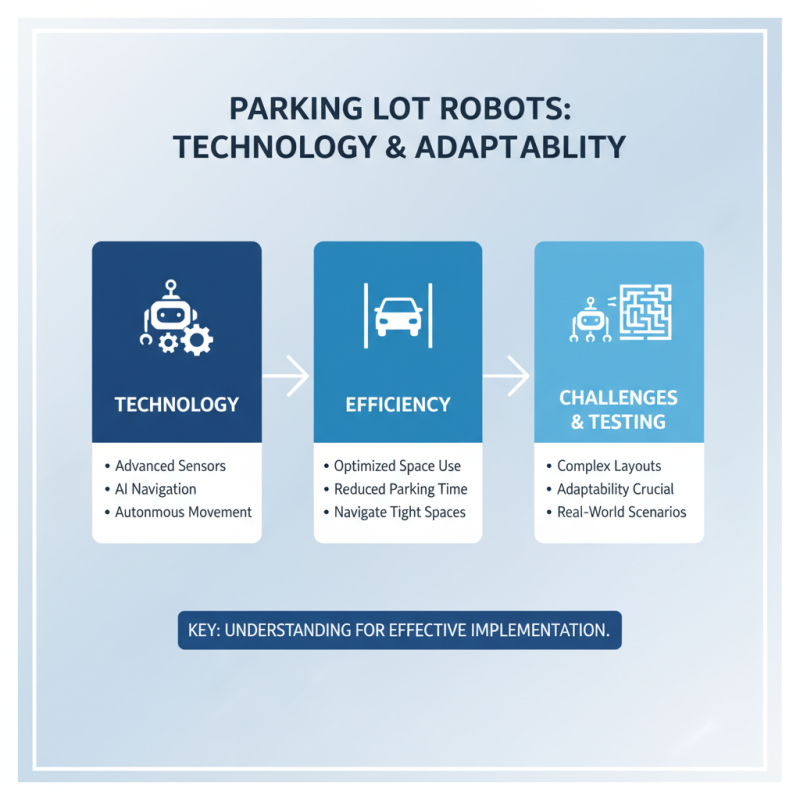
When considering parking lot robots, understanding the technology is crucial. These robots often utilize advanced sensors and AI. They can navigate tight spaces, making parking efficient. Some may struggle with complex layouts. Testing a robot's adaptability is vital for effectiveness.
Tips: Test the robots in real scenarios. Ensure they can handle various weather conditions. It’s essential to evaluate their downtime. Can they charge quickly? A Smart Parking Lot requires seamless performance.
Evaluate the user interface. Ease of use impacts staff training time. Some systems might have steep learning curves. Choose wisely for smoother operations. Keep user feedback in mind. Continuous improvement shapes better technology.
Lastly, analyze the maintenance needs. Some robots require frequent updates. Others may have simpler upkeep. Weigh these factors against your business goals. Remember, not every solution fits all. Adaptability is key for a successful Smart Parking Lot.
Cost Analysis: Budgeting for Parking Lot Robot Investment
When considering parking lot robots, a detailed cost analysis is crucial. A recent industry report estimates the initial investment for these robots ranges from $50,000 to $150,000. This figure can vary based on size, features, and technology. Operating costs, though often overlooked, can also accumulate. Maintenance, software updates, and electricity need to be factored in.
Many businesses underestimate these expenses. A survey showed that 42% of companies failed to budget for ongoing maintenance. This oversight can lead to financial strain over time. Additionally, the return on investment (ROI) can take longer than anticipated. Often, businesses expect savings within the first year, but reality differs. Trends indicate that it might take two to four years for full payback.
Determining the right budget requires careful analysis. Evaluate expected usage and potential savings from labor costs. Examine fleet management efficiency and customer satisfaction rates. Calculating these metrics informs a stronger investment decision. It's important to weigh both initial costs and long-term benefits thoroughly. A hasty decision might lead to regret.
Cost Analysis of Parking Lot Robots Investment
Assessing Compatibility with Existing Infrastructure
When considering parking lot robots, compatibility with existing infrastructure is key. Evaluate your current layout. Measure the dimensions of parking spaces and pathways. Ensure the robot can navigate without obstruction. It's vital to consider entry and exit points. If these are not aligned with the robot's design, it can create congestion.
Tips: Assess power sources around your lot. Parking lot robots often require charging stations. Installing these can be costly and time-consuming. Understanding your current utility setup will save money.
Also, consider the technology integration. Your robots should communicate with existing systems. This includes payment processors and security cameras. A mismatch can lead to operational issues. It's important to anticipate future upgrades as well. Infrastructure changes may lead to incompatibility down the line.
Imagine a scenario where you have a robot that cannot access a newly built section of your lot. This could lead to lost efficiency. Regular evaluations of your infrastructure can help avoid such situations. Investing in versatile robots that adapt is crucial.
How to Choose the Best Parking Lot Robots for Your Business? - Assessing Compatibility with Existing Infrastructure
| Feature |
Description |
Compatibility Level |
Cost Estimate ($) |
| Navigation System |
Laser-guided navigation with real-time mapping capabilities. |
High |
15,000 |
| Size |
Compact design suitable for confined spaces. |
Medium |
10,000 |
| Charging Method |
Automatic docking station for recharging. |
High |
12,000 |
| Load Capacity |
Able to carry loads up to 500 kg. |
High |
18,000 |
| Software Integration |
Compatible with existing parking management systems. |
High |
5,000 |
User Experience: Accessibility and Ease of Use
User experience plays a crucial role when selecting parking lot robots for your business. Accessibility and ease of use directly impact customer satisfaction. When robots are too complex, they can frustrate users. A seamless interface encourages customers to engage more readily.
Consider the physical layout of the parking area. Robots should reach every corner efficiently. Obstructions could limit their functionality. If Parking Lot Lifts are not easily accessible, it can lead to bottlenecks. Users may feel overwhelmed. Simple design features can change that experience.
It's important to think about maintenance, too. If the technology is too complicated, repairs can be challenging. Staff might require training just to troubleshoot simple issues. Design choices should focus on usability and upkeep. A balance is necessary; challenges must be addressed without sacrificing robust features. Engaging with users will provide insights into their needs.
Maintenance and Support Services for Parking Lot Robots
When selecting parking lot robots, maintenance and support services are crucial. Choosing reliable providers can enhance the longevity of your Parking Lot Systems. Regular maintenance keeps everything running smoothly. Operators often underestimate the importance of scheduled check-ups. Skipping these can lead to costly repairs down the line.
One key aspect is to find support services that understand your specific needs. Look for providers who offer tailored solutions. Quick response times are vital. Delays can disrupt operations and frustrate customers. You should assess if their communication is effective. A good support team should be easy to reach, even during emergencies.
Tips: Ensure you ask about training for your staff. Knowing how to handle issues can save time. Evaluate the spare parts availability. Without them, delays might occur. Additionally, consider setting up a routine maintenance schedule. It helps in preventing unexpected breakdowns.
Optimizing Urban Spaces with Fully Automated Tower Parking Systems: A Comprehensive Guide to Customized Solutions
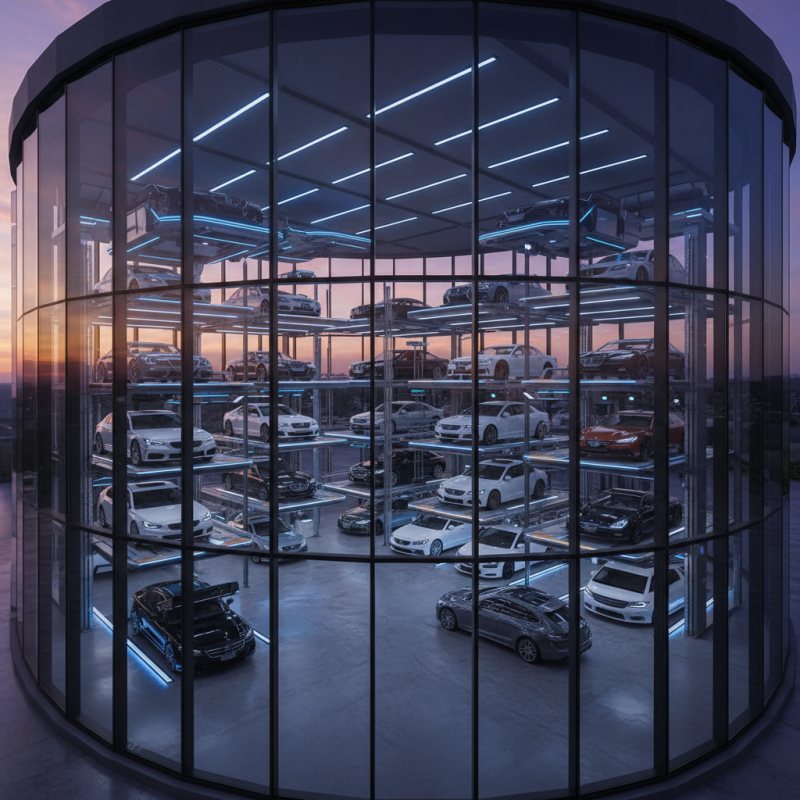
As urbanization continues to soar, cities face an escalating challenge in providing adequate parking solutions. The influx of vehicles exacerbates the already intense demand for parking spaces, particularly in metropolitan areas where land is at a premium. The Vertical Lifting Parking System, commonly referred to as Tower Garage, presents a revolutionary approach to addressing this pressing issue. This fully automated parking system maximizes vertical space utilization while maintaining a minimal horizontal footprint, aligning perfectly with the need for efficiency in urban environments.
Recent industry reports indicate that the global automated parking systems market is projected to grow significantly, with an estimated value expected to reach over $5 billion by 2025. This growth is largely driven by the increasing need for innovative solutions to tackle urban space constraints and enhance vehicle storage capacities. The Tower Garage is a prime example of a high-quality, fully automated parking solution, offering a substantial number of parking spaces within a compact structure. Its fully enclosed design not only ensures the safety and security of parked vehicles but also contributes to the aesthetics of urban landscapes, showcasing how functionality can blend seamlessly with visual appeal.
Furthermore, with the projected increase in electric vehicle (EV) adoption and the corresponding need for charging infrastructure, automated parking systems are poised to provide flexible solutions to accommodate a variety of vehicle types. The Tower Garage stands out by offering an environmentally friendly alternative to traditional parking methods, thereby supporting cities in their sustainability goals. In a world where urban spaces are increasingly becoming contested resources, implementing tailored solutions like fully automated tower parking systems can significantly alleviate parking shortages and enhance the overall efficiency of urban transport ecosystems.
FAQS
: The product aims to enhance user convenience and improve efficiency.
Follow the simple instructions provided in the manual. Read each step carefully for the best results.
Regular cleaning is needed to keep it in good condition. Neglecting this can lead to poor performance.
Check the power source and ensure all connections are secure. If issues persist, refer to troubleshooting tips.
Avoid using it near water or in damp conditions. This helps prevent electrical hazards and ensures safety.
Yes, it has versatile functions. However, not all features may work optimally for every task.
You can often find a digital copy online. But remember, this might lead to missing crucial instructions.
The design is relatively lightweight, but it's not perfectly portable. Be cautious of its bulkiness when moving.
Durability depends on usage and care. Mishandling can shorten its lifespan significantly.
The warranty typically covers defects in materials. But users must register or keep their proof of purchase.
Conclusion
Parking Lot Robots are becoming increasingly vital in modern business environments, offering innovative solutions to streamline parking operations. When selecting the best robots for your parking lot, it's crucial to consider several factors. Key elements include the technology behind the robots, ensuring compatibility with existing infrastructure, and evaluating user experience for accessibility and ease of use.
Additionally, a thorough cost analysis is necessary to budget for the investment in parking lot robotics, while also factoring in maintenance and support services to ensure optimal functionality over time. By carefully assessing these aspects, businesses can make informed decisions that enhance operational efficiency and elevate customer satisfaction.