Honestly, a car lift can totally change how a shop uses its floor space. Instead of messing around with floor jacks all the time, you just raise the vehicle up to a comfortable working height—and suddenly you can actually see what’s going on with the brakes, suspension, tires, and all that underbody stuff. It makes routine jobs way more practical. Plus, you’re not constantly crouching down or repositioning jacks. It might sound like a small thing, but those little gains really do add up.
Honestly, the “right” lift isn’t just about what the spec sheet says. You really have to think about what you’ll be using it for. A two-post is usually great for everyday repairs, but a four-post? That can be a lifesaver if you’re doing storage or certain service jobs. And don’t forget the boring stuff—ceiling height, bay width, floor condition, clearance, power supply. Give all that a good once-over. Actually measure the space. Don’t eyeball it. Guessing gets expensive.
Okay, so when you’re looking at an Auto Lift Car Lift, don’t just skim the specs. Actually dig into the manufacturer’s load rating, installation requirements, locking system, and maintenance guidance. And hey, have a qualified installer come check out the site first—don’t wing it. You also want to make sure everyone on staff really knows how to operate the lift, not just kinda sorta. Seriously, never treat the rated capacity like a suggestion. That number matters. And hey, regular inspections matter just as much—wear and tear, damage, or lazy maintenance can really mess with safe operation.
Let's be honest—a lift isn't the right call for every workshop. It takes up real floor space, needs proper installation, and there's always ongoing upkeep to deal with. That alone is worth pausing over. In this guide, I'll walk you through the practical benefits, the common lift types, what to consider when choosing, and the ownership questions that tend to catch people off guard. It won't replace an actual site assessment, but it should help you walk in with smarter questions before you commit.
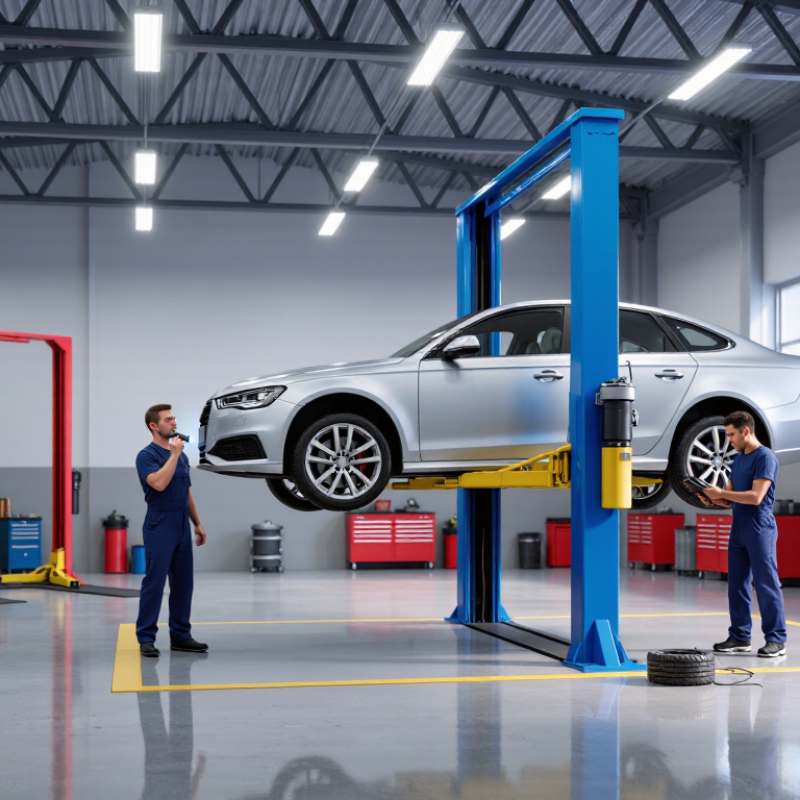
A car lift is a powered platform or set of arms that raises a vehicle to give technicians access underneath. In common hydraulic designs, an electric motor drives a pump, sending fluid into cylinders. The cylinders extend and lift the arms or platform; releasing fluid lowers the vehicle in a controlled way. Mechanical safety locks engage at set heights, so hydraulics are not the only support. A Scissor Lift Car Lift raises a platform using crossed steel arms that open beneath it. The contact points matter. Technicians position lift pads at the vehicle maker’s specified lifting points and check the lift’s rated capacity before raising the car. The Automotive Lift Institute’s ANSI/ALI ALCTV-2022 standard covers lift design, construction, testing, and validation.
BLS counted about 782,200 automotive service technician and mechanic jobs in 2023. It projects 3% employment growth from 2023 to 2033, according to its Occupational Outlook Handbook. That workforce data helps explain why safe, repeatable access matters in busy repair bays, but it does not determine which lift suits a particular shop. Ceiling height, floor condition, vehicle clearance, and daily work all affect the choice. A technician should watch the vehicle as it rises and confirm the locks engage. It sounds simple. Still, a lift’s convenience can make people rush the setup, so checking pad placement and balance deserves deliberate attention.
Choosing a car lift can make routine workshop jobs easier, but the right design depends on the work and available space. A two-post lift leaves the wheels accessible for brake and suspension repairs. It needs a suitable floor and careful vehicle positioning. A four-post lift supports the vehicle at its wheels, making it useful for storage, inspections, and some under-car tasks. It takes up more floor space. A lift is not magic.
Scissor lifts raise vehicles on compact platforms and can suit workshops with limited room. Some models provide good wheel access; others partly obstruct it, so check the design before buying. In-ground lifts keep the floor area clear, but installation and maintenance can be more involved. Compare rated capacity, lifting height, arm or platform reach, and compatibility with the vehicles you service. Even a capable lift may be awkward if its arms cannot reach the vehicle’s approved lifting points.
Tips: Check the floor requirements and the lift’s operating instructions before installation. Position the vehicle carefully, confirm the lifting points, and use the specified safety locks. Keep the area clear while raising or lowering a car. Regular inspections matter; a quick visual check alone may miss wear or damage. Workshop needs change, too, so allow room for the jobs you may take on later.
The Main Types of Car Lifts for Workshops
A car lift provides access beneath a vehicle for inspection, maintenance, and repair. Two-post and four-post lifts commonly offer higher rated capacities, while scissor and single-post lifts can suit workshops with different space or service needs. Capacities shown are representative examples; check each lift’s specifications and your vehicle’s weight before use.
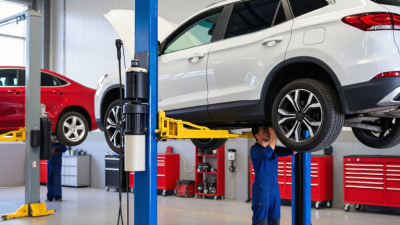
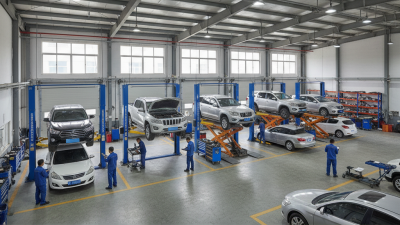
A car lift changes how a workshop uses its floor space. Raising a vehicle gives technicians room to inspect suspension, brakes, and underbody components without working around low stands. It also keeps tools and parts carts clear of the immediate work area. That matters.
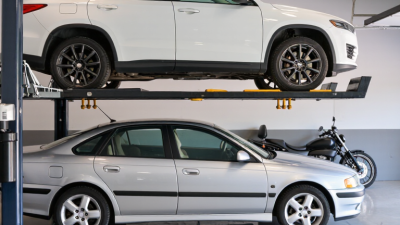
Access improves when the lift is matched to the work. Before installation, check ceiling height, vehicle dimensions, floor condition, and the space needed to open doors or position equipment. A Car Lift Car Park arrangement can also help a compact facility store one vehicle above another, but only when the layout and equipment are designed for that purpose. Clear approach paths save time. So do controls and safety features that staff understand and use consistently.
A lift can make some jobs easier, but it does not remove the need for careful setup. Technicians still need to follow the equipment’s operating instructions, check that the vehicle is positioned correctly, and keep people clear during raising and lowering. In practice, workflow gains may be uneven: a poorly placed lift can create bottlenecks instead of solving them. It is worth mapping common repair tasks before choosing a location. The first layout may need adjustment. Small details count.
A car lift makes routine work easier, but safe operation depends on careful habits. Before use, check the lift’s rated capacity and confirm the vehicle’s weight is within it. Position the arms at the vehicle’s approved lifting points, then raise the car just a few inches. Pause and check that it sits evenly before lifting higher. A tilted vehicle is a warning, not a small inconvenience.
Tips: Inspect pads, cables, and visible hydraulic parts before each shift. Keep the floor clear and dry. Follow the lift’s instructions, and do not rely on a quick glance when something seems worn. Small details matter.
Only trained workers should operate the lift. Keep everyone clear while it rises or lowers, and engage the mechanical safety locks before working underneath. Never rush. A checklist can feel repetitive on a familiar job, but that is when skipped steps are easy to miss. If the lift moves unevenly, makes an unusual sound, or fails an inspection, stop using it and arrange a qualified assessment. A workshop may lose a little time, but guessing at a fault is not worth the risk.
Choosing a Car Lift for your workshop begins with the vehicles you actually service, not the largest lift you can afford. Note their weight, wheelbase, and ground clearance. Then measure the bay, including ceiling height and space for open doors. Small details matter.
Match the lift type to the work. A two-post lift can leave wheels accessible for brake and suspension jobs, while a four-post design may suit storage or underbody inspections. Check rated capacity and lifting-point compatibility for your regular vehicles. Confirm the concrete slab and electrical supply meet the lift’s installation requirements. A clean-looking floor is not proof of strength.
Think about daily workflow, too. Leave room for tool carts, walking paths, and a vehicle to enter without awkward steering. Ask the installer about service access, maintenance intervals, and emergency lowering procedures before purchase. Measure twice. It saves trouble. If your vehicle mix changes often, allow a little flexibility; I’d still avoid paying for capacity your shop will rarely use. Workshop plans are rarely perfect, and I’ve seen a forgotten ceiling beam become an expensive rethink.
| Lift Type | Typical Rated Capacity | Best Suited For | Workshop Considerations | What to Check Before Choosing |
|---|---|---|---|---|
| Two-post lift | About 7,000–12,000 lb (3,175–5,443 kg) | General repair, brake and suspension work, and underbody access. | Requires suitable overhead clearance, a properly prepared concrete floor, and enough space around the posts and vehicle. | Confirm vehicle lifting-point compatibility, arm reach, ceiling height, floor requirements, and installation specifications. |
| Four-post lift | About 8,000–14,000 lb (3,629–6,350 kg) | Vehicle storage, inspections, and work where the vehicle can be driven onto runways. | Runways take up floor space. Some underbody jobs may require rolling jacks or additional accessories. | Check runway length and width, approach space, rated capacity, and whether accessories are needed for wheel-free service. |
| Scissor lift | About 6,000–12,000 lb (2,722–5,443 kg) | Workshops needing an unobstructed area when the lift is lowered; available versions suit different service tasks. | Designs vary: some are surface-mounted, while others require a recessed installation. Lift height and access differ by model. | Compare lifting height, platform dimensions, access to the vehicle’s underside, floor or pit requirements, and safety locks. |
| Portable low-rise lift | Often about 6,000–10,000 lb (2,722–4,536 kg) | Wheel, tire, brake, and other lower-height service tasks in flexible or space-limited bays. | Can be moved or stored depending on design, but provides less working height than many full-rise lifts. | Check the maximum lifting height, vehicle ground-clearance compatibility, storage needs, and the manufacturer’s floor requirements. |
| Alignment lift | Commonly about 10,000–14,000 lb (4,536–6,350 kg) | Four-wheel alignment and related service using dedicated runways and alignment equipment. | Needs adequate bay length and width, a level installation, and compatibility with alignment measurement systems. | Verify runway dimensions, turning plates, slip plates, alignment-system compatibility, and the required installation surface. |
Selection note: Capacity ranges are representative examples, not specifications for a particular lift. Choose a lift rated for the vehicle’s actual weight and intended use, and confirm floor, clearance, anchoring, installation, and safety requirements in the exact model’s documentation.
Choosing a car lift for a workshop means planning for safe installation, not just fitting equipment into an open bay. Measure ceiling height, vehicle clearance, and floor condition before delivery. A qualified installer should verify the concrete slab, anchor placement, electrical supply, and lift alignment against the manufacturer’s specifications. Small errors matter. A slightly uneven lift can affect vehicle stability and put extra strain on components. Keep the installation record and operating instructions where technicians can find them.
Inspection and maintenance make the lift dependable over time. ANSI/ALI ALOIM:2020, the Automotive Lift Operation, Inspection and Maintenance standard, calls for regular inspections, including at least annual inspection by a qualified lift inspector. Check locks, cables, hydraulic hoses, arms, and adapters before use; listen for unusual noises and watch for leaks. The U.S. Bureau of Labor Statistics recorded 5,283 fatal work injuries across all U.S. workplaces in 2023. That figure is not specific to vehicle lifts, but it reinforces why routine risk checks belong in daily shop practice. An Auto Lift Car setup also needs a written maintenance log, with repairs and inspection dates recorded. A checklist helps, but it can still miss a worn part. People need to look closely.
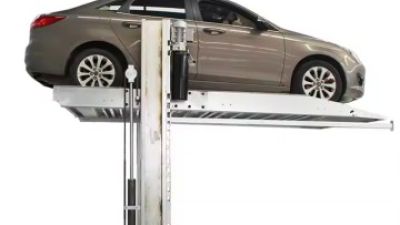
Global parking industry market reports increasingly highlight the need to make better use of limited space, particularly in dense residential and commercial areas. Hydraulic two-post car stackers offer a straightforward way to create two parking levels within a compact footprint. This system is available in three models, each accommodating two vehicles, and can suit sites seeking a practical alternative to expanding conventional parking areas. Its dimensions can also be customized to fit customer requirements and site conditions.
The lower-level vehicle can be parked or removed at any time, while accessing the upper-level vehicle requires first clearing the space below. This operating arrangement is an important consideration when evaluating parking capacity and daily user routines. The system has a maximum lifting height of 2,100 mm, with model-specific maximum load capacities of 2,700 kg, 2,300 kg, and 3,200 kg. These options can accommodate a range of sedans and SUVs, subject to vehicle dimensions and weight. For property owners and parking operators, comparing these specifications with expected vehicle types and available space can help determine whether a two-post stacker fits their needs.
Two-post lifts leave the wheels accessible for brake and suspension work. Four-post lifts support the tires and suit storage or inspections. They need more floor space.
It can fit limited spaces. Check whether its platforms block access to the wheels. Designs vary.
Compare rated capacity, lifting height, reach, and vehicle compatibility. Confirm the arms can reach approved lifting points. A strong lift can still be awkward.
Place the arms at approved lifting points. Raise the car a few inches, then pause and check that it sits evenly. Don’t rush.
Keep people clear while the lift moves. Engage the mechanical safety locks before working underneath. Only trained workers should operate the lift.
Inspect the pads, cables, hoses, arms, and adapters. Keep the floor dry and clear. A quick glance may miss wear.
Stop using it and arrange a qualified assessment. Uneven movement, unusual noises, or leaks deserve attention. Guessing is risky.
Measure ceiling height, vehicle clearance, and floor condition. A qualified installer should check the slab, anchors, electrical supply, and alignment. Keep records handy.
The article cites a standard calling for regular inspections, including at least annual inspection by a qualified lift inspector. Record dates and repairs in a maintenance log. A checklist helps, but it is not perfect.
A Car Lift is a workshop system that raises a vehicle to provide access beneath it, using a powered or manually operated mechanism and secure lifting points. Workshops can choose from different designs, such as two-post, four-post, scissor, or in-ground lifts, depending on the vehicles they service, available floor space, and the tasks they perform. By elevating vehicles, a lift can make inspections and repairs more accessible, reduce time spent repositioning equipment, and help create a more organized workflow.
Choosing the right lift involves considering its rated capacity, lifting height, vehicle compatibility, ceiling clearance, and installation requirements. Safe operation depends on using approved lifting points, positioning the vehicle correctly, following operating instructions, and keeping people clear while the lift is moving. Regular inspections and maintenance, including checks of safety locks, moving parts, and hydraulic or electrical systems, help keep the equipment reliable over time.