Picking out a Car Lifter isn’t just about slapping a price tag on it. It’s a decision that affects safety and how smoothly things run in your workshop. You gotta think about the kind of vehicles you’re working with, how much space you have, and your daily workload. For example, a two-post lift might be just right if you’re running a small repair shop, but if you need to handle storage or wheel alignments, a four-post lift could be a better fit. Details like rated capacity, arm reach, locking mechanisms, installation support, and availability of spare parts — those things really matter when you’re thinking about the long haul.
And here’s an interesting bit: the car market is massive. According to OICA, around 92.5 million vehicles were produced worldwide in 2024 alone. Now, that number doesn’t directly tell you how many lifts are sold, but it does give you a sense of how big the service ecosystem is to keep all those vehicles on the road. For safety stuff, it’s a good idea to check out the Automotive Lift Institute (ALI). They publish helpful guidance on choosing the right lifts, inspecting them, and staying safe while using them. R.W. “Bob” O’Gorman, ALI’s executive director, always emphasizes the importance of certified equipment and correct lift procedures. His advice? Don’t just look at the price — make sure the lift is independently certified first. Skipping that step could be a costly mistake.
This guide also takes a look at China’s top Car Lifter manufacturers, especially for buyers around the world. We focus on their product ranges, quality certifications, options for customization, export experience, and how solid their after-sales support is. But remember, just because a company has a fancy catalog doesn’t mean it’s all legit — always check current certificates, test records, and references from other customers. Also, don’t forget to double-check what’s needed for installation and local service availability before you decide to buy. It may take a bit of extra time, but it could save you from some really expensive surprises down the line.
China Top Car Lifter Manufacturers for Global Buyers
EN 1493:2022 defines safety requirements for vehicle lifts used to raise vehicles for inspection, repair, or maintenance. For global buyers, it offers a practical basis for comparing equipment beyond rated capacity and price. The standard addresses hazards associated with lift design, construction, operation, and verification. A compliance claim should be supported by traceable technical documents, not just a sales-page statement.
Look closely at load holding, stability, controls, and protection against unintended movement. On a workshop floor, small details matter: a locking device must engage reliably, and operating instructions should explain safe positioning and loading. Ask manufacturers for the lift’s rated capacity, installation conditions, maintenance guidance, and evidence of conformity to the applicable edition. Check that the documents match the exact model being quoted.
Paperwork helps, but it cannot correct poor installation or skipped inspections. That part is easy to underestimate. Buyers should confirm local market requirements as well, since EN 1493:2022 may not cover every obligation in the destination country. A careful supplier will answer technical questions clearly and identify limitations, rather than promising that one certificate settles everything. Even experienced teams can miss a detail.
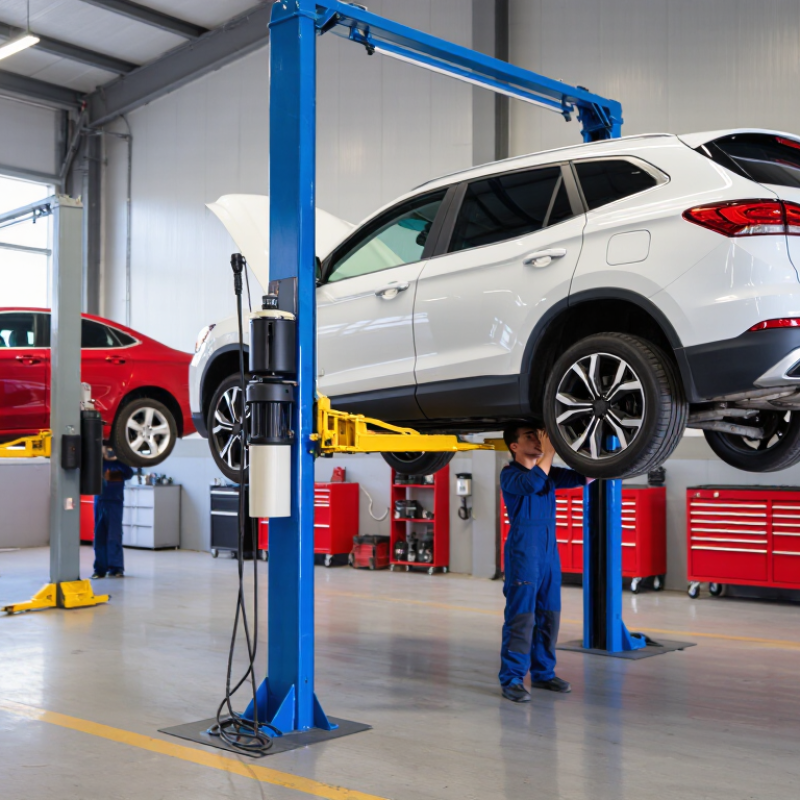
Chinese car-lift catalogs commonly group equipment by structure and lifting method. A two-post lift uses paired columns and swing arms to raise a vehicle by its frame. It suits general repair work, but technicians need clear access points and enough bay width. Symmetric and asymmetric arm layouts affect door clearance and vehicle positioning. Check the rated capacity, arm range, and anchoring requirements for the intended vehicles.
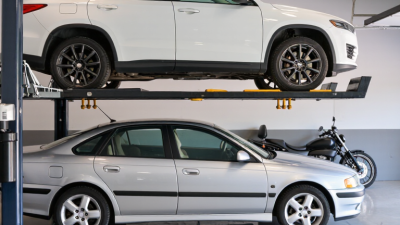
A four-post lift supports tires on two runways, making it useful for storage, inspections, and some alignment work. A scissor lift raises a platform or wheel-contact sections vertically; low-rise models save space, while taller versions improve underbody access. In-ground lifts keep much of the mechanism below the floor and leave a clear bay when lowered. They can require more planning for installation and service access. No type fits every workshop.
Tips: Measure bay height, width, and floor conditions before comparing models. Ask for load-test records, installation drawings, and maintenance instructions. Confirm that the lift suits your vehicle mix, not just the heaviest vehicle listed. Small details matter. Recheck clearances with a real vehicle; paper layouts can miss awkward door or arm positions.
Comparing a 3–5 t passenger-car lift with a 10 t+ heavy-duty model starts with the vehicles, not the catalogue headline. A 3–5 t Car Parking Lifter often suits passenger cars and many SUVs. Still, platform width, wheelbase, and rated load must match the vehicle. Check the heaviest vehicle’s actual axle loads, too; a high total rating cannot compensate for poor load distribution.
Small details matter. Measure roof height with the vehicle raised. Allow for ceiling clearance, ramp approach, and space to open doors or work safely.
Models rated at 10 t or more target heavier vehicles. Loaded vans and commercial equipment may need them, but confirm each lift’s intended use. That capacity often means a larger platform, stronger supports, and greater demands on the floor and installation.
Ask for the rated load per platform, locking positions, foundation requirements, and inspection schedule in writing. Do not infer suitability from tonnage alone.
It is tempting to overbuy. An oversized unit can crowd a compact workshop, while a smaller lift may limit future vehicle choices. That trade-off is easy to underestimate.
Global buyers assessing Chinese car-lifter manufacturers should compare verified production capacity, not just advertised output. Ask how many units are assembled monthly and whether capacity changes during peak seasons. A factory visit or live video walkthrough can reveal the number of workstations, finished units, and available test areas. Figures need context. Confirm realistic lead times and how the supplier handles replacement parts.
For a Hydraulic Car Lifter, request documentation for the exact model being purchased. Check that certificates and test reports match its load rating and configuration, rather than a similar product. Review inspection records, operating manuals, and details for key safety features. Ask how load testing is performed and whether results can be traced to individual units. A polished certificate alone proves little.
Export support matters after production ends. Clarify who prepares shipping documents, how equipment is protected for transport, and whether manuals are available in the buyer’s working language. Ask about remote installation guidance, warranty response times, and spare-part availability. Requesting a written process can expose vague promises. Supplier records may not always align neatly, so ask for explanations and keep important commitments in writing.
Buyer comparison benchmark: This table presents general product-category reference ranges and verification criteria, not verified claims about any individual manufacturer. Actual ratings, certifications, and export services vary by model, factory, and destination market; request current supporting documents before purchase.
| Product Category | Indicative Rated Capacity | Certification and Compliance Checks | Export-Support Evidence to Request | Key Buyer Assessment |
|---|---|---|---|---|
| Two-Post Vehicle Lifts | Common catalog ratings are approximately 3.5–5.5 metric tonnes; confirm the exact model rating and vehicle compatibility. | Request the model-specific risk and compliance documentation. For relevant markets, check conformity with EN 1493 and obtain applicable CE documentation. Verify the scope and validity of any management-system certificate separately. | Request installation and operating manuals, foundation drawings, spare-parts lists, packing details, and destination-specific shipping documents. | Check arm configuration, lifting-point range, mechanical safety locks, minimum ceiling height, and whether the stated capacity applies across the full lifting range. |
| Four-Post Vehicle Lifts | Common catalog ratings are approximately 4–6 metric tonnes; alignment and parking models may have different specifications. | Ask for test reports and conformity documents for the exact model. Confirm applicable destination-market requirements and whether any third-party product listing is required by the buyer or local authority. | Verify whether the supplier can provide loading-ramp details, installation instructions, electrical specifications, and replacement-part identification. | Compare runway length and width, wheelbase limits, locking positions, approach angle, and the availability of rolling jacks where required. |
| Scissor Lifts | Common workshop models are often rated at approximately 3–5 metric tonnes; platform design and lift height affect suitability. | Request model-specific design and testing records, user instructions, and applicable conformity documentation. Check whether the model is intended for surface-mounted or flush-mounted installation. | Confirm that the supplier provides pit or foundation drawings when applicable, wiring diagrams, maintenance schedules, and clear packing dimensions and weights. | Assess platform length, closed height, synchronization, safety devices, and access for servicing hydraulic and electrical components. |
| Heavy-Duty Vehicle Lifts | Ratings vary substantially by design; heavy-duty systems may be offered from approximately 8 metric tonnes to 20 tonnes or more. Verify the rating for each configuration. | Request engineering calculations, model-specific test evidence, installation requirements, and documentation for the destination market. Do not treat a factory quality-management certificate as proof of product compliance. | Check for project drawings, technical coordination, installation guidance, commissioning procedures, and a defined process for supplying critical replacement parts. | Evaluate axle or wheel load limits, lifting-point arrangements, synchronization, site requirements, and the supplier's ability to support the intended vehicle types. |
| Certification Verification | Capacity must be traceable to the product nameplate, technical datasheet, and test documentation for the specific model. | EN 1493 is a European standard for vehicle lifts. ISO 9001 concerns a quality-management system and does not, by itself, certify a lift model. For CE-marked products, request the applicable Declaration of Conformity and supporting technical information. | Check that document model numbers match the quotation and nameplate, and that certificates are current, issued to the relevant legal entity, and within their stated scope. | Record the issuing body, certificate scope, model coverage, applicable standard, and validity dates; seek independent verification where appropriate. |
| Export and After-Sales Readiness | Capacity claims should remain consistent across the quotation, datasheet, nameplate, manuals, and shipping documents. | Compliance requirements depend on the destination and application. Ask the importer or local authority which standards, declarations, labels, or inspections are required. | Confirm support for commercial invoices, packing lists, shipping marks, manuals in agreed languages, spare-parts quotations, and certificates of origin where applicable. | Agree on Incoterms, lead time, packaging method, warranty terms, parts availability, response times, and responsibility for installation and commissioning before placing an order. |
A supplier’s safety claim is only useful when it can be checked against the exact lift model and applicable standard. For a Parking Lifter, ask for documentation showing whether the product was assessed to EN 1493:2022, ANSI/ALI ALCTV:2022, or both. These standards are not interchangeable labels; confirm their scope and edition with the issuing body or a qualified safety professional.
Check the certificate, test report, and nameplate together. The model designation, rated capacity, lift configuration, and manufacturer should match across the documents. A certificate for one configuration may not cover a modified platform or a different capacity. Small details matter. Ask who performed the assessment, what testing was completed, and whether the evidence applies to the unit being quoted—not merely a product family.
Then compare the paperwork with the installation and operating instructions. Look for stated load limits, anchoring requirements, inspection guidance, and clear warnings. Keep records for the delivered unit and review them with the installer before use. A polished brochure can sound convincing, but it is not proof. Even a complete file may leave questions about site conditions; that deserves a second look, not a guess.
For global buyers comparing car lift manufacturers, an ISO 9001:2015 certificate is a starting point, not proof of consistent production. Check that its scope covers the relevant factory and lifting equipment. Then ask how procedures work on the shop floor. Can staff trace a steel batch from receiving records to a finished lift? Are torque tools and load-test instruments calibrated, with current dates recorded?
Look closely. A tidy manual means little if inspection records are incomplete. Ask to review a recent internal audit, a corrective-action record, and evidence that recurring faults were checked after repairs. For a Car Lift Car Park project, examine how the factory verifies welds, dimensions, and rated-load tests. Details matter.
During a site visit, compare written procedures with actual workstations. Notice whether rejected parts are clearly separated and whether operators can explain inspection steps. ISO 9001 supports a managed quality system; it does not guarantee that every unit is defect-free. That distinction is easy to overlook. Records may also lag behind real improvements, or appear polished without showing how problems were resolved. Ask specific follow-up questions, and judge the answers alongside the evidence.
For global buyers, a 400 V/50 Hz specification is a useful starting point, not a complete compatibility check. Confirm the supply type, motor rating, control-cabinet requirements, and protective devices against the installation site. Ask for wiring diagrams and clear photos of the electrical nameplates before ordering. This avoids a costly mismatch. Local voltage conditions can still vary.
Shipping details matter just as much. Compare the packed dimensions, gross weight, and loading method, not only the quoted freight price. A car lift may arrive in several crates, with long runways needing suitable handling equipment. Confirm the shipping terms, export packaging, estimated transit time, and who manages customs documents. Check that the crate protects hydraulic parts and finished surfaces from moisture. Small details are easy to overlook.
Before purchase, request a spare-parts list with part numbers, prices, and typical dispatch times. Ask whether seals, cables, switches, and hydraulic components are stocked for future service. After-sales support should include installation guidance, fault-finding steps, and a realistic response channel. Keep manuals and wiring diagrams accessible to the installer. Remote help is useful, but it cannot replace local technical skill. Even a thorough checklist misses something now and then, so confirm responsibilities in writing.
As cities grow denser, parking operators are increasingly looking for ways to manage limited land more efficiently. MarketsandMarkets forecast the parking management market to grow from USD 4.1 billion in 2023 to USD 6.3 billion by 2028, at a compound annual growth rate of 8.8%. This outlook reflects rising interest in smarter parking operations, including systems that use available space more effectively. A vertical lifting carousel addresses this need by storing vehicles vertically and moving them automatically between entry and parking positions, creating several times more spaces than a conventional surface lot within a comparable footprint.
Designed for urban communities, commercial facilities, and dedicated car parks, the system supports vehicle loads of 2,000 kg or 2,350 kg, accommodating standard saloon cars and SUVs. Its configuration can be adapted to site conditions by adjusting the number of levels, parking-bay layouts, and equipment dimensions, including for irregular plots or restricted headroom. An 18.5 kW motor powers vertical lifting and horizontal movement, while fully automated entry and retrieval reduce the need for manual handling. Remote password control allows operators to monitor equipment, support troubleshooting, and manage multiple parking spaces from a central platform—combining space-saving capacity with flexible, connected parking management.
It sets safety requirements for lifts used to raise vehicles for inspection, repair, or maintenance. It addresses design, construction, operation, and verification.
Review load holding, stability, controls, and protection against unintended movement. Check that the locking device engages reliably.
Request traceable conformity evidence, installation conditions, maintenance guidance, and operating instructions. Confirm every document matches the exact model quoted.
No. Poor installation and skipped inspections can still create hazards. That part is easy to underestimate.
Compare the supply type, motor rating, control-cabinet requirements, and protective devices with the site. Ask for wiring diagrams and nameplate photos before ordering.
Check packed dimensions, gross weight, loading method, shipping terms, transit estimates, and responsibility for customs documents. Long runways may need suitable handling equipment.
Confirm that export packaging protects hydraulic parts and finished surfaces from moisture. A wet crate is a poor surprise.
Ask for part numbers, prices, and typical dispatch times for seals, cables, switches, and hydraulic components. Confirm installation guidance and a realistic support channel in writing. Remote help has limits.
Choosing a Car Lifter for international use starts with understanding the safety principles in EN 1493:2022 and matching lift design to the job. Chinese manufacturers offer two-post, four-post, scissor, and in-ground models, with passenger-car lifts commonly rated around 3–5 tonnes and heavy-duty equipment designed for 10 tonnes or more. Buyers should compare rated capacity, vehicle compatibility, installation needs, and the space available in the workshop before selecting a model.
A careful supplier review should consider documented safety testing against EN 1493:2022 and ANSI/ALI ALCTV:2022, as well as factory quality processes supported by ISO 9001:2015. Export readiness matters too: confirm 400 V/50 Hz configurations, shipping arrangements, spare-parts availability, warranty terms, and after-sales support. Clear documentation and verifiable claims help buyers assess whether a lift is suitable for their operating requirements and destination market.