Lately, everyone's been talking about how to make parking easier and more efficient. You know, those Car Elevator Lifts are really leading the charge in this whole new way of thinking. John Smith from ElevateTech, an industry pro, put it pretty well when he said, "Car Elevator Lifts totally change the game for urban parking." That right there shows just how important this tech is getting.
A Car Elevator Lift is basically a game-changer for tight spaces. It quickly raises your car up and down, making the most of every inch. They're super handy whether you’re talking about homes or big commercial spots. But, fair warning, they’re not perfect — sometimes things can go out of alignment or need a bit of maintenance. So, regular checks are definitely a must if you want everything to run smoothly.
As cities keep growing and space gets even scarcer, Car Elevator Lifts are more relevant than ever. They help solve space issues and make getting around easier. Still, it’s important to remember that innovation needs to be paired with practical, real-world solutions. Keeping an eye on how things are done these days can help us improve safety and efficiency. Ultimately, the story of Car Elevator Lifts is about clever ideas and continuous improvement — pretty exciting stuff, if you ask me.

What is a Car Elevator Lift?
A Car Elevator lift is an innovative solution for vehicle movement in multi-story buildings. It simplifies parking and enhances space efficiency. These systems have grown in popularity, especially in urban areas where space is limited. According to a report from the International Elevator and Escalator Industry, the demand for car elevators is projected to grow by 6% annually. This statistic highlights their increasing significance in modern architecture.
The design of a car elevator focuses on maximizing safety and functionality. Most models are equipped with advanced safety features, such as emergency brakes and sensor systems. These components are crucial, as the risk of accidents can increase when vehicles are moved vertically. However, not all designs perform equally. Some may require more maintenance than others, leading to potential downtime. Regular assessments and servicing are vital to ensure reliability and safety.
Specific considerations must also be addressed. The installation of a car elevator requires substantial space. It’s essential to evaluate available dimensions and load capacity before proceeding. Furthermore, the integration of these systems can disrupt construction schedules if not properly managed. Planning and expert consultation are fundamental to minimize these challenges. With the right approach, a Car Elevator can optimize the utility of a building while providing ease of access for users.
Car Elevator Lift Usage Statistics
Basic Components of Car Elevator Lifts
Car elevator lifts are crucial for modern parking solutions. They enable efficient vertical movement of vehicles, maximizing space in urban areas. The basic components of a car elevator lift are straightforward yet vital for its functionality.
At the heart of the system is the hydraulic or mechanical lift mechanism. This component elevates vehicles seamlessly. Sensors ensure safety by detecting obstacles during operation. Control panels allow easy operation for users. A sturdy platform supports various vehicle weights and sizes.
However, not everything is perfect. Maintenance is often overlooked, leading to malfunctions. Regular checks on hydraulic fluid and cable wear are essential. Ignoring these aspects can result in unexpected breakdowns. Proper documentation and user training are necessary but sometimes insufficient. Understanding these components leads to better use of a
Car Park Elevator, enhancing safety and efficiency in vehicle storage.
Types of Car Elevator Lifts Available
Car elevator lifts are essential for modern buildings, particularly in urban areas where space is limited. These lifts help efficiently transport vehicles between different levels. Several types of car elevator lifts are available to meet varying needs.
Hydraulic lifts are often used in residential areas. They are reliable and can lift heavier cars with ease. On the other hand, electric lifts, although slightly more expensive, tend to require less maintenance. Each type serves distinct purposes, making it crucial to choose the right one based on building specifications and vehicle weight.
According to market analysis, the global Elevator Car Parking market is expected to grow significantly, reflecting the architectural shift toward vertical parking solutions.
When selecting a car elevator lift, consider these tips:
- Evaluate the space and load requirements before purchasing.
- Additionally, prioritize manufacturers with a proven track record.
- It’s important to consult experts to ensure compliance with local safety and building regulations.
- Regular maintenance is also key to ensuring longevity and safety.
- Finally, think about the future needs and expansions that may arise.
How Car Elevator Lifts Function Mechanically
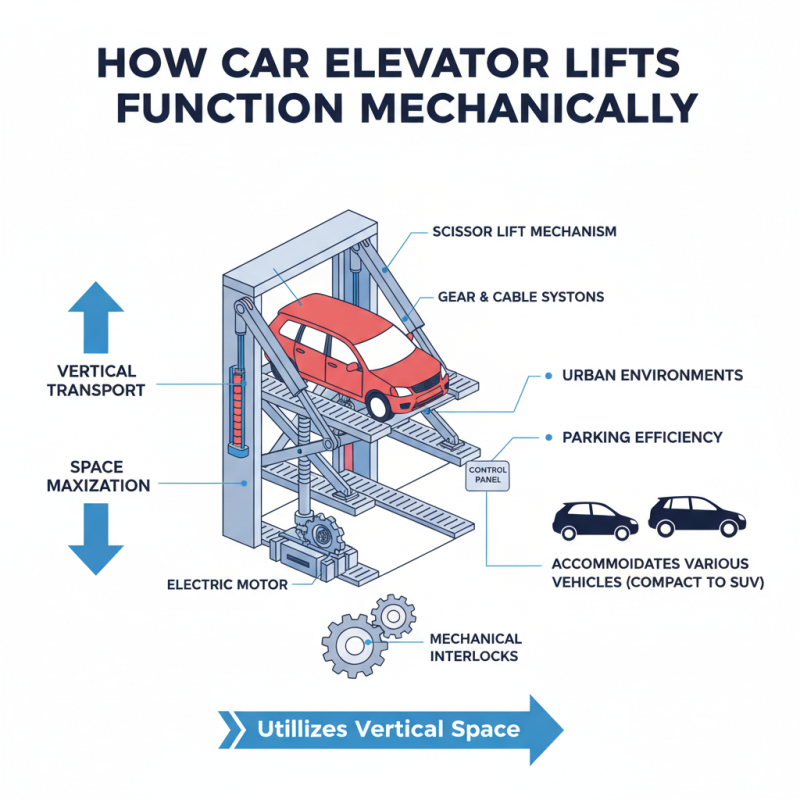
Car elevator lifts are mechanical systems designed for transporting vehicles vertically. They are essential in urban environments where space is limited. This innovation maximizes parking efficiency by utilizing vertical space. A Car Parking Elevator can hold various vehicle types, from compact cars to larger SUVs.
Mechanically, car elevator lifts function using hydraulic or electric systems. Hydraulic lifts rely on fluid pressure to move the platform up and down. This method allows for smooth operation and stability when lifting heavy loads. Electric lifts use a combination of motors and pulleys for movement. They are generally faster but require more energy. Both systems must be carefully maintained to ensure safety and efficiency.
The design of a car parking elevator varies based on its intended use and load capacity. Regular maintenance checks are critical. Operators must inspect hydraulic fluid levels and electric connections routinely. Additionally, any sign of wear and tear should be addressed immediately to prevent accidents. Such diligence reflects the importance of safety and reliability in car elevator operations.
Safety Features in Car Elevator Lifts
Car elevator lifts are gaining popularity, especially in urban areas. They provide efficient vertical transportation for vehicles in buildings like parking garages. Safety is essential in these systems, as vehicle accidents can lead to significant damage.
Modern car elevator lifts are equipped with numerous safety features to prevent mishaps. For instance, overload sensors can detect whether the lift is carrying the proper weight. If the weight limit is exceeded, these sensors prevent the elevator from moving. According to a report by the International Association of Elevator Engineers, around 30% of elevator accidents are due to overload issues.
Automatic emergency brakes also play a vital role. These brakes engage if the lift moves too quickly or if there’s a sudden malfunction. Regular safety checks ensure that all components meet established standards. Users should be aware of the importance of periodic inspections. Always request maintenance logs before using a car elevator lift.
Here’s a tip: Always familiarize yourself with the lift controls beforehand. Ensure you know how to signal for help in case of an emergency. Additionally, educate all users about weight restrictions to promote safety. Remember, understanding these features enhances the overall experience and mitigates risks.
What is a Car Elevator Lift and How Does It Work? - Safety Features in Car Elevator Lifts
| Feature |
Description |
Importance |
| Load Capacity |
The maximum weight that the lift can safely carry. |
Ensures the safety of the vehicle and users. |
| Emergency Stop |
A feature that halts the elevator operation in case of emergency. |
Prevents accidents and provides safety for users. |
| Safety Sensors |
Devices that detect obstacles and prevent the lift from operating. |
Reduces the risk of collisions and damage. |
| Overload Protection |
Stops the lift from functioning if the load exceeds its capacity. |
Protects the machinery and ensures user safety. |
| Automatic Door Systems |
Doors that open and close automatically for convenience and safety. |
Enhances user experience and minimizes contact. |
| Manual Override |
Allows the lift to be operated manually in the event of a power failure. |
Ensures access to vehicles at all times. |
Common Applications of Car Elevator Lifts
Car elevator lifts are becoming increasingly popular in luxury residential buildings and commercial spaces. These innovative systems allow vehicles to be moved vertically between levels, optimizing space and providing easy access. They are especially useful in urban areas where parking space is limited. Car elevator lifts help maximize parking efficiency by utilizing vertical space.
These lifts can be found in various applications. In multi-story parking garages, they enable seamless vehicle transport, reducing the need for long ramps and staircases. In high-end hotels, car elevators provide guests with a convenient and sophisticated way to access their vehicles. Additionally, luxury homes now often feature car lifts, adding an element of convenience and modernity.
Tips: Regular maintenance is vital for car elevator lifts. Ensure that the system is inspected frequently to prevent breakdowns. Observe the load limits and avoid overloading; this simple precaution can prolong the lift's life. For buildings with high traffic, consider a faster hydraulic system for greater efficiency. This can greatly reduce wait times during peak hours.
Maintenance Tips for Car Elevator Lifts
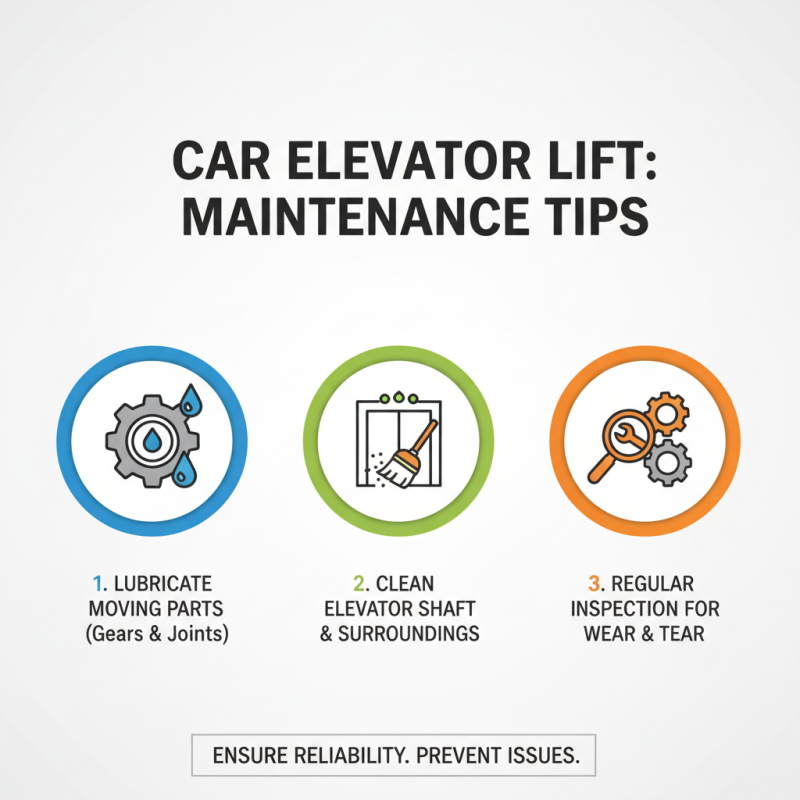
Regular maintenance is essential for ensuring the reliability of car elevator lifts. These systems can face various issues due to wear and tear, making periodic checks necessary. Start by inspecting the moving parts. Lubricate all gears and joints to reduce friction and prevent rust. Dust buildup can affect performance, so clean the elevator shaft and surrounding areas regularly.
Checking the hydraulic fluid levels is also crucial. If the fluid is low, it can lead to operational failures. Keep an eye on any leaks that may indicate deeper issues. The control systems should function correctly. Test the buttons and emergency stop features to ensure they work smoothly.
Don’t overlook mechanical inspections. Wear in cables or pulleys could lead to a breakdown. These parts should be replaced if they show signs of excessive wear. Additionally, consider keeping a maintenance log. Documenting service dates and issues can help identify patterns and potentially prevent major problems down the line. Regular maintenance fosters safety and longevity for car elevator lifts, creating a smoother experience for users.
Maximizing Urban Space Efficiency: The Impact of Hydraulic Car Parking Lift Elevators on the Future of Automotive Parking Solutions
As urban areas continue to grow, the demand for efficient parking solutions has never been higher. The emergence of hydraulic car parking lift elevators is transforming the landscape of automotive parking. This innovative technology maximizes urban space by allowing multiple vehicles to be parked vertically, significantly reducing the footprint required for parking facilities. By utilizing vertical space, cities can alleviate congestion caused by traditional horizontal parking layouts, ultimately leading to improved traffic flow and environmental benefits.
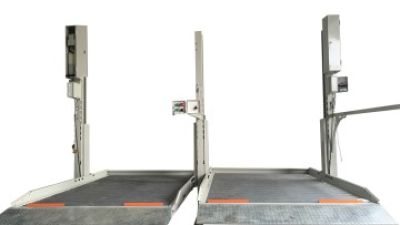
One of the standout solutions in this realm is the Simple Parking System, designed with modern needs in mind. Featuring a two-post parking lift that accommodates two vehicles across two levels, this system is exceptionally efficient. The bottom vehicle can be accessed freely, while the upper vehicle requires the lower vehicle to be repositioned first, enhancing space utilization. With a maximum lifting height of 2100 mm and varying lifting capacities to accommodate different vehicle sizes, from sedans to SUVs, this system offers versatility to meet diverse parking requirements. Customizability in equipment size ensures that urban planners and property developers can tailor installations according to the specific dimensions and logistics of their locations.
The incorporation of hydraulic car parking lift elevators not only optimizes space but also enhances the overall parking experience. By prioritizing functionality and convenience, these systems represent a forward-thinking approach to modern parking challenges. As cities look to the future, investing in such innovative solutions will be crucial in creating more efficient, sustainable urban environments.
FAQS
: They transport vehicles vertically in urban buildings where space is limited.
There are hydraulic lifts and electric lifts designed for different uses.
They are reliable and capable of lifting heavier vehicles with ease.
Electric lifts require less maintenance but may be slightly more expensive.
Evaluate your space and load requirements to ensure a suitable choice.
It is essential for safety and reliability over time; neglect can lead to issues.
Inspect moving parts, lubricate gears, clean shafts, and check fluid levels regularly.
Replace cables or pulleys showing excessive wear immediately to prevent breakdowns.
Keeping a log helps identify patterns and potential future problems.
Consulting experts ensures compliance with safety and building regulations.
Conclusion
A Car Elevator Lift is a specialized system designed to transport vehicles vertically between different levels of a building, optimizing space and enhancing accessibility. These lifts are equipped with basic components such as a platform, hydraulic or electric motors, and control systems. Various types of Car Elevator Lifts are available, including hydraulic lifts, traction lifts, and pneumatic lifts, each catering to specific needs and building designs.
Mechanically, Car Elevator Lifts function through a series of pulleys and cables or by using hydraulic pressure, ensuring smooth and efficient operation. Safety features like emergency stop buttons, weight sensors, and anti-fall systems are integrated to protect vehicles and users. Commonly found in multi-story parking structures, hotels, and service stations, these lifts require regular maintenance to ensure safety and reliability, including inspections and routine servicing. Overall, Car Elevator Lifts significantly enhance the convenience of vehicle transportation in urban environments.