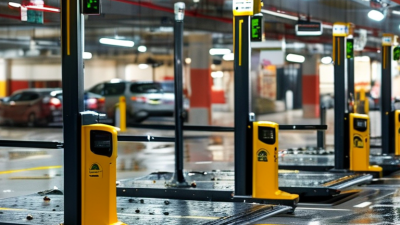
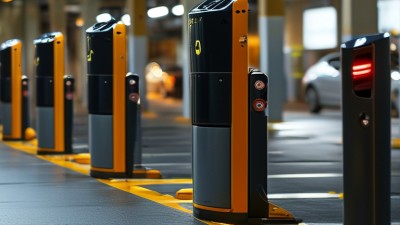
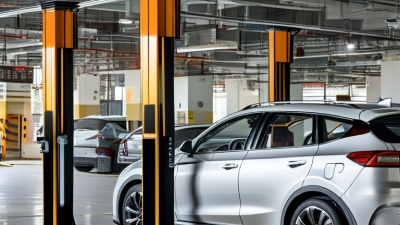
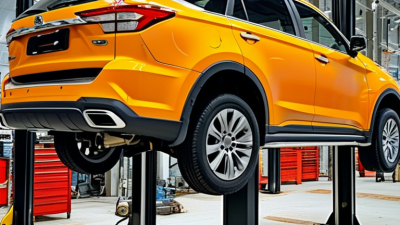
China has really become a major source of parking equipment for all sorts of places—airports, shopping malls, hospitals, office buildings, and residential complexes. Their manufacturing scene is quite diverse, covering everything from metal fabrication and access-control software to license plate recognition and payment systems. But here’s the thing: 'best' doesn’t just mean the lowest price. It’s really about dependable performance, detailed documentation, quick support, and proven integration. You know, things you actually need when it counts.
Looking at the industry data, it’s clear why doing your homework in this market is so important. MarketsandMarkets estimates that the global smart parking market hit about USD 5.5 billion in 2023, and they’re projecting it’ll grow to around USD 13.7 billion by 2028. Meanwhile, Grand View Research reports strong growth fueled by urban expansion, connected vehicles, and digital payment options. Sounds promising, right? But let’s not forget—big numbers don’t always equal quality. A slick website or fancy marketing can’t replace a sturdy barrier gate at 7:30 am or accurate license plate recognition during a heavy downpour.
Donald Shoup, one of the top parking policy gurus, always stresses that, ‘There’s no such thing as free parking.’ And I think that totally applies when picking out equipment, too. Cheaper systems might seem like a good deal upfront, but they could end up costing you more down the line with outages, replacement parts, delays in integration, or weak technical support.
In this guide, I’ll walk you through some Chinese brands like Hikvision, Dahua Technology, Shenzhen Jieshun, and NaaS Technology—evaluating them based on real-world criteria: how reliable their products are, software compatibility, certifications, customization options, installation experience, and after-sales support. Now, I should mention, it’s not a perfect science—public data can be inconsistent, and some manufacturers don’t share a lot of performance details. So, before you sign on the dotted line, make sure to ask for test results, customer references, warranty info, and if possible, see live demos. Better safe than sorry, right?
China’s vehicle population reached 336 million in 2023, according to Ministry of Public Security figures. That number changes the parking conversation. It represents crowded apartment blocks, busy shopping streets, and repair sites with limited floor space. In many cities, drivers circle for several minutes before finding a usable bay. The pressure is visible. A narrow ramp, a wet garage floor, or a failed sensor can quickly reduce daily capacity. Parking equipment manufacturers in China therefore face practical demand: store more vehicles without making access unsafe or confusing.
When comparing the best manufacturers, buyers should examine engineering evidence, not only catalog prices. Look for load calculations, corrosion protection, emergency lowering systems, and clear maintenance records. A reliable supplier should explain installation tolerances and replacement-part planning. Demonstrations matter. Watch a platform lift a vehicle smoothly, stop at each limit, and operate during a simulated power failure. Garage Lifting Equipment must also match ceiling height, vehicle dimensions, drainage, and traffic flow. These details often decide whether a system works after six months, not just on delivery day.
The 336 million-vehicle figure also exposes a weakness in simple capacity estimates. More cars do not mean every parking structure needs the same machine. Electric vehicles, heavier SUVs, and older buildings can change structural requirements. I would request a site survey before accepting a final quotation. Even then, human error remains possible. A rushed layout may look efficient on paper but create awkward turning points. Manufacturers with transparent testing, trained technicians, and documented service response times deserve closer attention from property owners and fleet operators.
China’s parking equipment sector covers more than automated gates. It includes car lifts, puzzle garages, AGV parking systems, and access-control equipment. Each category solves a different site problem.
Car lifts suit narrow buildings with limited ramp space. Buyers should check rated load, platform size, pit depth, and emergency lowering. Puzzle garages stack vehicles vertically and horizontally. Their value depends on cycle time, noise control, and dependable positioning sensors. AGV systems move cars without fixed driving lanes. They require accurate mapping, battery planning, and strong software coordination. A small floor error can interrupt the whole operation.
Access systems connect the equipment to daily traffic. Look for barrier response times, ticket or plate recognition options, intercoms, and manual override controls. Field inspections often reveal more than catalog pages. Ask manufacturers for load-test records, wiring diagrams, maintenance schedules, and installation references. Factory quality also matters. Check weld consistency, coating thickness, cable protection, and control-panel labeling. Some suppliers offer impressive demonstrations but weak after-sales support. That gap can become expensive. I would also question systems that promise zero downtime. No mechanical system is perfect. Reliable manufacturers explain failure risks and provide practical recovery procedures. Availability of spare sensors, motors, and control boards should be confirmed before purchase.
| Equipment Category | Typical Equipment Types | Operating Principle | Typical Capacity or Performance Range | Space Utilization | Best-Fit Applications | Key Technical Requirements | Relevant Standards and Compliance Considerations | Important Selection Criteria |
|---|---|---|---|---|---|---|---|---|
| Parking Lifts | Two-post lifts, four-post lifts, puzzle lifts, and stacker lifts | Vehicles are raised vertically or moved between parking platforms using hydraulic cylinders, screw mechanisms, chains, or electric motors. | 2–4 vehicles per module; lifting speeds commonly range from approximately 2–6 m/min, depending on the design. | Can approximately double or triple parking capacity in the same footprint, particularly where vertical clearance is available. | Residential buildings, commercial parking areas, hotels, workshops, dealerships, and sites with limited land area. | Rated load, platform dimensions, lifting height, mechanical locking, emergency lowering, vehicle clearance, and floor-load capacity. | Structural safety, electrical protection, emergency-stop functions, anti-fall devices, guarding, and local building and machinery regulations should be verified. | Check vehicle size limits, installation height, maintenance access, noise level, drainage, power requirements, and availability of spare parts. |
| Automated Parking Garages | Classified storage systems, tower systems, shuttle systems, rotary systems, and automated garage modules | Vehicles are transferred to storage spaces by elevators, shuttles, conveyors, pallets, or rotary platforms without requiring drivers to park inside the storage area. | Dozens to several hundred parking spaces; system throughput varies widely according to the number of elevators, shuttles, transfer points, and operating cycles. | May reduce the land requirement compared with conventional parking by using vertical storage and narrower vehicle circulation areas. | Urban developments, mixed-use buildings, hospitals, airports, high-density residential projects, and sites where land costs are high. | Vehicle envelope control, fire protection, ventilation, evacuation strategy, access control, barcode or RFID identification, software controls, and system redundancy. | Fire safety, structural design, accessibility, electrical safety, emergency retrieval procedures, and local planning requirements must be assessed during project design. | Evaluate peak-hour throughput, retrieval time, queue capacity, backup operation, software integration, lifecycle cost, and service response capability. |
| AGV Parking Systems | Autonomous guided vehicle parking, robotic pallet parking, and autonomous transfer platforms | Automated guided vehicles or robotic platforms transport cars between entry points and designated storage locations using sensors, mapping, navigation software, and warehouse-style control logic. | System capacity may range from several dozen to many hundreds of spaces; vehicle movement speed and throughput depend on layout, traffic control, charging, and fleet size. | High space efficiency because vehicle aisles can be reduced or eliminated within the storage area. | Large commercial facilities, underground garages, transportation hubs, premium residential projects, and high-density urban developments. | Navigation accuracy, obstacle detection, pallet positioning, battery management, fleet coordination, fire detection, manual override, and cybersecurity. | Emergency access, fire and life-safety provisions, machinery protection, electrical charging safety, accessibility, and local automated-vehicle regulations should be reviewed. | Assess navigation reliability, recovery from misplaced vehicles, charging strategy, software compatibility, spare AGV availability, and operator training. |
| Access and Entry Systems | Barrier gates, ticket dispensers, ticket validators, license plate recognition, RFID readers, QR-code readers, and parking payment terminals | Controls vehicle entry and exit by identifying users or vehicles, validating payment or authorization, and operating gates or other access devices. | Individual barrier cycles commonly take approximately 1–3 seconds; transaction capacity depends on lane configuration, payment method, and network performance. | Does not directly increase parking capacity but improves circulation, security, occupancy monitoring, and revenue control. | Public parking facilities, office buildings, shopping centers, campuses, residential communities, hospitals, airports, and logistics sites. | Detection loops, photoelectric sensors, anti-crush protection, plate-recognition accuracy, network connectivity, payment security, offline operation, and access logs. | Data protection, payment-card security, electrical safety, accessibility, traffic management, and local privacy requirements should be considered. | Review recognition performance in low light and bad weather, integration with parking software, lane throughput, maintenance access, and payment options. |
| Parking Guidance Systems | Space sensors, LED indicators, digital guidance signs, occupancy displays, and mobile or web-based parking information | Detects occupied and vacant spaces and communicates availability to drivers through signs, indicators, digital maps, or connected applications. | Sensor networks can monitor individual spaces or entire parking zones; update intervals depend on sensor type and communication architecture. | Improves the use of existing capacity by reducing search time, unnecessary circulation, and congestion inside the facility. | Large garages, airports, shopping centers, hospitals, campuses, event venues, and multi-level parking structures. | Detection accuracy, sensor placement, communication protocol, lighting conditions, sign visibility, data storage, and integration with access-control systems. | Electrical installation, accessibility signage, data protection, fire-route visibility, and local traffic-sign requirements should be checked. | Compare detection technology, false-occupancy rates, installation method, battery life, network coverage, analytics functions, and software openness. |
| Charging-Integrated Parking Equipment | EV charging bays, charging-enabled parking lifts, charging management systems, and energy-monitoring equipment | Combines vehicle parking with controlled electrical charging through dedicated chargers, load management, authentication, and energy monitoring. | Charging output commonly ranges from approximately 3.7 kW to more than 150 kW, depending on charger type, vehicle compatibility, and available electrical capacity. | Uses parking spaces for both storage and charging but requires careful allocation of electrical infrastructure and cable-management space. | Residential developments, offices, commercial garages, fleet depots, hotels, hospitals, and public parking facilities. | Electrical capacity, residual-current protection, cable protection, ventilation, payment or user authentication, load balancing, and integration with energy systems. | Electrical installation rules, charger certification, fire safety, accessibility, grounding, overcurrent protection, and utility interconnection requirements must be verified. | Consider charging power, peak-load management, connector compatibility, billing functions, upgradeability, weather protection, and maintenance support. |
| Control and Management Software | Parking management platforms, equipment controllers, reservation systems, payment software, occupancy analytics, and remote monitoring dashboards | Coordinates equipment, access devices, payments, alarms, user accounts, occupancy data, maintenance records, and operational reporting through local or cloud-based software. | Performance depends on system architecture; suitable systems should support real-time status monitoring, event logging, alarm handling, and controlled user permissions. | Optimizes the use of existing equipment and can reduce manual operation, retrieval errors, unauthorized access, and downtime. | Single-site garages, multi-site parking networks, automated garages, commercial properties, campuses, and fleet operations. | API availability, cybersecurity, data backup, user roles, fault notifications, equipment interoperability, reporting, and disaster-recovery procedures. | Data privacy, cybersecurity controls, payment security, network resilience, auditability, and local information-management requirements should be reviewed. | Prioritize open integration, clear ownership of operational data, offline fallback, software update procedures, training, and long-term technical support. |
Comparing manufacturers requires more than checking lifting capacity. Ask for tested load data, not only catalog figures. A platform rated at 3,000 kilograms should support that load evenly, repeatedly, and without visible frame distortion. Request factory test records, weld inspection details, and operating temperature ranges. Hydraulic Lifting Equipment also needs stable pressure control during full-load movement.
Cycle life reveals more than a single demonstration. Ask how many complete movements were tested and under what load percentage. Check cylinder seals, chains, guide rollers, and motor performance after testing. A short video proves little. A maintenance schedule proves more.
Safety deserves direct inspection. Look for mechanical locks, emergency lowering, anti-drop protection, limit switches, and clear access controls. Ask whether safety functions remain active after power loss.
Uptime depends on practical support. Review spare-parts availability, remote diagnostics, technician response times, and installation training. Visit a working site if possible. Listen for abnormal pump noise and watch whether the platform stops level. A spreadsheet can mislead. I have seen attractive specifications hide slow service and difficult maintenance access. Manufacturers should explain failure rates honestly, even when the data is incomplete. Compare warranty terms, inspection documents, software records, and total maintenance costs before selecting equipment.
China’s parking equipment sector includes several established manufacturers with strong engineering capabilities. Three leading suppliers stand out through different strengths: automated parking systems, space-saving lifts, and large-scale project delivery. Their solutions commonly serve apartment towers, hospitals, hotels, and commercial districts.
A reliable manufacturer should provide more than polished product images. Check load-test records, motor specifications, emergency controls, and corrosion protection. Ask for installation references in climates similar to your project. A parking lift beside a coastal road needs stronger surface treatment than one installed inland. Clear maintenance schedules also matter. Sensors, chains, hydraulic units, and control panels need regular inspection.
In practical evaluations, one supplier may offer excellent customization but slower spare-part delivery. Another may provide fast installation but fewer layout options. That difference can affect daily operations. It is easy to overlook. A careful buyer should compare total ownership costs, not only the purchase price. Energy use, service response, training, and warranty terms deserve equal attention.
Site measurements are essential. A few centimeters can affect vehicle clearance, turning space, and user comfort. Factory testing is valuable, but local installation quality still decides performance. Ask whether engineers supervise commissioning and train the facility team. Reliable manufacturers usually document each stage and accept reasonable technical questions. Their proposals may not be perfect. That is useful, because honest limitations are easier to manage than attractive promises.
China’s NEV growth is changing how a Parking Lot should be designed. According to China’s Ministry of Public Security, 31.4 million new energy vehicles were registered by the end of 2024. NEVs now create heavier demand for charging-ready spaces, reliable access control, and clearer parking guidance.
The strongest Chinese manufacturers combine parking barriers, ticketless recognition, payment systems, and charging coordination. Look for equipment certified for local electrical and safety requirements. Also check software compatibility, weather protection, spare-parts access, and response times. A busy hospital Parking Lot needs different equipment from a residential garage. Simple details matter. Cameras must read plates in rain. Sensors should detect low-clearance vehicles. Emergency release should remain practical.
Industry evidence supports this shift. The International Energy Agency reported that China represented more than 60% of global electric car sales in 2023. The China Electric Vehicle Charging Infrastructure Promotion Alliance also reported rapid expansion of public charging infrastructure through 2024. These figures suggest that parking equipment manufacturers must understand both vehicle movement and charging behavior. Yet no platform is perfect. Field inspections still find false plate readings, confusing bay indicators, and weak network backups. A lower purchase price may become expensive during daily failures. Buyers should test equipment in real traffic, review maintenance records, and compare measured uptime rather than attractive specifications.
When comparing parking equipment manufacturers in China, compliance evidence should guide the shortlist. GB/T 51149-2016 is a key reference for parking garage planning and design. It helps assess vehicle circulation, clearance, equipment placement, and operational safety. However, it is not a universal product certificate. A supplier should explain how its barriers, guidance systems, payment terminals, or lifting equipment fit the project design.
ISO 9001 indicates a structured quality management system, not perfect product quality. Check the certificate scope, issuing body, validity, and production site. Ask for inspection records, component traceability, calibration logs, and corrective-action reports. Practical details matter. Can technicians replace a damaged sensor quickly? Are wiring labels readable inside the control cabinet? These small signs often reveal manufacturing discipline.
CE marking matters when equipment enters the European Economic Area and falls under applicable EU requirements. Request the EU Declaration of Conformity, technical documentation, risk assessment, and relevant test reports. Do not accept a CE logo alone. During supplier visits, compare documents with actual machines and software versions. A polished file can still hide inconsistent testing. I have found that weak after-sales records deserve attention, even when certificates look complete. Standards create a useful baseline, but installation conditions, maintenance training, and honest technical communication still require careful judgment.
Compliance Benchmarks: GB/T 51149-2016, ISO 9001:2015, and CE
This reference chart shows the relevant framework years used when reviewing parking-equipment suppliers. GB/T 51149-2016 is a Chinese urban parking planning standard, ISO 9001:2015 covers quality management systems, and CE marking indicates conformity with applicable European Union requirements. These benchmarks support supplier due diligence and are not a ranking of individual companies.
The best parking equipment manufacturer depends on your site, not its catalog size. For a small residential project, compact stackers or a Parking Lift may provide practical capacity. A hospital or office complex needs faster entry, clear pedestrian routes, and stronger traffic control. Measure vehicle dimensions, ceiling height, drainage, and daily peak demand before comparing quotations. A low purchase price can become expensive when installation, training, spare parts, and downtime are included.
For larger sites, review the manufacturer’s engineering experience and testing records. Ask for load data, maintenance intervals, emergency procedures, and local service coverage. Request references from facilities with similar traffic patterns. A reliable supplier should explain how equipment performs after several years, not only show polished launch photos. Lifecycle cost matters. Energy use, replacement sensors, corrosion protection, software updates, and technician response times can change the real budget. I once focused too heavily on capacity per square meter. That shortcut was wrong. Queue length and maintenance access mattered more.
Tips: Create a simple five-year cost sheet before selecting equipment. Include civil work, permits, inspections, electricity, training, and repairs. Test a full-size vehicle in the proposed bay. Small clearance errors become daily frustrations. Also, inspect the control interface personally. If staff need repeated explanations, the system may not fit the site. Ask difficult questions early, because impressive specifications do not guarantee dependable operation.
Common categories include car lifts, puzzle garages, AGV systems, and access-control equipment. Each addresses a different site constraint. Choose carefully.
A car lift suits narrow buildings with limited ramp space. Check rated load, platform dimensions, pit depth, and emergency lowering. Small spaces need precise planning.
Review cycle time, noise control, positioning sensors, and vehicle clearance. Ask whether platforms remain level after repeated movements. Fast demonstrations can hide slow recovery.
Confirm accurate mapping, battery capacity, software coordination, and floor accuracy. A small surface error can interrupt the entire operation. Test real traffic conditions.
Look for mechanical locks, anti-drop protection, limit switches, emergency lowering, and access controls. Safety functions should remain active after power loss. Inspect them directly.
Request tested load data, cycle-life records, weld inspections, and operating temperature ranges. Check cylinders, chains, guide rollers, and motors after testing. One video proves little.
Ask for load-test records, wiring diagrams, maintenance schedules, installation references, and spare-parts information. Review software records and component traceability. Missing details matter.
Treat planning standards, quality certificates, and European conformity documents as useful evidence, not automatic approval. Check certificate scope, validity, technical files, risk assessments, and test reports. Logos alone are insufficient.
Downtime often depends on sensor availability, technician response, remote diagnostics, and installation training. Confirm access to motors, sensors, and control boards. No mechanical system is perfect.
Listen for abnormal pump noise and watch whether platforms stop level. Inspect welds, coatings, cable protection, and control-panel labels. Catalog pages cannot show everything.
China’s rapid growth in vehicle ownership—reaching approximately 336 million vehicles in 2023 and 31.4 million new-energy vehicles by 2024—has created strong demand for reliable, space-efficient Parking Equipment. The market includes vehicle lifts, automated garages, AGV-based systems, and access-control solutions, each designed for different site conditions and operational needs. Choosing the right system requires evaluating load capacity, operating cycle life, safety features, maintenance requirements, and expected uptime.
Manufacturers should also be assessed against recognized benchmarks such as GB/T 51149-2016, ISO 9001, and CE requirements. Smart connectivity, energy efficiency, and compatibility with new-energy vehicles are becoming increasingly important. The best solution depends on parking scale, available budget, required capacity, installation environment, and total lifecycle cost. A careful comparison of technical performance, service support, and long-term reliability can help property owners and developers select equipment that delivers safe, efficient, and sustainable parking operations.