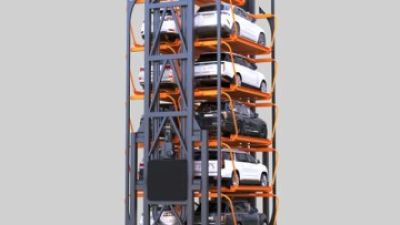
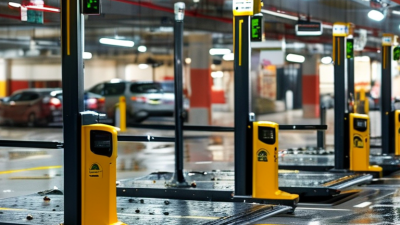
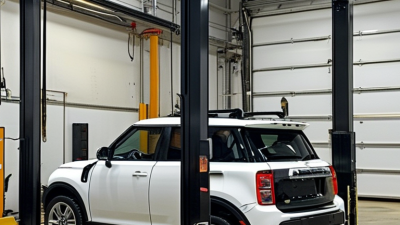
An auto parking lift is basically a mechanical system designed to stack vehicles either above ground or underground. It’s made up of steel platforms, lifting columns, guide rails, and safety controls—pretty straightforward. The main idea? Maximize parking space without needing extra land. In busy downtown areas, even a little unused vertical space can turn into several secure parking spots—that’s a game changer.
Klaus Wöhr, who’s well-known as a pioneer in automated parking tech and the founder of WÖHR Autoparksysteme, once said, “Parking space must be used intelligently.” Honestly, his point still resonates today. Usually, a car rolls onto the lift’s platform, and sensors check things like its position, height, and weight. Then, the control system kicks in—activating a motor, hydraulic system, or chain mechanism. The platform then moves up, down, or sideways into an open parking spot. Safety locks catch it in place before anyone steps off—gotta keep things secure.
But let’s remember—it’s more than just a machine. For the system to work smoothly, everything matters—installation quality, regular inspections, trained operators, and correct vehicle measurements. Some models come with fancy features like automatic locks, emergency stops, anti-fall devices, and obstacle detection. Others might require drivers to follow a fixed parking sequence, which can be a bit less convenient. Choosing the right auto lift isn’t just about saving space; a poorly selected one might save floor space but cause daily frustrations. And while some lifts boast high capacity figures, that doesn’t always mean quick access or smooth operation.
This guide dives into the main types of lifts, how they work, safety features you should look for, maintenance tips, and what you really need to consider for your site. Plus, it’s honest about when these systems work like a charm—and when sticking with a traditional parking layout might actually make more sense.
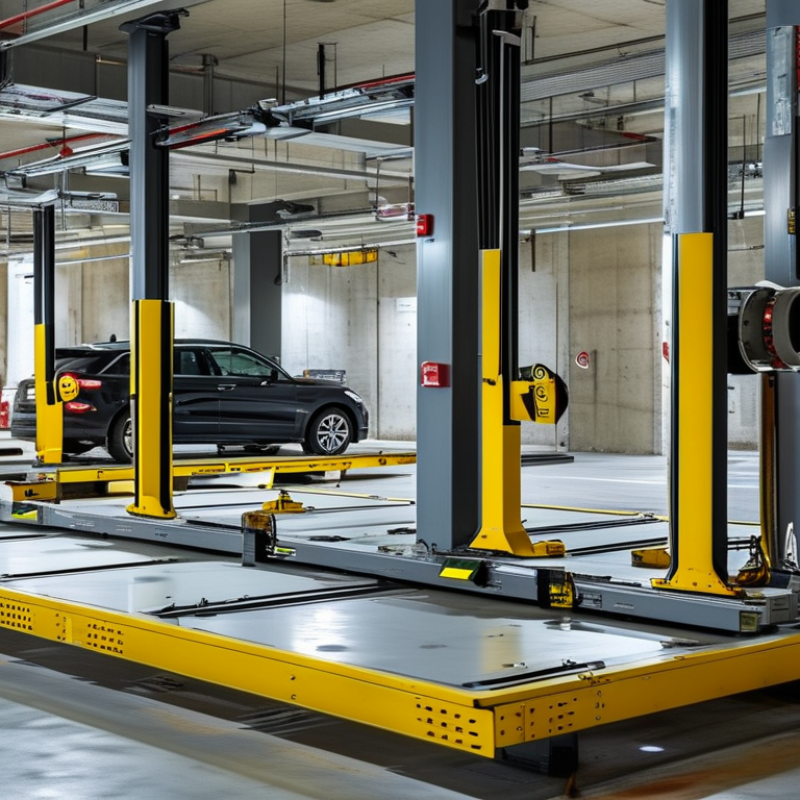
Definition and Basic Purpose of an Auto Parking Lift
An Auto Parking Lift is a mechanical parking system that moves vehicles vertically or horizontally. Its basic purpose is simple: use height instead of spreading across more land. A driver parks on a platform, activates the control panel, and the lift raises the vehicle to an available level. Some systems use sliding platforms, while others combine lifting and rotating movements.
The need is growing in dense cities. The United Nations World Urbanization Prospects projects that 68% of the global population may live in urban areas by 2050. INRIX’s 2017 Parking Pain report estimated that American drivers spent about 17 hours searching for parking annually. An Auto Parking Lift can reduce this wasted circulation, especially beside apartments, offices, and small commercial sites.
Safety depends on engineering, not appearance. Sensors check platform position, vehicle alignment, and obstacles before movement. Mechanical locks should hold the platform during loading and unloading. Operators must also confirm weight limits and clearance measurements. It is not a magic box. Poor maintenance can create noise, delays, or unsafe movement. A careful site survey remains essential, although real projects sometimes underestimate user habits and weather conditions.
What Is an Auto Parking Lift and How Does It Work?
A typical two-level auto parking lift uses a powered platform to raise one vehicle above another, allowing two parking positions within the footprint normally used by one vehicle.
The lower platform remains at ground level while the upper platform moves vertically. When the upper vehicle is lifted, the lower position can be used for another vehicle. Actual lifting capacity, platform dimensions, and safety clearance depend on the lift design and applicable regulations.
Main Components and Structural Design
What Is an Auto Parking Lift and How Does It Work?
Main Components and Structural Design
An auto parking lift uses a steel frame, lifting platform, drive system, and safety controls. The platform moves vehicles vertically or horizontally within a compact bay. Its design begins with load paths, not appearance. Vehicle weight transfers through the deck, columns, beams, anchors, and foundation. Each connection must resist static loads, movement, vibration, and accidental impact.
The main lifting options include hydraulic cylinders, screw mechanisms, and chain-driven systems. Hydraulic units often need guide rails and pressure protection. Screw systems require accurate alignment and regular lubrication. Sensors confirm platform position, door status, and obstruction clearance. Mechanical locks support the platform during parking. They should not be treated as optional backup parts. A 2024 Grand View Research analysis estimated the global automated parking system market at about USD 2.1 billion in 2023, reflecting growing demand for engineered space efficiency.
Structural design also considers vehicle dimensions, uneven loading, wind, seismic movement, drainage, and maintenance access. The 2023 Global Status Report for Buildings and Construction states that buildings and construction produced approximately 37% of global energy-related emissions in 2022. This does not prove that parking lifts reduce emissions, but denser parking can limit land-intensive construction. The International Building Code and ASCE 7 provide useful frameworks for structural, wind, and seismic evaluation. Still, local engineering review remains essential. A neat drawing can hide weak assumptions. Small errors accumulate. Clearance deserves careful testing. Regular inspections should examine welds, anchors, cables, locks, sensors, and hydraulic leakage before wear becomes failure.
How Vehicles Are Loaded onto the Parking Platform
An auto parking lift stores vehicles vertically when ground space is limited. Its main components include a parking platform, lifting columns, guide rails, sensors, and a control panel. Auto Parking Lift Systems move vehicles between ground level and an assigned storage position. The process begins with careful vehicle entry.
The driver approaches the platform slowly and follows the alignment marks. The front wheels must stop inside the marked area. Small mistakes matter. Sensors check the vehicle’s position, weight, height, and door clearance. If the vehicle sits unevenly, the system should prevent movement and request repositioning. This pause can feel inconvenient, but it protects the platform and surrounding structure.
After the parking brake is applied, the driver exits through the designated area. The control system confirms that people, doors, and loose objects are clear. Then, mechanical locks secure the platform before the lift rises. Guide rails help reduce sideways movement during travel. At the selected level, the platform stops and locks into place. Later, the retrieval command brings the platform down in the reverse sequence.
In real installations, loading is rarely perfect every time. Rain, poor lighting, or an unfamiliar driver can affect alignment. Regular inspections and clear operating instructions reduce these problems. Operators should still review unusual noises, uneven lifting, or repeated sensor warnings instead of ignoring them. A reliable system depends on both engineering and disciplined use.
The Step-by-Step Lifting and Parking Process
An auto parking lift is a mechanical platform that raises vehicles into unused vertical space. It usually uses hydraulic cylinders, chains, or screw-driven equipment. The structure must match the vehicle’s weight, dimensions, and center of gravity. Experienced installers check these factors before daily operation.
The lifting process begins when the driver positions the vehicle centrally on the platform. Wheel guides help, but the driver still needs careful alignment. The engine is switched off, and the parking brake is applied. Sensors then check the platform position, door clearance, and load limits. If everything is acceptable, the operator activates the control panel. The lifting mechanism moves slowly, reducing sudden movement and vibration.
As the platform rises, locking devices engage at designed heights. These locks carry the parked load, rather than relying only on hydraulic pressure. The operator should confirm full engagement before leaving the vehicle. To retrieve it, the system unlocks the platform only after the surrounding area is clear. It lowers the platform under controlled speed, then stops at the ground position. The driver checks the platform surface before driving away.
The process is not perfectly automatic. A sensor can misread dirt or unusual positioning. Small mistakes matter. Routine inspections should include cables, locks, bolts, hydraulic lines, and emergency controls. Operators should follow the equipment manual and never exceed its rated capacity. A brief pause before lifting is often the most practical safety habit.
What Is an Auto Parking Lift and How Does It Work? - The Step-by-Step Lifting and Parking Process
General operating information for vehicle parking lifts. Actual capacity, dimensions, controls, and cycle times vary by lift design and installation conditions.
| Step |
Process Stage |
What Happens |
Typical System Status |
Key Safety or Operating Requirement |
| 1 |
Vehicle Approach |
The driver aligns the vehicle with the parking platform or entry area and follows the marked positioning guidance. |
Ready for Entry |
The platform must be fully lowered, unobstructed, and correctly positioned before the vehicle enters. |
| 2 |
Vehicle Positioning |
The vehicle is driven onto the platform until the wheels are inside the designated wheel stops or positioning markers. |
Position Check |
The driver should center the vehicle, apply the parking brake, select the required transmission setting, and switch off the engine. |
| 3 |
Safety Confirmation |
The operator verifies that doors, luggage compartments, and other vehicle openings are closed and that no person remains on the platform. |
Safety Interlock Active |
Controls should prevent movement when safety conditions are not satisfied. People must not remain in the vehicle during lifting. |
| 4 |
Lift Activation |
The control system activates the lifting mechanism, which may use hydraulic cylinders, screw drives, chains, cables, or a combination of components. |
Lifting |
The lifting area must remain clear. Emergency-stop controls should be accessible during operation. |
| 5 |
Vertical Movement |
The platform rises vertically along its guides or support structure to create space below or to reach an elevated parking position. |
In Motion |
Mechanical guides, locks, limit switches, and overload protection help control movement and prevent operation beyond the designed travel limits. |
| 6 |
Elevated Parking Position |
When the platform reaches the programmed height, the system stops and engages its mechanical locking or holding devices. |
Locked and Parked |
The vehicle is supported by the lift’s rated structure and safety locks rather than relying only on hydraulic pressure. |
| 7 |
Lowering Command |
To retrieve the vehicle, the operator selects the target platform and confirms that the lowering path is clear. |
Ready to Lower |
The system should verify that doors, barriers, adjacent equipment, and people are clear of the travel zone. |
| 8 |
Lock Release and Descent |
The mechanical locks release in a controlled sequence, and the platform descends at a regulated speed. |
Lowering |
Speed control, limit switches, anti-drop protection, and emergency-stop functions are important during descent. |
| 9 |
Ground-Level Arrival |
The platform reaches its lower limit and stops at the designated loading position. |
At Ground Level |
The platform should be stable and properly aligned before the driver enters the area or removes the vehicle. |
| 10 |
Vehicle Exit |
The driver releases the parking brake, starts the vehicle, and drives straight off the platform after receiving clearance. |
Available for Exit |
Wheel stops, side barriers, and platform edges must be cleared carefully to avoid tire or bodywork contact. |
| 11 |
System Reset |
After the vehicle leaves, the platform returns to its assigned standby position or remains available for the next parking cycle. |
Standby |
The control system records the final position and keeps movement disabled if a fault or obstruction is detected. |
| Data Dimension |
General Reference Information |
Why It Matters |
| Primary Function |
Uses vertical space to store one vehicle above another or to move vehicles between parking levels. |
It can increase parking capacity where the available floor area is limited. |
| Common Lift Types |
Two-post or four-post dependent lifts, puzzle or semi-automated systems, stacker lifts, and fully automated parking systems. |
Each configuration offers different levels of capacity, automation, access, and space efficiency. |
| Typical Drive Systems |
Hydraulic, electromechanical screw, chain-driven, cable-driven, or combined lifting mechanisms. |
The drive system affects maintenance requirements, lifting speed, noise, and installation design. |
| Vehicle Capacity |
Capacity is specified by the manufacturer and commonly covers passenger vehicles within a defined weight range; heavier vehicles require a suitably rated system. |
Exceeding the rated load can damage structural, mechanical, and safety components. |
| Platform Requirements |
The platform must accommodate the vehicle’s wheelbase, track width, overall length, width, height, and tire dimensions. |
Correct dimensional compatibility helps prevent contact with barriers and ensures stable positioning. |
| Structural Requirements |
The installation surface must provide adequate strength, levelness, drainage, and anchoring conditions according to the system design. |
A suitable foundation is essential for stability, alignment, and safe load transfer. |
| Protection Features |
Common features include mechanical safety locks, emergency-stop buttons, overload protection, travel-limit switches, anti-drop devices, and obstruction detection. |
These features help reduce risks caused by overloads, unintended movement, control faults, or obstructions. |
| Operating Environment |
Indoor and outdoor installations may require different corrosion protection, drainage, lighting, ventilation, and weather-resistant controls. |
Environmental conditions influence durability, visibility, electrical safety, and maintenance needs. |
| Maintenance Tasks |
Regular inspections typically include structural components, anchors, cables or chains, hydraulic equipment, locks, sensors, controls, lubrication points, and emergency devices. |
Scheduled maintenance helps identify wear, leakage, misalignment, and safety-system faults before they affect operation. |
| User Access |
Most vehicle lifts are designed for the vehicle to be unoccupied during lifting and lowering. |
Removing occupants reduces the risk associated with movement at height and changing platform conditions. |
Types of Auto Parking Lifts and Their Applications
What Is an Auto Parking Lift and How Does It Work?
An Auto Lift Car system raises vehicles vertically, creating extra parking spaces without expanding the building footprint. Hydraulic cylinders, screw drives, or electric motors move platforms between fixed levels. Sensors check position, weight, and access clearance before the system operates. A four-post lift suits apartments and showrooms, while a two-post stacker fits compact residential garages. The lower vehicle usually leaves first. That limitation matters.
Puzzle parking systems slide platforms horizontally and vertically, using empty spaces as temporary routes. They work well in dense apartment buildings, hotels, and commercial garages. Pit lifts place one car below ground level, preserving the visible streetscape. Tower and shuttle systems use automated carriers, lifts, and software to store vehicles with minimal driver movement. Grand View Research estimated the global automated parking system market at about US$2 billion in 2023, with growth near 16% annually through 2030. The forecast reflects urban land pressure, not guaranteed project success.
Applications should match traffic patterns. A small clinic may need a simple stacker, while a high-rise residence needs faster retrieval and backup controls. Operators should verify platform capacity, ceiling height, drainage, emergency release access, and maintenance intervals. EN 14010-based safety planning can support risk control, but local inspection rules still apply. The uncomfortable truth: automated layouts can reduce land use while increasing maintenance complexity. A poorly planned lift may save space and waste time. Real users notice every delay.
Safety Features, Space Benefits, and Operating Limits
An Auto Park Lift raises one vehicle above another, using hydraulic cylinders, screw drives, or cables. It can turn one parking bay into two. The benefit is practical in dense garages. INRIX’s 2023 Global Traffic Scorecard reported that U.S. drivers lost 42 hours in traffic, showing how valuable convenient parking access can become. The U.S. Department of Transportation’s 2022 National Household Travel Survey also found nearly two vehicles per household. More vehicles need smarter space use.
Safety depends on more than steel thickness. Look for mechanical locking positions, obstruction sensors, emergency-stop controls, anti-fall devices, and clear load plates. ANSI/ALI ALCTV guidance supports structured inspection and testing for vehicle lifts. Operators should check unusual noise, oil leaks, uneven platforms, and damaged cables before use. Never exceed the stated vehicle weight, wheelbase, height, or tire-position limits. A heavy electric vehicle may fit physically but overload the platform. That detail is easy to miss. Power failure procedures also matter; some systems require trained manual lowering, not improvisation.
Tips: Measure the car and garage first. Leave space for mirrors, doors, and drainage. Keep people outside the lift zone. Do not store loose tools beneath a raised vehicle. Maintenance records should include inspections, repairs, and test dates. Local building and fire requirements still apply. A lift can save floor area, but it cannot correct poor measurements or neglected maintenance.
High-Capacity Motor-Driven Rotary Car Parking Systems for Efficient Vehicle Garage Solutions
High-Capacity Motor-Driven Rotary Car Parking Systems for Efficient Vehicle Garage Solutions
The vertical rotating parking system is a premium, heavy-duty solution designed for commercial environments where land is limited and parking demand is high. Suitable for shopping centers, hospitals, office complexes, and other busy facilities, it uses a motor-driven rotary structure to arrange vehicles vertically while maintaining a compact footprint of only 7 x 5.8 meters. This space-saving design helps maximize garage capacity, reduce parking congestion, and support faster vehicle retrieval.
Powered by a reliable 15–22 kW motor, the system is available with load capacities of 2,000 kg or 2,350 kg, allowing it to accommodate most common vehicle models. Its efficient rotating operation minimizes unnecessary driving and waiting time, creating a smoother experience for both drivers and facility operators. The structure can also be customized according to site conditions, capacity requirements, and project specifications.
Fully CE-certified, the system is manufactured to meet rigorous quality and safety standards for dependable daily operation. As a China-based supplier and factory, we provide robust equipment, practical engineering support, and flexible configurations for high-traffic commercial parking projects. Its durable construction and efficient performance make it well suited to facilities seeking reliable garage solutions without expanding their land footprint.
FAQS
The main parts include a steel frame, platform, drive system, sensors, and safety controls. Guide rails limit sideways movement. Mechanical locks support the platform during parking. A neat drawing can still hide weak assumptions.
The platform moves vertically or horizontally inside a compact parking bay. Hydraulic cylinders, chains, or screw mechanisms can provide movement. The system checks position, clearance, and load limits before lifting. Movement should remain slow and controlled.
The driver enters slowly and follows the platform’s alignment marks. The front wheels must remain inside the marked area. The vehicle should sit centrally and evenly. Small errors matter.
Sensors may detect uneven positioning, excessive height, or insufficient door clearance. The system should stop and request repositioning. Rain, poor lighting, and unfamiliar controls can increase mistakes. Do not force the cycle forward.
Mechanical locks hold the platform at its parking position. They reduce reliance on hydraulic pressure or lifting equipment alone. The locks should engage fully before anyone leaves the area. Pause before lifting.
Sensors check platform position, vehicle weight, door status, and obstruction clearance. Controls should prevent movement when people or loose objects remain nearby. Emergency controls also require regular testing. Not perfectly automatic.
The retrieval command begins only after the surrounding area is clear. The platform unlocks and lowers at a controlled speed. It stops at ground level for inspection. The driver should check the platform before driving away.
Inspections should examine welds, anchors, bolts, cables, locks, sensors, and hydraulic lines. Technicians should check unusual noises, uneven lifting, and repeated warnings. Screw mechanisms may need regular lubrication. Ignoring small signs can create larger failures.
They can use vertical space where land is limited. Denser parking may reduce the need for land-intensive construction. This does not automatically prove lower emissions. The result depends on design, energy use, materials, and maintenance. That limitation deserves attention.
Conclusion
An Auto Parking Lift is a mechanical system designed to raise vehicles onto elevated platforms, allowing multiple cars to occupy the footprint of a single parking space. Its main structure typically includes a strong steel frame, parking platforms, lifting columns or hydraulic equipment, guide rails, motors, and control systems. Vehicles are driven onto a designated platform, positioned within marked boundaries, and secured before the lifting cycle begins.
During operation, sensors and controls check the platform position and safety conditions. The lift then raises or lowers the vehicle steadily along its guides, placing it on an upper or lower parking level. Different designs may serve private homes, commercial garages, workshops, or high-density urban facilities, depending on capacity and available space. Safety features can include locking mechanisms, anti-fall devices, emergency stops, obstruction sensors, and warning signals. Although an Auto Parking Lift can significantly increase parking efficiency, its operation is limited by vehicle size, weight, ceiling height, platform dimensions, maintenance requirements, and the need for trained users to follow operating instructions.