Picking the right Car Parking Machine can really make a huge difference—turning a crowded, chaotic spot into a safer, more efficient parking area. When international buyers shop around, it's common to compare things like lifting systems, automated garages, rotary platforms, and smart payment tech. Each of these solutions is suited to different spaces, budgets, traffic flows, and maintenance needs.
In this guide, I’ll walk you through seven solid options that are popular with buyers worldwide. We’ll focus on practical stuff—how they perform, what’s involved in installing them, safety for users, ongoing costs, and support down the line. A good machine should smoothly move vehicles, cut down waiting times, and keep cars safe during everyday use. It’s also important to look at load capacity, platform size, emergency controls, power requirements, and whether you can easily get local service. For example, a smaller platform might work great at a hotel entrance, but a multi-level system may be better for a busy office building.
Details really matter here. If the machine will be outside and exposed to rain, it needs a tough finish and protected electrical parts. If it’s mainly for family cars, you might want a wider platform or clearer controls. Plus, experienced installers usually check things like floor strength, ceiling height, drainage, ventilation, and pedestrian paths before suggesting the right equipment. Doing these checks upfront can save you from nasty surprises after installation.
Now, no one model is perfect for every situation. Some save space but require more regular maintenance, while others are lightning-fast but need careful planning during setup. Brochures often look great, but they don’t always tell you the full story. That’s why it’s smart to ask for test results, warranty info, spare parts availability, and references from projects they’ve completed. Specs can seem impressive online, but real-world performance might tell a different tale. The goal here is to help you make a smart, informed decision—not to push a one-size-fits-all solution. So, take your time, narrow down your options carefully, and choose wisely.
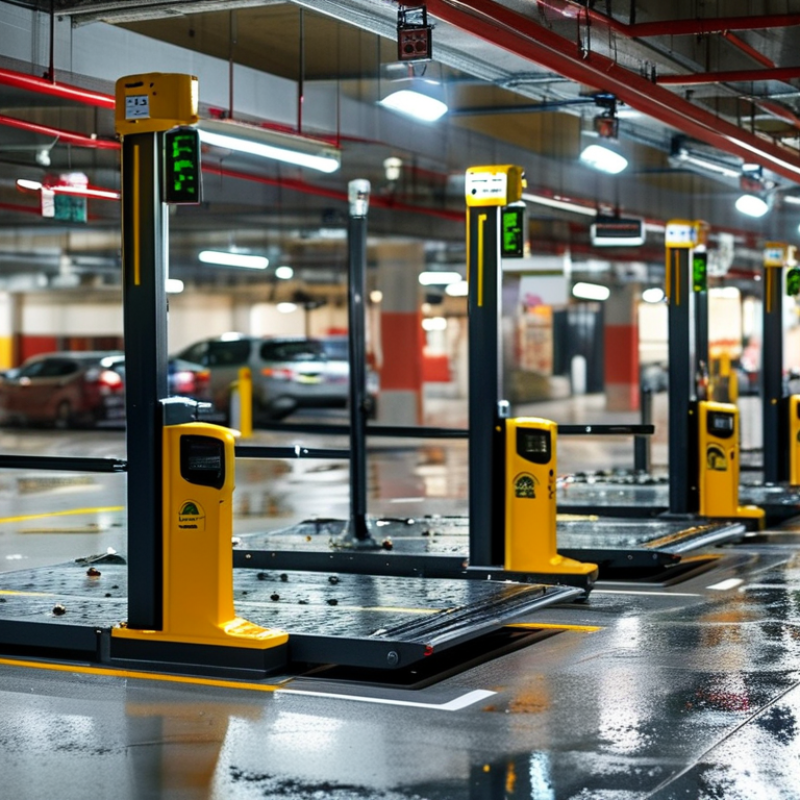
What Are Car Parking Machines and How Do They Work?
Car parking machines are systems that store vehicles on steel platforms, rails, or vertical lifts. They reduce the space needed for conventional parking. Unlike a simple parking meter, a machine often controls the entire vehicle movement.
A driver stops at an entry bay. Sensors check vehicle length, height, weight, and position. The control unit then selects an empty space.
Motors, conveyors, lifts, or rotating platforms move the vehicle into storage. At collection, the system identifies the ticket or digital record and returns the car to the exit bay.
It feels simple to the user. The machinery is not.
The 2022 INRIX Global Traffic Scorecard reported that American drivers spent about 51 hours searching for parking annually. Automated systems can reduce this circulation by using compact vertical and stacked layouts. A 2024 MarketsandMarkets industry report also projects strong growth for automated parking systems through the decade, driven by dense cities and limited land. Yet reports are not the whole story. A poorly calibrated sensor can delay every vehicle behind it. Rain, dust, unusual vehicle dimensions, and power interruptions still require careful planning. Reliable installations need emergency controls, maintenance access, fire protection, and trained operators. The best design is not always the largest one.
Key Types of Car Parking Machines for Different Locations
Choosing the right Parking Machine starts with the location, not the screen. Street parking needs compact meters with contactless payment, clear instructions, and strong weather resistance. Shopping centers often benefit from ticketless entry, license-plate recognition, and pay-on-foot stations. These systems reduce queues near crowded exits. A 2023 MarketsandMarkets report forecasts the smart parking market to grow from about USD 6 billion in 2023 to USD 15 billion by 2028. That growth reflects demand for connected equipment, but not every site needs a complex system.
Airports and transit hubs require multilingual interfaces, fast payment, and reliable network connections. Bright sunlight can make small displays difficult to read. Wet gloves can also turn a simple transaction into a frustrating delay. Residential garages usually need access-control machines with visitor management and mobile credentials. For narrow urban sites, automated parking systems can store vehicles vertically. Grand View Research reported strong growth in this segment, supported by limited urban land and rising vehicle density. Still, installation depth, maintenance access, and fire-safety planning require careful review.
The best choice depends on traffic volume, climate, staffing, and payment habits. Barrier-free systems suit busy facilities, but cameras may misread plates after rain or snow. That weakness deserves honest testing. Buyers should request trial data, uptime records, spare-parts plans, and cybersecurity details. A cheaper Parking Machine can become expensive when replacement parts arrive slowly. Local technicians matter, especially at remote airports or coastal sites. Human support still counts.
How to Compare Parking Capacity, Speed, and Space Efficiency
7 Best Car Parking Machines for Global Buyers
Choosing among car parking machines requires more than counting advertised spaces. Compare usable capacity, retrieval speed, and total space efficiency together. Count vehicle bays, turning clearance, and expected daily demand. A six-car tower may outperform a twelve-space puzzle system on a busy street. Measure floor area, ceiling height, and entrance width before selecting equipment. In my site assessments, narrow entrances caused more delays than lifting cycles. That detail is easy to miss. Good layouts also leave room for sensors, drainage, and maintenance access.
Speed should be measured from payment confirmation to vehicle handover. Ask for average and peak retrieval times, not the fastest demonstration. A 90-second cycle sounds impressive. Real queues change the result. Compare loading time, door opening, access checks, and error recovery. Systems with parallel movement can reduce waiting during morning peaks. However, faster movement may increase noise and maintenance demands. Request test records from similar climates and vehicle sizes. Numbers need context.
Space efficiency means more than fitting cars vertically. Check columns, ramps, fire access, pedestrian clearance, and service zones. Calculate spaces per square meter, then test larger vehicles carefully. A tight design may win on paper but frustrate drivers daily. Inspect backup controls, power-failure procedures, and local technician coverage. These are unglamorous details. Yet they protect uptime. Leave room for future vehicle growth. My earlier estimates were too optimistic when SUVs replaced smaller cars.
7 Best Car Parking Machines for Global Buyers: Comparing Capacity, Speed, and Space Efficiency
| Parking Machine Type |
Typical Capacity |
Typical Retrieval Time |
Approx. Floor Area per Vehicle |
Space Efficiency |
Key Advantages |
Recommended Applications |
| Automated Puzzle Parking System |
10–100 vehicles per installation |
90–180 seconds |
14–20 m² |
High |
Modular design, flexible expansion, and good use of irregular layouts. Suitable for medium- and high-density projects. |
Residential buildings, offices, mixed-use developments, and retrofit projects |
| Rotary Parking System |
6–20 vehicles per module |
60–120 seconds |
8–12 m² |
Very high |
Compact vertical arrangement, relatively simple structure, and a small ground footprint. |
Small urban plots, homes, dealerships, and low- to medium-capacity sites |
| Two-Level Stacker Parking System |
2–4 vehicles per unit |
45–90 seconds |
15–18 m² |
High |
Lower installation complexity, fast operation, and practical for doubling capacity in existing spaces. |
Private garages, apartment buildings, workshops, and small commercial car parks |
| Automated Parking Tower |
20–100 vehicles per tower |
90–180 seconds |
5–10 m² |
Excellent |
Uses vertical height efficiently, reduces driving aisles, and provides strong capacity on restricted land. |
Dense city centers, hotels, hospitals, residential towers, and commercial developments |
| Shuttle-Based Automated Parking System |
50–500 vehicles per zone |
120–210 seconds |
8–14 m² |
Excellent |
High throughput, scalable storage lanes, and efficient handling of large parking volumes. |
Airports, transit hubs, shopping centers, hospitals, and large public facilities |
| Automated Guided Vehicle Parking System |
50–1,000 vehicles per facility |
120–240 seconds |
9–15 m² |
Excellent |
Driverless vehicle movement, flexible layout planning, high automation, and no fixed transfer machinery in every bay. |
Large-scale urban facilities, airports, premium developments, and high-capacity projects |
| Underground Lift-and-Slide Parking System |
2–6 vehicles per module |
90–180 seconds |
14–22 m² |
High |
Preserves the ground-level appearance of a site, protects vehicles from weather, and works well where height is restricted. |
Historic districts, private residences, landscaped sites, and low-rise urban properties |
Figures are typical planning ranges for commercial installations. Actual capacity, retrieval time, and floor-area efficiency vary according to vehicle dimensions, structural layout, local safety regulations, access configuration, control software, and required fire-protection systems.
Seven Leading Car Parking Machines for Global Buyers
Seven Leading Car Parking Machines for Global Buyers
Global buyers often compare seven leading car parking machines by site conditions, not appearance. A two-post stacker suits compact buildings and lighter parking demand. A four-post lift offers stronger support for larger vehicles and longer storage. Puzzle parking systems move platforms horizontally and vertically, using limited floor space efficiently. Rotary systems rotate vehicles around a central axis, making them suitable for narrow urban plots.
Tower parking systems build upward and can hold many vehicles on a small footprint. Shuttle systems use mechanical carriers to transfer cars between storage positions. Automated Parking Machine solutions may combine lifts, shuttles, sensors, and control software. Each option requires careful review of vehicle dimensions, loading speed, noise levels, and emergency access. Small details matter.
During a site assessment, measure ceiling height, turning space, drainage, and electrical capacity. A machine that fits a brochure may fail inside an irregular basement. Ask for tested load data, maintenance schedules, safety certifications, and operator training records. Local climate also matters. Dust, humidity, freezing temperatures, and salt air can shorten component life.
Real projects rarely perform perfectly. Sensors may need recalibration after heavy use. Delivery times can change because of customs or construction delays. Buyers should request clear inspection procedures and spare-part availability before signing. A reliable supplier should explain limitations openly, not only advertise maximum capacity. Cost matters, but predictable operation matters more.
Safety Standards and Essential Protection Features
For global buyers, a Car Lifting Machine should be judged by protection features, not lifting height alone. The International Labour Organization estimated 2.93 million work-related deaths and 395 million non-fatal injuries in 2023. Parking equipment needs disciplined risk control.
Look for mechanical safety locks, anti-fall devices, overload sensors, and door interlocks. Light curtains should stop movement when a person crosses the access zone. Emergency-stop buttons must remain visible beside the operator position. Manual lowering is valuable during power loss, though it is often overlooked. Very practical. Standards such as EN 14010, ISO 13849-1, and IEC 60204-1 can guide procurement, but certification should match the installation country. A certificate alone does not prove safe commissioning.
The World Health Organization reported about 1.19 million annual road deaths, reminding buyers that vehicle movement requires careful separation from people. Check platform load plates, wheel stoppers, drainage, lighting, and floor markings. Ask for factory test records, installation procedures, and maintenance intervals. Operators should receive hands-on training with an empty platform before carrying vehicles. In my experience, buyers sometimes focus heavily on price and parking capacity. That is understandable, but a cheaper control panel can create expensive downtime. Independent inspections after installation are wise. Even strong systems can fail when sensors are bypassed, guards are removed, or inspection logs become routine paperwork.
Installation, Maintenance, and Long-Term Operating Costs
Choosing among the 7 best car parking machines requires more than comparing purchase prices. Installation conditions often decide the real budget. A Car Lift Parking system may need reinforced flooring, drainage, electrical upgrades, and accurate vehicle clearance checks. Measure ceiling height twice. A few lost centimeters can delay commissioning. Installation may also require traffic planning, safety sensors, and operator training. These details are easy to underestimate.
Maintenance controls long-term reliability. Inspect lifting chains, hydraulic seals, guide rails, sensors, and emergency stops on a fixed schedule. Keep a record of service dates and replaced parts. Dust, moisture, and careless driving can increase wear. Annual inspections are sensible, but busy facilities may need monthly checks. In my experience, preventive maintenance costs less than repairing a failed platform during peak hours. Still, maintenance estimates are not always perfect. Local labor rates and replacement-part availability can change the calculation.
Tips: Ask for a five-year operating-cost estimate, not only the equipment quote. Confirm power consumption, warranty coverage, spare-part lead times, and remote support. Request a written maintenance checklist before installation. Keep one access route clear for technicians. Also compare noise levels, cycle speed, and winter performance. A cheaper machine may consume more electricity or require frequent service. Calculate the cost per parking space, including construction, inspections, downtime, and eventual component replacement. Short-term savings can become expensive.
4-Post Parking Lift Outlook: 4-Car Capacity & Space Efficiency, Informed by Grand View Research Data
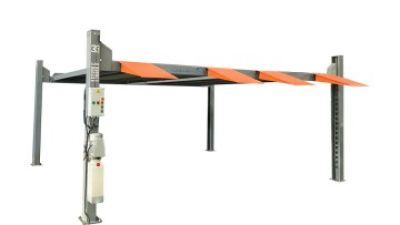
The outlook for four-post parking lifts is closely tied to the growing need for practical space efficiency. Market research indicates that vehicle ownership and limited parking areas are encouraging homeowners, property managers, and commercial operators to seek vertical storage solutions. A four-car configuration can convert one conventional parking footprint into four independent spaces, with two vehicles positioned on the upper level and two on the lower level. This makes the system suitable for residential driveways, multi-vehicle households, service facilities, and commercial parking lots.
Designed for four-car capacity, this lift uses hydraulic-cylinder drive, wire-rope lifting, and electric unlocking for smooth operation. A dual unlocking mechanism, combined with an anti-drop wire-rope lock, supports secure positioning during vehicle storage. The integrated parking platform allows flexible vehicle access, while the approximately 2-meter lifting height provides room for taller vehicles on the lower level. This arrangement helps users organize multiple cars without expanding the parking area.
Space-conscious details further support daily use. The foldable tow plate reduces the system’s footprint when access or movement is required, while the high-strength beam is engineered to resist tilting or bending under full load. By combining vertical expansion, independent parking positions, and practical safety features, the four-post lift addresses the demand for greater parking density without requiring major structural changes to an existing site.
FAQS
: It stores vehicles on platforms, rails, lifts, or rotating decks. The machine controls vehicle movement. It uses less ground space than conventional parking.
The driver stops inside an entry bay. Sensors check height, length, weight, and position. A control unit selects an empty space. Lifts, motors, conveyors, or platforms move the vehicle.
The system reads a ticket or digital record. It locates the stored vehicle. Mechanical equipment moves it to the exit bay. The driver then collects it.
A two-post stacker can suit compact buildings. A rotary system may fit a narrow urban plot. A puzzle system uses horizontal and vertical movement. The best choice depends on site measurements.
Count usable vehicle bays, not advertised spaces alone. Measure floor area, ceiling height, and entrance width. Include turning clearance and service zones. A smaller system may serve busy traffic better.
Retrieval speed depends on loading, movement, access checks, and queues. Ask for average and peak times. A ninety-second demonstration proves little. Real queues are messier.
Check ceiling height, drainage, turning space, and electrical capacity. Allow room for sensors and maintenance access. Inspect fire access and pedestrian clearance. An irregular basement can defeat a perfect brochure plan.
Dust, rain, humidity, salt air, and freezing temperatures may affect components. Sensors can need recalibration after heavy use. Power interruptions require backup procedures. Maintenance access and trained operators are essential.
Request tested load data, maintenance schedules, and safety documentation. Ask about spare parts and local technician support. Review emergency controls and operator training. Limitations should be explained clearly.
No. Predictable operation often matters more. A tight design may save space but frustrate drivers. Larger vehicles can change earlier estimates. That mistake deserves attention.
Conclusion
A Car Parking Machine is an automated or semi-automated system designed to store, retrieve, and organize vehicles efficiently in limited spaces. This article explains how these systems work and introduces key types suitable for apartments, offices, shopping centers, hotels, and public facilities. It compares important factors such as parking capacity, vehicle retrieval speed, floor-space efficiency, layout flexibility, and suitability for different site conditions. It also presents seven leading solution categories for global buyers, helping readers understand which designs may best match their operational needs.
The article further highlights essential safety features, including vehicle detection, overload protection, emergency stop controls, access management, and reliable structural design. It also reviews installation requirements, routine maintenance, energy use, spare-part planning, and long-term operating costs. By considering performance, safety, service support, and total ownership value together, buyers can make a practical and informed decision when selecting a parking system for their location.