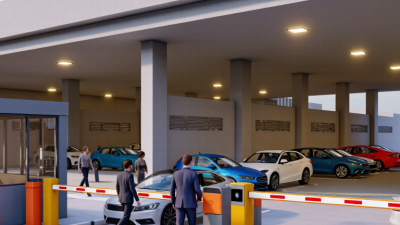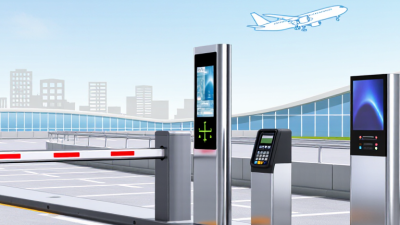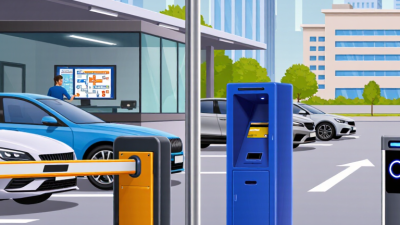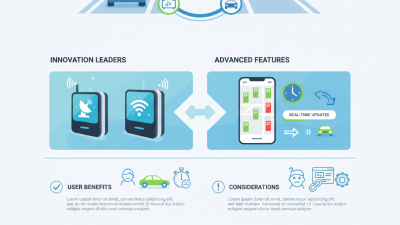
You know, Parking Equipment isn't just a bunch of gates and ticket dispensers anymore. It's turning into this connected ecosystem—sensors, payment tools, access controls—all tied together. And for global buyers, that shift makes choosing a supplier a whole lot harder. A barrier arm has to survive daily traffic; a payment terminal has to stay clear and workable in the rain. Little details? They matter.
So Grand View Research put the global smart parking market at around $6.06 billion back in 2023, and they're projecting a 19.1% compound annual growth rate from 2024 to 2030. Of course, that's just an estimate—not a promise that every product will see that kind of demand. But still, it does show that connected parking solutions are getting more attention. Okay, so you know that frustrating loop of driving around looking for parking? Donald Shoup—UCLA professor and basically the guy when it comes to parking policy—called it 'cruising for parking,' and said it's a major cause of congestion in a lot of cities. His work also shows why accurate occupancy data and easy access matter way beyond the parking structure itself.
Okay, so if you're a buyer looking at the 2026 list of top parking equipment suppliers, you probably want to skip the hype. The real questions are pretty down-to-earth: Will this system actually talk to the software we already use? Can I get spare parts without waiting forever? And what happens when the queue is out the door at 5 PM? A slick demo is nice, sure—but it doesn't tell you much. Neither does a giant feature list, honestly. That's where this guide comes in. We dig into what suppliers actually offer, how their support works, whether they have real global experience, and the products they cover—so you can compare with confidence. Here's the thing, though — it also points to an uncomfortable reality: just because a brand is the most well-known doesn't mean it's the right fit for every site. And honestly, market forecasts? They can't replace good old-fashioned testing.
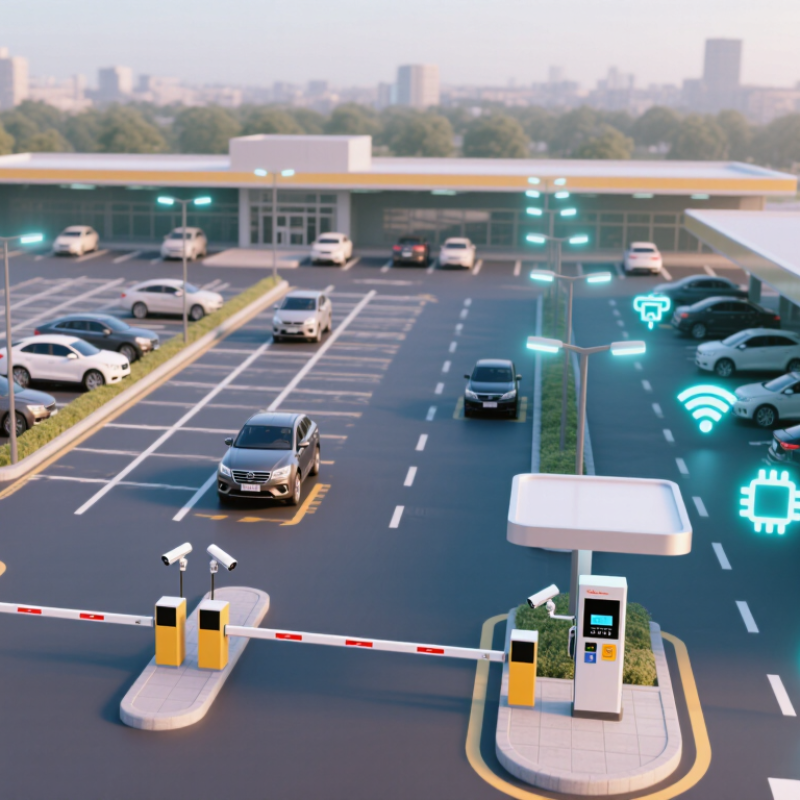
In 2026, the parking equipment market covers more than entry gates. Buyers may need ticketless access, payment terminals, occupancy sensors, wayfinding displays, and central management software. Some projects also connect parking operations with electric vehicle charging or building systems. The right scope depends on the site: a busy airport has different demands from a compact city garage. Start with the actual journey from vehicle entry to exit. Measure peak arrivals, queue length, payment time, and accessible-space use. Small details matter. A reader mounted too high can slow entry, while a dim display may frustrate drivers at dusk.
Supplier comparisons should use measurable service and operating criteria, not just purchase price. Ask for documented uptime methods, spare-parts lead times, software update policies, warranty coverage, and support response targets. Request a demonstration using realistic traffic patterns and existing equipment. Check whether data can be exported in a usable format. That can be overlooked. Lifecycle cost estimates should include installation, energy use, maintenance visits, and likely component replacement. Compare assumptions carefully; suppliers may define availability or response time differently. Even a strong scorecard has limits. A clean test environment cannot fully predict winter weather, dust, or rushed drivers, so buyers should leave room for site-specific judgment.
System Types: Mechanical Lifts, Puzzle Parks, Towers, and AGVs
Choosing a parking system starts with the site, not the brochure. Mechanical lifts can add spaces above existing stalls, but drivers may need to move one vehicle before reaching another. Puzzle parks shift platforms vertically and horizontally, making better use of compact plots. They need careful planning around vehicle dimensions and daily traffic. Tower systems stack cars in a narrow footprint. Tall structures can save land, though local access, maintenance, and operating speed matter.
AGV systems move vehicles with automated guided vehicles, reducing the need for ramps and driver access inside the facility. They can suit larger projects, but depend on reliable navigation, charging, and software support. Compare equipment availability and maintenance skills in your region before choosing. A system that works well on paper may disappoint during peak hours; that risk deserves honest discussion with suppliers.
For global buyers, safety claims should point to evidence, not polished brochures. EN 14010 addresses hazards in powered parking equipment, including design, installation, and commissioning. ISO 12100 provides a broader method for identifying hazards, estimating risk, and reducing it through design and protective measures. Ask suppliers for the risk assessment, test records, operating limits, and maintenance instructions. Check that documents match the actual configuration, not merely a similar model.
The ILO’s 2023 global estimates report 2.93 million work-related deaths each year. This figure covers all sectors, not parking equipment, but it underscores why risk controls need verification.
Look closely at pinch points, moving platforms, access gates, emergency stops, and rescue procedures. Request a walkthrough using a real vehicle and the site’s expected traffic pattern. Small details matter. A sensor’s position or a confusing control label can change how people interact with the system.
Still, paperwork cannot capture every site condition; buyers should review risks again after installation and whenever layouts or operating routines change.
For global buyers, electrical and quality checks should be part of supplier evaluation, not paperwork collected at the end. IEC 60204-1 addresses electrical equipment on machinery, including practical safeguards such as protective bonding, circuit protection, and clear control markings. Ask how these points are verified on the actual parking system. A wiring diagram is useful, but it cannot show whether a terminal was tightened correctly or a stop button works under test. Look for documented inspection steps and traceable test results.
Details matter. ISO 9001:2015 concerns a supplier’s quality management system; it does not, by itself, prove that every product is safe or defect-free. Review how the supplier controls design changes, incoming components, assembly checks, and corrective actions. For Garage Lifting Equipment, request records linked to the specific model and production batch, then confirm that manuals match the installed controls. A brief factory review can reveal loose labeling or inconsistent inspection records. Not every gap means poor performance, but unexplained gaps deserve follow-up. Standards help structure the conversation; they do not replace competent engineering judgment or commissioning checks at the site.
Buyer evaluation framework: This standards-based comparison is for assessing suppliers without naming or ranking companies. Requirements and applicability should be confirmed for the specific equipment, installation, and destination market.
| Evaluation Dimension | Relevant Standard or Reference | Evidence to Request from the Supplier | What Buyers Should Verify | Why It Matters |
|---|---|---|---|---|
| Electrical equipment of machinery | IEC 60204-1, applicable edition and local adoption | Electrical design documentation, inspection records, test results, and a declaration identifying the standards applied | Confirm the standard’s applicability to the equipment and check that the delivered configuration matches the documented design. | IEC 60204-1 addresses electrical, electronic, and programmable electronic equipment of machinery, beginning at the point of connection of the supply to the machine. |
| Protective bonding and electrical protection | IEC 60204-1, where applicable; destination-market electrical rules | Protective-bonding continuity results, protection-device details, and relevant electrical test records | Check that test methods, acceptance criteria, and equipment ratings are documented for the supplied machine and its intended supply conditions. | Documented checks help buyers assess electrical safety measures and their suitability for the installation environment. |
| Control circuits and safety-related functions | IEC 60204-1 and any additional applicable machinery-safety standards | Control schematics, safety-function descriptions, component details, and validation records where required | Confirm that emergency-stop and other safety functions are described, tested, and aligned with the project’s risk assessment and applicable regulations. | Parking equipment may include moving machinery; safety requirements depend on its design, use, and jurisdiction. |
| Quality management system | ISO 9001:2015 | Current certificate, certification scope, issuing certification body, and certificate validity details | Verify the certificate directly with the issuing body or its official database. Confirm that the scope covers relevant design, manufacture, or service activities. | ISO 9001 specifies quality management system requirements. Certification concerns the management system and scope; it is not, by itself, product certification. |
| Document and configuration control | ISO 9001:2015 quality management system processes | Documented procedures or records for revisions, approvals, and product configuration control | Check that drawings, manuals, software versions, and supplied components correspond to the final equipment configuration. | Controlled information helps reduce discrepancies between approved designs, production, installation, and maintenance. |
| Production inspection and nonconformity handling | ISO 9001:2015 quality management system processes | Inspection plans, acceptance records, nonconformity procedures, and corrective-action records relevant to the order | Ask how defects are recorded, contained, investigated, and resolved, and request order-specific inspection evidence. | Traceable inspection and corrective-action records support consistent production and issue follow-up. |
| Installation, commissioning, and handover | Contract requirements, equipment instructions, and applicable local rules | Installation instructions, commissioning checklist, operating and maintenance manuals, and handover records | Confirm responsibilities, site prerequisites, training, acceptance criteria, and the documents supplied in the buyer’s required languages. | Clear handover information helps coordinate the supplier, installer, operator, and local authorities. |
| Serviceability and spare-parts support | Contract and lifecycle-support requirements | Recommended spare-parts list, maintenance schedule, service contact process, and parts identification information | Agree on support responsibilities, response arrangements, parts availability terms, and maintenance requirements before purchase. | Defined lifecycle support helps buyers plan maintenance and reduce avoidable equipment downtime. |
| Export and destination-market documentation | Destination-market regulations and project specifications | Applicable declarations, technical files or supporting documents, equipment ratings, and translated manuals as required | Identify the importing country’s requirements and confirm that the documents apply to the exact model and configuration being purchased. | Regulatory obligations vary by market; a general standards reference does not establish compliance in every country. |
A useful supplier comparison starts with the site, not the catalogue. Check rated capacity against the heaviest vehicle you expect, then allow room for uneven loading and future demand. Ask whether the quoted figure applies to each platform or the full system. That detail matters.
Cycle time should include lifting, lowering, and vehicle positioning—not just the machine’s movement. Request a timed demonstration with a vehicle similar in size to yours. Compare the result with peak-hour traffic. A fast cycle on paper may still feel slow when drivers queue.
Footprint needs the same scrutiny: measure columns, ramps, entry clearance, and service access on the actual drawing. Hydraulic Lifting Equipment can suit constrained sites, but its layout and maintenance needs still require careful review. Install base figures help show operating experience, yet ask how many systems resemble your project in climate, usage, and configuration. A large number alone proves little.
Tips: Request a dimensioned layout, cycle-time assumptions, and references for comparable installations. Keep your own measurements; supplier drawings can miss awkward site details. Recheck them.
A useful global shortlist starts with regional capability, not a polished product catalogue. Parking equipment suppliers should understand local site conditions, traffic patterns, and maintenance expectations. Ask how they handle spare parts when a gate motor fails on a busy Monday. Response times matter more than broad service claims. Ask for named service locations and realistic coverage limits.
Project evidence should be specific. Look for completed installations with similar entry volumes, climate, and operating hours. A compact photograph of a control cabinet can reveal more than a glossy rendering. Request commissioning records, fault logs, and references from operators who use the equipment daily. Check whether the supplier can explain delays or design changes. Perfect case studies can be oddly unhelpful.
Regional leaders may differ in software integration, payment options, and technician availability. Compare these details against the actual site plan, including queue length and pedestrian routes. Ask who trains local staff, and what happens after the warranty ends. A supplier may offer remote support, but weak connectivity can make that promise less useful. That gap deserves attention. Buyers should record assumptions, verify service commitments in writing, and leave room for practical lessons learned during installation.
A supplier scorecard should compare warranty coverage, delivery time, and whole-life cost—not just the quoted price.
Ask what the warranty actually covers: motors, controls, structural parts, labor, and travel. Record exclusions and response times in writing. A long warranty means little if common wear parts are excluded or technicians are unavailable. Confirm the quoted lead time includes drawings, approvals, shipping, installation, and commissioning. Then test that schedule against a real project calendar. Delays have a cost.
For a Parking Lift, estimate annual inspections, energy use, spare parts, and expected downtime across its service life. NIST’s Handbook 135 provides a recognized framework for life-cycle cost analysis, including future costs and discounting.
For revenue context, INRIX’s 2017 Global Traffic Scorecard estimated that U.S. drivers spent 17 hours a year searching for parking, with an average annual cost of $345 per driver. That figure is dated and location-specific; do not treat it as a guaranteed lift-related return.
Build ROI from local occupancy, turnover, fees, and usable space, then run a cautious scenario with lower demand and higher maintenance costs. The assumptions may be wrong. Show them. Compare supplier bids using the same service-life period and downtime assumptions, and request references for installations with similar traffic and climate.
It may need access gates, ticketless entry, payment terminals, occupancy sensors, and wayfinding displays. Choose based on the site’s actual needs.
Track peak arrivals, queue length, payment time, and accessible-space use. A reader mounted too high can slow entry. Small details matter.
Ask for realistic traffic patterns and existing equipment. Check how drivers enter, pay, and exit. A tidy test may not reflect winter weather or rushed drivers.
Request documented uptime methods, spare-parts lead times, software update policies, warranty coverage, and support response targets. Definitions can differ.
Include installation, energy use, maintenance visits, and likely component replacements. Compare the assumptions behind each estimate, not just the totals.
Usable exports help teams review performance and compare systems. Ask to see a sample file. That can be overlooked.
Request risk assessments, test records, operating limits, and maintenance instructions. Confirm they match the exact equipment configuration.
Review pinch points, moving platforms, access gates, emergency stops, and rescue procedures. Check sensor positions and control labels on site.
Review risks after installation and whenever layouts or routines change. Paperwork cannot capture every site condition. It never quite does.
This guide to Parking Equipment suppliers in 2026 helps global buyers compare solutions by application, site constraints, and operating needs. It outlines the main system types—mechanical lifts, puzzle parks, tower systems, and automated guided vehicles—and explains how capacity, vehicle circulation time, footprint, and proven installation experience can shape a project decision. It also highlights the importance of assessing safety through EN 14010 and ISO 12100 risk-assessment practices, alongside electrical and quality checks informed by IEC 60204-1 and ISO 9001:2015.
A practical supplier shortlist should consider more than equipment specifications. Buyers can evaluate regional service coverage, installation evidence, warranty terms, delivery lead times, and the expected cost of ownership over the equipment’s lifecycle. By weighing these factors against project requirements and potential return on investment, procurement teams can make a clearer, more balanced comparison and select a solution suited to their site, budget, and long-term operational goals.